Archive for September, 2026

The Dragons of Siluvaria

Posted in Gildensong on September 24, 2026 by coyoteandthunder

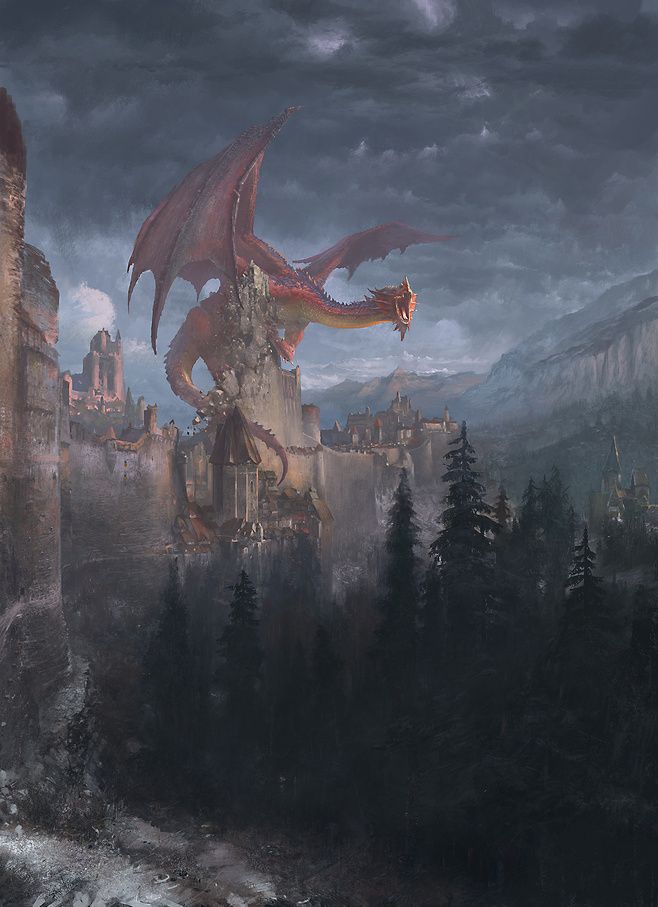
The Scintilliant are a family only in the oldest and strangest meaning of that word: sixteen great dragons descended through different lineages from the first powers of dragonkind, born across different ages of the world and bound to one another by blood, rivalry, memory, and ancient obligation. Some remember siblings whom the younger wyrms know only as legends; some inherited territories from their forebears, while others seized their realms through fire and slaughter. No two are alike. Each has become an expression of the country it inhabits, as singular in temperament as in magic, whether guardian, tyrant, oracle, recluse, or monster. For the peoples living beneath their shadows, a dragon is therefore never merely a dangerous animal but a permanent fact of geography and history. Villages leave offerings, kings negotiate treaties, roads bend around forbidden mountains, and generations inherit rules concerning which lakes must not be crossed or which names must never be spoken beneath certain stars. A benevolent dragon may inspire reverence and even love; a cruel one may keep whole provinces in terror. Yet even the kindest inspires unease. Where a dragon reigns, awe is always attended by anxiety, gratitude by caution, and every upward glance carries some measure of trepidation, for the oldest truth of Siluvaria is that a dragon may love the people beneath its wings and still remain a dragon.
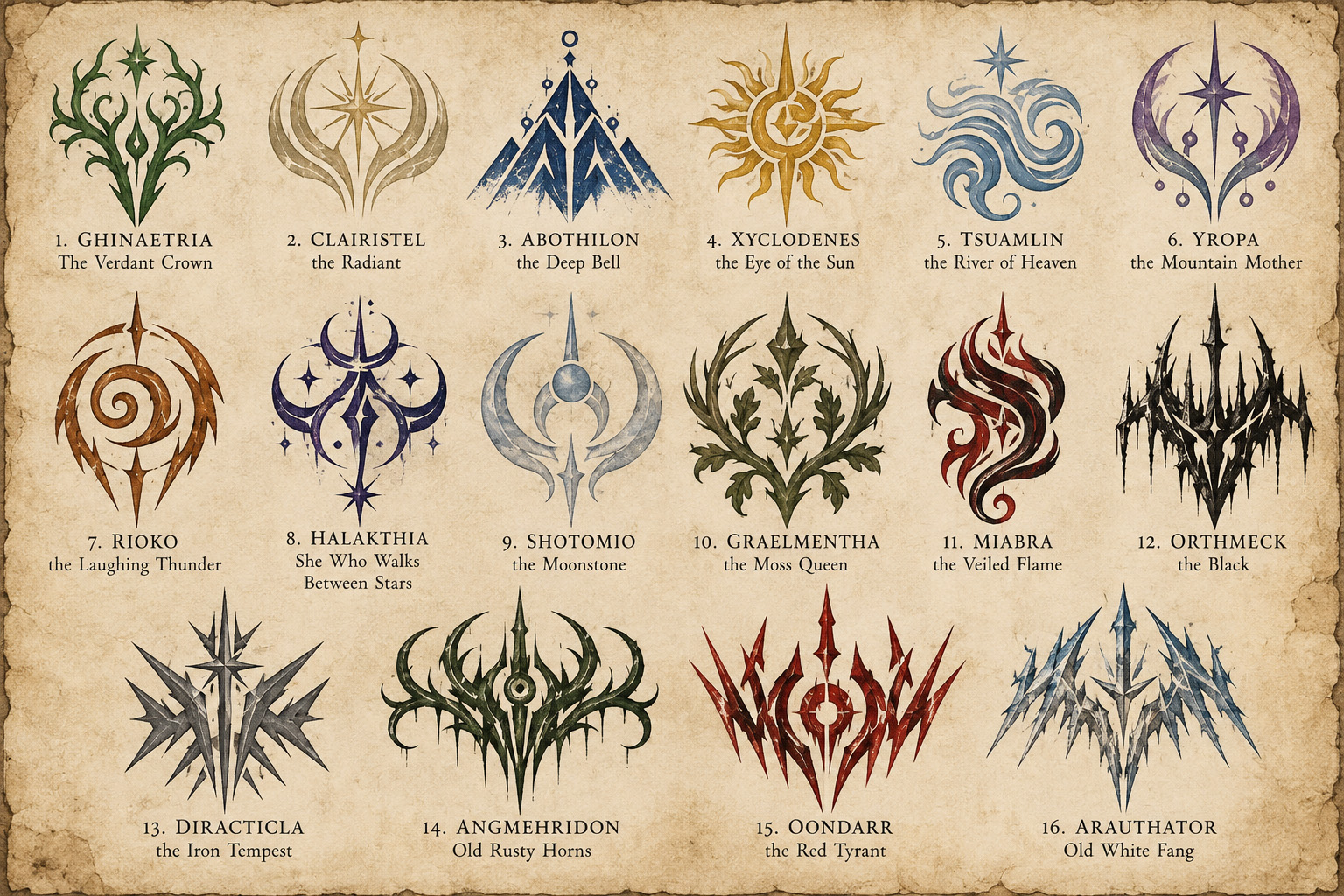
Taken together, the Scintilliant are less a council than a broken pantheon. They are sixteen survivors of the first ordering of dragonkind, each carrying some fragment of the ancient powers unleashed by the division of Bahamut and Tiamat and Sardior’s failed reconciliation. Some became guardians, some tyrants, some hermits, and some things for which mortal languages have no comfortable political name. Their territories overlap the kingdoms of Siluvaria without truly belonging to them, and their feuds are older than many mountains.

Thus the Dragon War of 1497 DR was never simply a war against dragons. It was the moment when the ancient disagreements of the Scintilliant ceased to remain above and beyond mortal history. Sixteen elder wyrms had endured into the age of elves and humans. When the war ended, only thirteen remained.

THE SCINTILLIANT

The Sixteen Dragons of the Scintilliant

Ghinaetria, the Verdant Crown
An immense bronze-green dragon whose scales carry the shifting colors of leaves after rain, Ghinaetria is among the oldest surviving guardians of western Siluvaria. Her dominion lies chiefly over Isalia, where the oldest forests remember her passage and certain trees are said to bend toward her when she flies overhead. Ghinaetria commands wind, rain, and growing things, and her breath falls as a green-golden storm that causes roots to burst from the earth. Patient and intensely territorial, she has little affection for kings or governments but tremendous loyalty to places. Mortals who protect the land may earn her friendship; those who injure it discover that her patience is measured in centuries, but her vengeance in minutes.
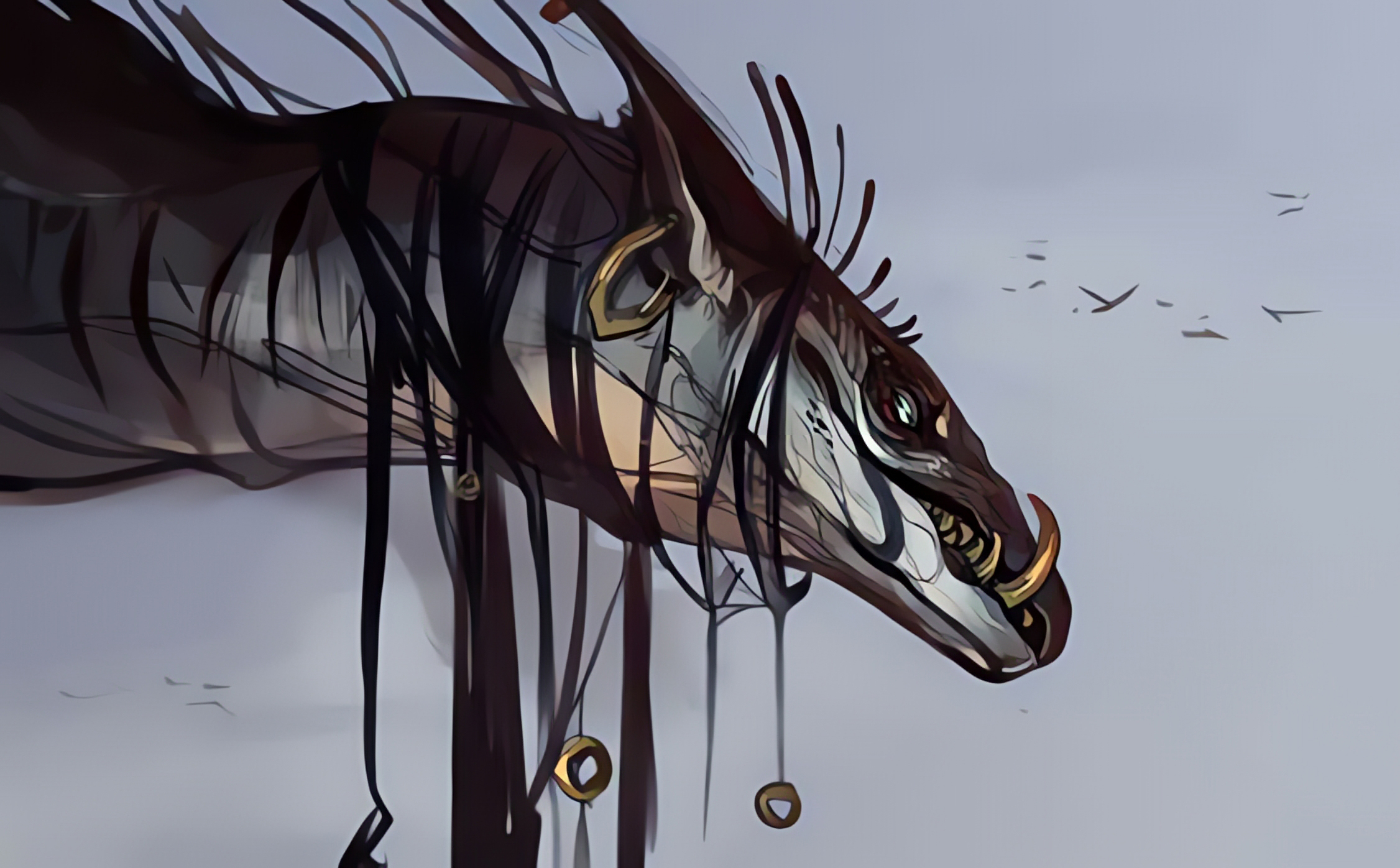
Ghinaetria

Clairistel the Radiant
Sister to Ghinaetria, Clairistel was a magnificent pearl-white dragon whose translucent scales caught daylight and fractured it into halos of spectral color. Called the Radiant, she wielded light as both weapon and healing power and could cross the boundaries between worlds wherever sunlight touched living water. Clairistel possessed a grave and compassionate nature, regarding power as an obligation rather than a privilege. When the lost dragon god Sardior attempted to enter the mortal world through Prismeer in 1497 DR, Clairistel opposed him and was destroyed. For several years afterward, witnesses throughout Isalia reported seeing strange rainbows at sunset, even beneath cloudless skies.

Abothilon, the Deep Bell
The ancient cobalt dragon Abothilon sleeps beneath the mountains and drowned caverns of Ethylistyr, where his breathing is sometimes mistaken for distant thunder. His great horns curl backward like those of a ram, and the scales along his throat shine with blue mineral fire. Abothilon commands stone, subterranean water, and vibration. His roar can travel through mountains for miles, breaking walls without disturbing the grass above them. Slow to anger and almost impossibly contemplative, he may remain silent through an entire mortal audience before answering a single question. Earthquakes in Ethylistyr are traditionally called the turning of Abothilon, and miners still leave silver bells at deep shafts to announce themselves before entering his country.

Xyclodenes, the Eye of the Sun
Among the most magnificent of the Scintilliant, Xyclodenes is a colossal gold dragon whose wings shine like hammered metal beneath the noon sun. His golden fire once guarded the high mountains against things that climbed from older darkness, and for millennia his appearance above the peaks was regarded as an omen of protection. Xyclodenes possesses terrible powers of revelation: disguises fail beneath his gaze, invisible creatures cast shadows before him, and deliberate falsehoods become difficult to speak in his presence. Noble without being gentle, he expects courage from those who petition him and has little tolerance for self-pity. Of all the Scintilliant, he most closely resembles an ancient dragon-king.
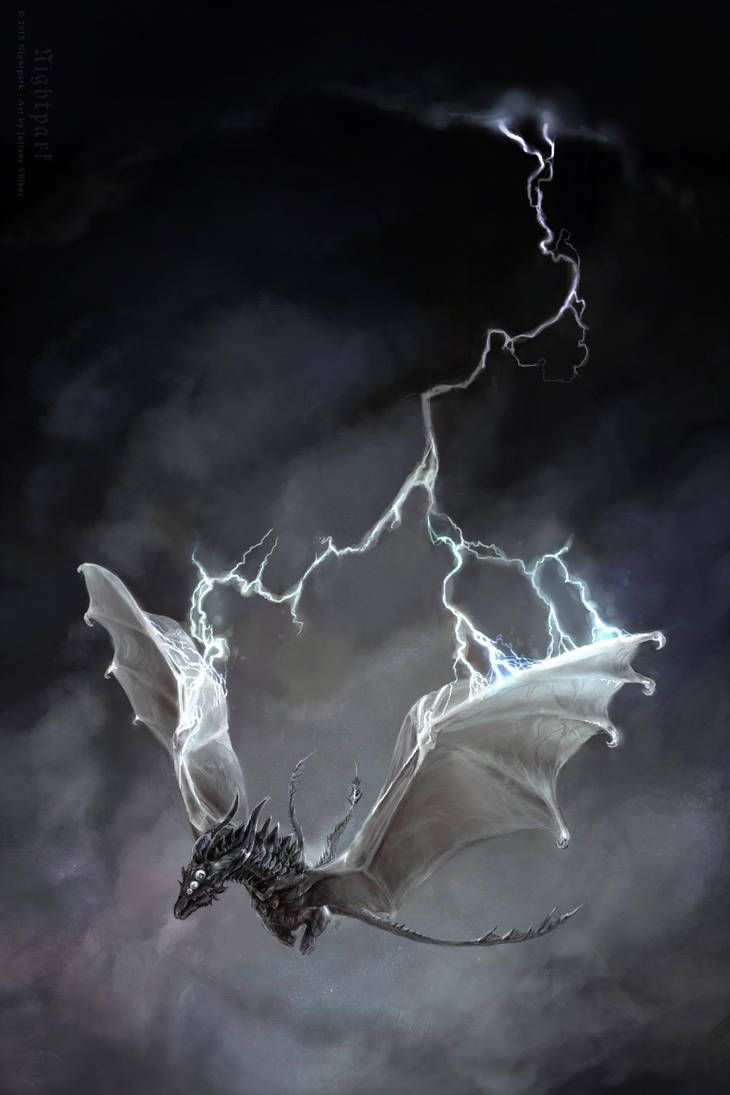
Tsuamlin

Tsuamlin, the River of Heaven
Long and serpentine, Tsuamlin is a silver-blue storm dragon of Earlann whose antlered head and trailing mane give him an appearance unlike the great western wyrms. He rarely walks upon the earth, preferring clouds, rivers, waterfalls, and mountain mist. His breath is not flame but a roaring torrent of electrically charged rain capable of sweeping soldiers from a battlefield. Tsuamlin is mercurial, humorous, vain, and fascinated by music. He has been known to answer an insult with a flood and a beautiful song with a century of friendship. Several rivers of Earlann are said not merely to belong to Tsuamlin but to be extensions of his dreaming body.

Yropa, the Mountain Mother
The great amethyst dragon Yropa was once among the most beloved of all the Scintilliant. Her vast wings shimmered violet, rose, and blue, and ancient Siluvaeren traditions remember them spread above the earliest elves as a shelter against the terrors of the young world. Yropa commands formidable psionic power, entering dreams, moving objects without touch, and speaking directly into minds across tremendous distances. She awakened Baertolaine as a psi warrior and later bore Skylla into the Dragon War. Yet Yropa’s fate became one of the great tragedies of the Scintilliant: corruption transformed her luminous hide into black crystal threaded with violet fire. Something of the Mountain Mother survives within that terrible form, imprisoned behind the power that claimed her.

Rioko, the Laughing Thunder
Rioko is a great copper dragon, broad-winged and scarred, whose mountainous territory lies among the western reaches of Earlann. His horns curl outward like a stag’s crown, and lightning-blue markings cover his muzzle and breast. Rioko delights in contests, riddles, improbable wagers, wrestling matches, and mortal celebrations, but the apparent levity conceals an extraordinarily perceptive mind. His thunderous breath can shatter fortifications, while his laughter itself can break enchantments of fear and despair. Rioko despises tyranny above nearly every other vice. More than one petty lord has invited the charming old dragon to dinner only to discover by morning that the gates of his prison had mysteriously been torn from their hinges.
Halakthia

Halakthia, She Who Walks Between Stars
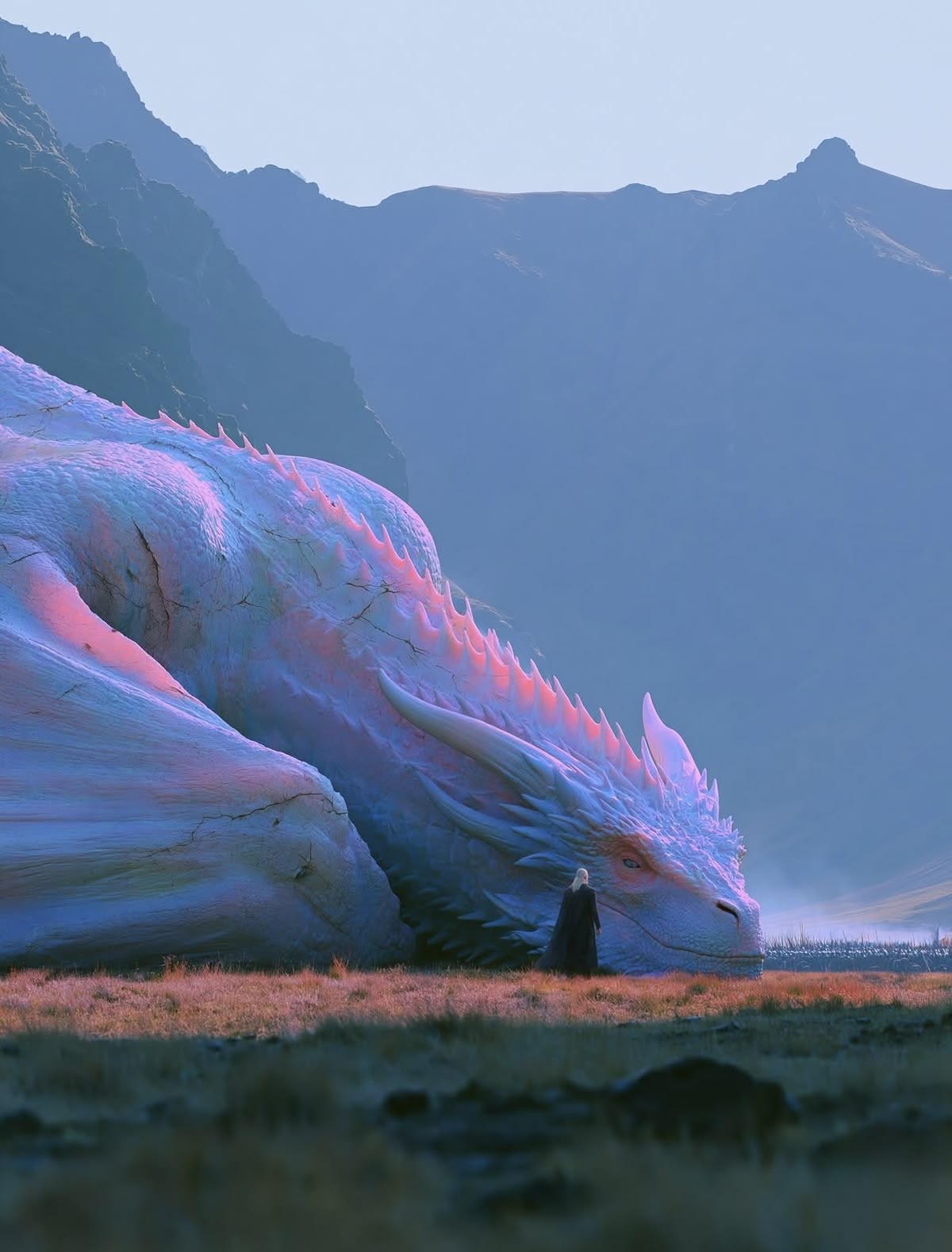
Perhaps the strangest of the Sixteen, Halakthia is a slender indigo crystal dragon whose scales resemble fragments of a winter night. Tiny points of light move beneath them like distant stars. She inhabits remote peaks and abandoned places where the barriers between planes grow thin. Halakthia can step briefly outside ordinary space, appearing miles away without crossing the intervening country, and her breath creates a field of glittering darkness in which distance becomes unreliable. She speaks softly, rarely intervenes in mortal affairs, and seems to perceive time differently from other beings. Prophets seek her and usually regret doing so. Halakthia seldom tells anyone what will happen. She tells them what must happen for something else not to occur.

Shotomio the Moonstone
The legendary moonstone dragon Shotomio possessed scales of milky silver that became almost transparent beneath moonlight. His domain encompassed dreams, reflected light, illusion, and the invisible pathways by which the Feywild touches Siluvaria. Gentle in speech but ferocious in defense of the innocent, Shotomio maintained particularly close relationships with elves and the benevolent fey. During the Dragon War, he answered the assault upon Silverymoon and confronted Angmehridon. On Flamerule 12, 1497 DR, Shotomio was destroyed defending the city. Siluvaeren astronomers claim that a previously unknown white star appeared near the moon that night and has never vanished.

Graelmentha, the Moss Queen
A vast emerald-brown forest dragon, Graelmentha is so thoroughly overgrown that trees take root between the scales of her back. Moss hangs from her jaw, mushrooms flower along her tail, and small birds sometimes nest between her horns. She inhabits the oldest forests and seldom flies unless greatly disturbed. Graelmentha’s breath carries spores that can produce either miraculous fertility or choking fungal death, according to her will. She is maternal, suspicious, and profoundly slow in judgment. Mortal kingdoms mean almost nothing to her. She remembers forests where cities now stand and regards three hundred years as a reasonable period in which to consider an apology. Druids say that when Graelmentha finally dies, she will simply lie down and become a mountain.
Miabra

Miabra, the Veiled Flame
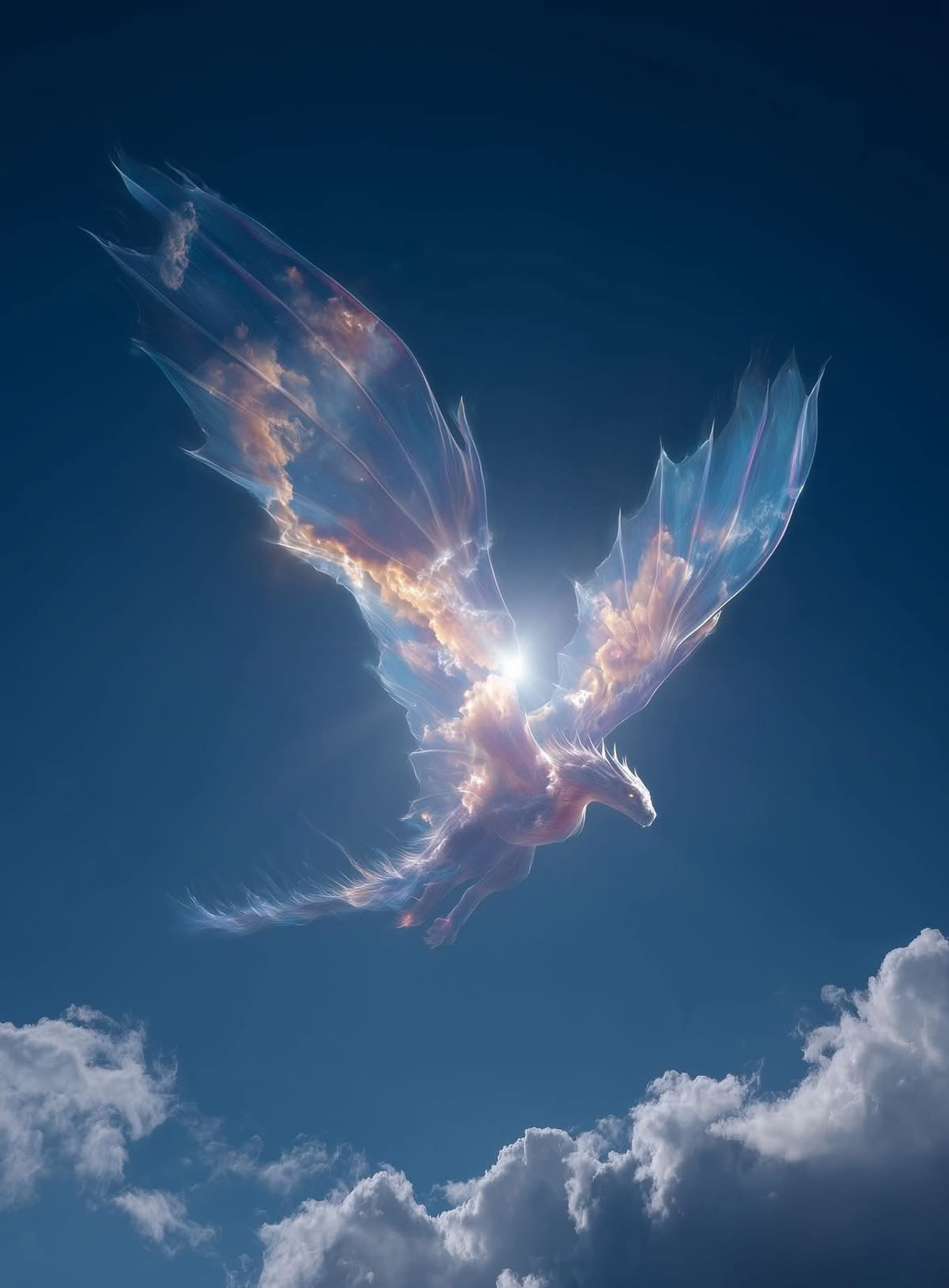
Beautiful and deeply dangerous, Miabra is a slender red-gold dragon whose scales darken toward black along her wings and extremities. She has always moved nearer to mortal politics than most of her kin, cultivating relationships among elves, drow, archmages, smiths, and royal houses. Miabra possesses extraordinary command of magical flame and can burn enchantments themselves, stripping spells from objects without necessarily destroying the objects that bear them. She is intelligent, seductive, secretive, and difficult to place among either the benevolent or tyrannical Scintilliant. Miabra values promises intensely, but cares little whether the promises themselves are virtuous. Her involvement in the histories surrounding Caelithar and the Crimson Blade has ensured that no serious history of the Swords of Creation can entirely escape her shadow.

Orthmeck the Black
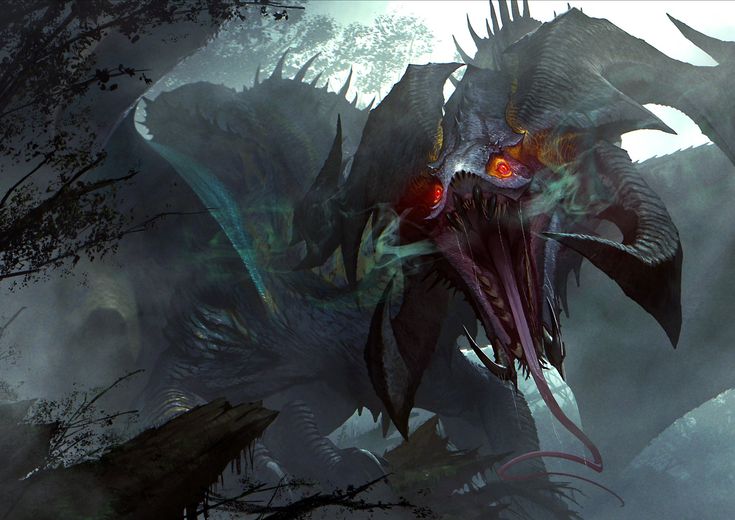
Called Old Black Orthmeck in the frightened stories of the eastern marches, Orthmeck is an immense ancient black dragon whose body has grown monstrous with age. More than two hundred feet from snout to tail, he possesses a strangely bone-white face, enormous glasslike horns, and a rasping cough that can be heard through the marsh long before he appears. Orthmeck rules poison water, decay, acid, and the drowned dead. His swamp has become almost an extension of his body, its twisted trees and black pools seeming to awaken when their master is threatened. He is vicious, avaricious, enormously intelligent, and possessed of a memory for insults that borders upon religious devotion. Yet he despises Angmehridon, and that hatred has occasionally placed the old monster on the useful side of history.
Orthmeck

Diracticla, the Iron Tempest
The terrifying Diracticla is an iron-gray dragon whose armored scales overlap like the plates of some celestial war machine. She rules among the eastern mountains, where ruined fortresses and abandoned roads testify to the kingdoms that once attempted to oppose her. Diracticla breathes a storm of metallic shards and magnetic force capable of tearing weapons from soldiers’ hands and armor from their bodies. She admires discipline, hierarchy, engineering, and war conducted with ruthless precision. Unlike Orthmeck, who rules through terror and appetite, Diracticla genuinely believes domination produces order. Her armies therefore march beneath laws, standards, quartermasters, and carefully measured supply trains. Of the hostile Scintilliant, she may be the most dangerous strategist.

Angmehridon, Old Rusty Horns
The elder green dragon Angmehridon is the dreaming horror of the deep forest. Roots and vines grow across his enormous body until a sleeping Angmehridon can be mistaken for an overgrown hill beneath the trees. His horns have weathered to the brown-red color that gives him his mocking mortal epithet, Old Rusty Horns. Poison is among the least of his powers. Angmehridon enters dreams, cultivates fear, plants desires, manipulates memory, and may spend decades preparing the corruption of a single enemy. He would rather persuade a hero to betray everything they love than kill them. Yet beneath this almost incomprehensible patience lies a peculiar terror: Angmehridon fears children. Something in their unfinished minds resists the pathways by which he enters the dreams of adults, and this ancient fear will eventually become central to his undoing.

Oondarr, the Red Tyrant
Oondarr is an enormous deep-crimson dragon, blackened along the belly and crowned with forward-sweeping horns like the blades of a war helm. He does not merely accumulate treasure. He accumulates power. Oondarr breeds soldiers, selects bloodlines, builds fortifications, appoints generals, studies roads, stockpiles grain, and measures civilizations according to whether they can be conquered. Beginning in 1485 DR, he deliberately breeds a superior strain of orc infantry and sends them against the borders of Gildensong, beginning the long escalation toward the Dragon War. Six thousand of his orcs eventually descend upon Edderoth itself. Oondarr’s flame burns an unnaturally dark red and can melt enchanted metal. Proud, disciplined, patient, and utterly imperial, he does not dream of destroying Siluvaria. He dreams of ruling it.

Arauthator, Old White Fang
Far to the north dwells Arauthator, the colossal white dragon called Old White Fang. His scales are not clean white but the colors of glacier ice, old bone, and storm cloud, while his wings become almost invisible against falling snow. Arauthator commands cold on a geographical scale. Lakes freeze beneath his passage, blizzards follow his anger, and his breath can turn stone brittle enough to shatter beneath a hammer. He is savage but not stupid, an important distinction lost upon many who have died in his country. Old White Fang possesses the patience of winter itself. He may stalk an enemy for weeks without revealing his presence, allowing cold, hunger, and fear to do most of his killing. He attacked Elandreth Filarian during the winter elf’s journey south from Methedra Vale and remains one of the great sovereign terrors of the extreme North.
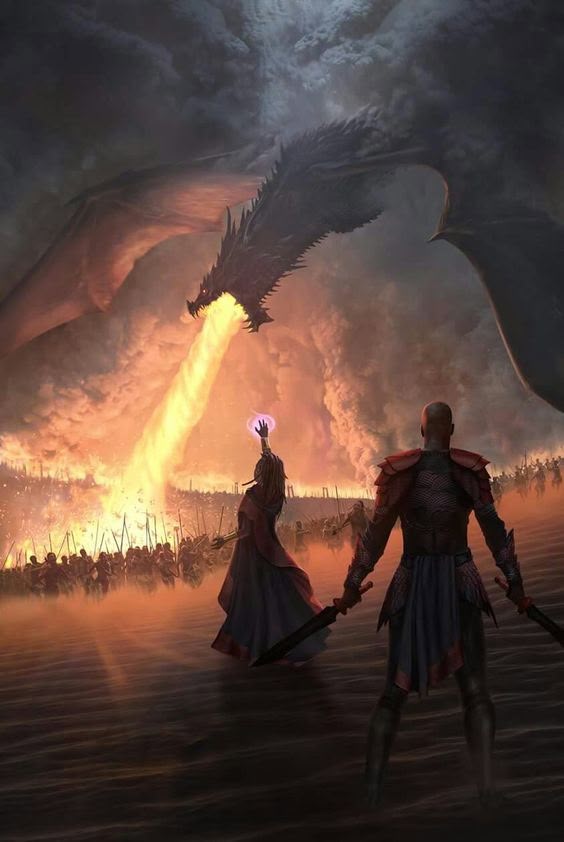
Dragon Wars (1485-1505)

Posted in Gildensong on September 24, 2026 by coyoteandthunder

The Dragon Wars at Gildensong

1485 DR: Oondarr begins breeding a stronger and more disciplined strain of orc infantry in the eastern reaches. The first companies are sent west to test themselves against the Bladesong Knights at Tiruandar, beginning what is at first dismissed in Edderoth as another season of border violence.

1486 DR: The fighting widens into what becomes known as the Long Orc War, with battles spreading through the countryside of Earlann. At Memorianne, Miraedriel, a wolf-riding Bladesong Knight, destroys Urthgati, a demon of Lolth whose appearance reveals darker powers moving behind the orc offensive.

1487 DR: Orthmeck leads a goblin host against the elven city of Leandor in Isalian. Barrot Ithae, a human sorcerer and Bladesong Knight, organizes a daring sortie from the besieged city and breaks the attack, temporarily checking Orthmeck’s advance.

1495 DR, the Year of the Witchlight War: The Clockwork Coven captures Zybilna within Prismeer, an extradimensional realm deep within Siluvaria. In the same year, Vivianna’s sister, the witch Skylla, is angrily rebuked for reasons never publicly disclosed and removes herself to Silverymoon. Ogdinnion (Magister at Edderoth) later reports that Skylla departed with a substantial cache of arcane instruments stolen from the Vinespeakers.

1496 DR: Elandreth Filarian, a winter elf from the legendary Methedra Vale, arrives in Silverymoon bearing extraordinary news: a third functioning mythal lies hidden among the mountains of the extreme north. The discovery will prove crucial before the coming war is finished.
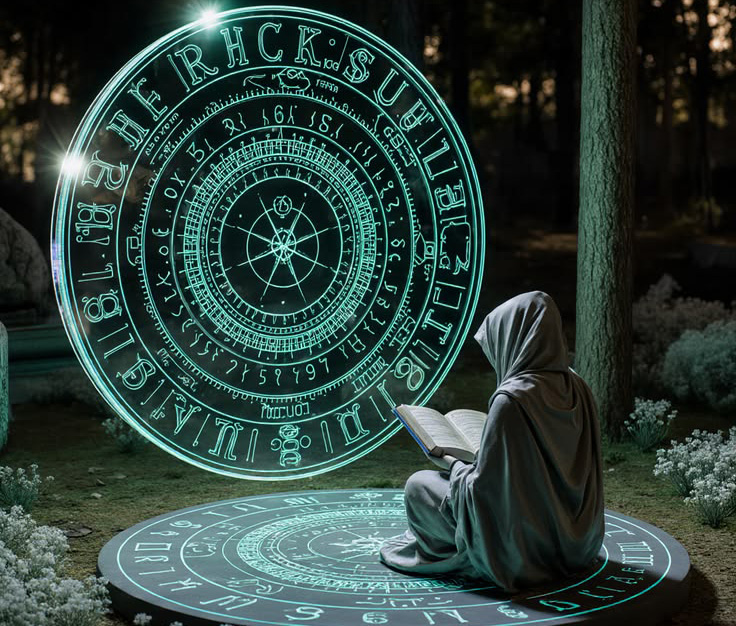
1497 DR: The Year of the Dragon War

The border conflicts erupt into the Dragon War, also remembered as the War of the Scintillant. Battlefronts spread across the High Forest and throughout Siluvaria. The Scintilliant, the twelve ancient dragons that have claimed the greater Siluvarian world since antiquity, descend into open war against one another and the peoples beneath them. By the war’s end, only nine will remain.

Ches 18: Word reaches Edderoth of the first great defeat of the Argent Legion by Orthmeck’s draconians at the Battle of Jalandhar. Gildensong responds immediately, dispatching 350 Bladesong Knights north to reinforce the Siluvaeren armies.

Tarsakh 1: The first of the terrible void zones, the Milentioch, manifests in Siluvaria. The fortress of Umgareth falls to the draconians and is rechristened Verminar. Thousands of draconians pour into Giants Dale, and Northguard is lost. With the ordinary roads collapsing under the advance, the elves of Isalian open the hidden ways of the Faenkalla to refugees, supplies, and military traffic. By this point the Bladesong Knights have been reduced to only 493 active knights.

Mirtul 1: Yropa the Wise is seen for the last time, bearing Vivianna’s sister Skylla into the gathering war. Neither rider nor mount is seen again by reliable witnesses.

Mirtul 7: Orthmeck and Angmehridon attack Silverymoon. The archmage Telmachion is slain, together with seventy-five Bladesong Knights, during the catastrophic Battle of the Fourth Shield.

Mirtul 28: Amid mounting losses, Ithilbre Glasshair is elevated as the 124th High Captain of the Bladesong Knights.

Kythorn 15: The Argent Legion wins its first major victory against the combined forces of Oondarr’s orcs and Orthmeck’s draconians at the Battle of Three Fronts. Victory comes at a terrible price: another sixty-four Bladesong Knights are killed. Facing the possible destruction of the order, High Captain Ithilbre begins the unprecedented conscription of Gildensong citizens into the knighthood.

Kythorn 24: Oondarr comes against Edderoth itself. Six thousand orcs descend upon the Elder Valley and lay siege to the city and Castle Edderoth, bringing the Dragon War at last to the heart of Gildensong.

Flamerule 12: Shotomio the Moonstone defends Silverymoon against another assault by Angmehridon and is destroyed in the battle. At the same time, Orthmeck lays siege to Everlund, and the city falls.

Later that summer: With Edderoth still threatened, powers older than Gildensong enter the war. The Far Darrig, deep fey out of Faywell, emerge into Edderoth and fall upon Oondarr’s besieging army, routing the orcs and liberating the city. Above the walls, colossal wyrms meet in battle. Castle Edderoth is scarred by their violence, and the ancient Diamond Tower of Valen Gildensong is shattered.

Eleint 13: The lost dragon god Sardior appears within Prismeer and attempts to cross into the Prime Material World. Clairistel the Radiant, sister of Gnimetria, opposes the manifestation and is destroyed.

Nightal 15: Elandreth Filarian and Baertolaine, Champions of the Witchlight, ignite the lost mythal of the Gherivon and destroy the avatar of Sardior. Across Siluvaria, the surviving dragons of the Scintilliant retreat to their lairs. The Clockwork Coven is destroyed and Zybilna is freed. The great Dragon War is effectively over, although the armies it created remain.

Oondarr comes to Edderoth

The Long Aftermath

1498 DR: The dragons have withdrawn, but their war does not end with them. Draconian armies continue to plague Isalian, while Silverymoon sends troops south to reinforce the depleted Bladesong Knights in the campaign to retake Northguard.

1499 DR: Oondarr’s orcs, now commanded by General Orol Kul, seize the ruins of Myth Adofhaer and fortify the surrounding country. Their new stronghold becomes known as Blood Moon Vale, an enduring base for Oondarr’s power in the region.

1500 DR: The Blood Moon orcs unleash purple worms against Crystal Bed, threatening to destroy the settlement from below. The archfey Orius brokers an extraordinary alliance between the Bladesong Knights and the drow of House Theradril. Together they drive back the worms and restore the community. Afterward, Orius takes up residence at Edderoth, bringing another powerful fey presence into Vivianna’s court.

1502 DR: Gildensong begins the largest defensive works undertaken in generations. Fences, fortified roads, walls, watch posts, and borderworks rise along the principality’s eastern frontier deep within the High Forest. Much of the immense expense is borne by the Dessarin Hold and House Enimdere, binding commercial wealth ever more closely to the military defense of the realm.

1503 DR: The draconian general Ziburizet enters Edderoth under diplomatic protection, claiming possession of Shadowtop and demanding that Gildensong recognize his conquest. Vivianna’s court refuses. During the failed negotiations, Ziburizet attempts to assassinate Moonbow, but loses his black sword in the ensuing melee and escapes with the assistance of a concealed abishai, a fiend bound to draconic power. The abishai is subsequently revealed as Nicandlin, the hidden architect of the Clockwork Coven’s attempt to restore Sardior. More disturbing still, the abandoned black sword is identified as Rendgray, one of the primordial Swords of Doom.

1504 DR: The campaign to recover Shadowtop begins. What is intended as a decisive offensive hardens into a brutal siege that will consume more than two years, drawing knights, money, and supplies from across Gildensong.

1505 DR: After a succession of costly battles, the Bladesong Knights retake Shadowtop. Victory exposes a deeper betrayal. Evidence reveals that Skylla, sister of Vivianna, has been working alongside Nicandlin and Ziburizet. All three escape capture, taking with them the body of Kannoth, the ancient vampire, for purposes unknown.

Divination performed afterward reveals something still more troubling. Kannoth is not merely an ancient vampire but an incarnation, vessel, or manifestation of a far older being from ancient Daotyr: Volukai, an elder power of immense and uncertain nature. Thus the war that began with Oondarr’s breeding pits in 1485 ends its second decade not with peace, but with the discovery that dragons, draconians, witches, and orcs have been moving across the surface of a much older game.

LORE NOTES 1510

Posted in Gildensong on September 24, 2026 by coyoteandthunder

The Elder Valley and the Founding of Gildensong

Gildensong, commonly called the Wine Lands, occupies the fertile Elder Valleys southwest of Silverymoon. Its political and cultural heart is Edderoth, where Castle Edderoth rises above the Edderoth River and the valley’s vineyards, orchards, roads, and settlements. The realm lies roughly seventy-five miles southwest of Silverymoon, close enough that the histories of the two countries have remained intertwined for centuries. Technically, Gildensong is something of a vassal state of Silverymoon.

The realm traces its founding to 851 DR, when Valen Gildensong, a high elf of Silverymoon, led a company of elves and humans southward during a period of growing racial violence and political unrest associated with the Eldreth Veluuthra. According to Gildensong tradition, the archfey Verenestra guided Valen’s company into the Elder Valley and helped establish the covenants with the fey that made permanent settlement possible. The resulting country was neither wholly elven nor human, but a mingled society whose identity grew from Siluvaeren culture, the agricultural wealth of the valley, and ancient agreements with the neighboring fayholds.

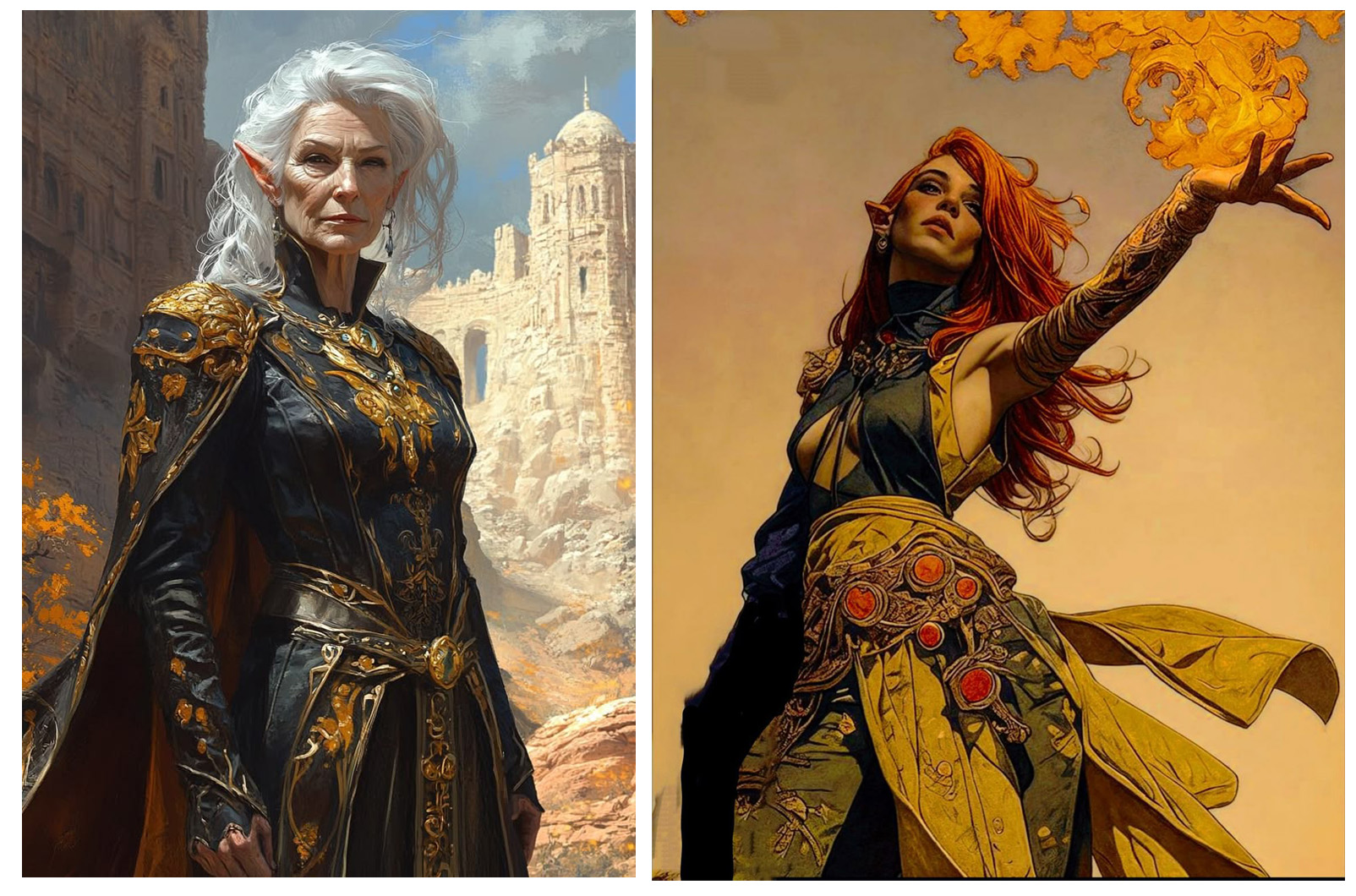
Lady Vivianna (left) and Verenestra of the Oaks (right)
are the most politically power people in the Principality of Gildensong

The relationship with Silverymoon remains unusually intimate. Many of Gildensong’s old high-elven families trace their ancestry to Silverymoon, and the two countries share centuries of marriage, trade, scholarship, and military service. Although part of the larger, cultural kingdom of Siluvaria, Gildensong has repeatedly declined incorporation into larger northern political projects, including the Confederation of the Silver Marches and the former Principality of Luruar. Its friendship, business, and military relationships with Silverymoon are therefore rooted in an alliance between sovereign powers rather than political subordination.

Lady Vivianna and the Court of Edderoth

Gildensong is ruled from Castle Edderoth by Lady Vivianna, Lady of the Valley, whose blood ties to Alustriel Silverhand reinforce the ancient relationship between Edderoth and Silverymoon. The Edderoth court is consequently both provincial and international: the great houses of the Wine Lands mingle there with Bladesong officers, merchants, diplomats, fey emissaries, priests, mages, and representatives of Silverymoon.

Silverymoon maintains a permanent diplomatic presence at Edderoth through Thereal the Siluvaeren, its ambassador to Vivianna’s court. Matters decided at Edderoth often extend far beyond the valley. Trade through the Dessarin corridor, draconian incursions, relations with the fayholds, the security of the northern roads, and the disposition of the Bladesong Knights all make the castle one of the consequential political centers of western Siluvaria.

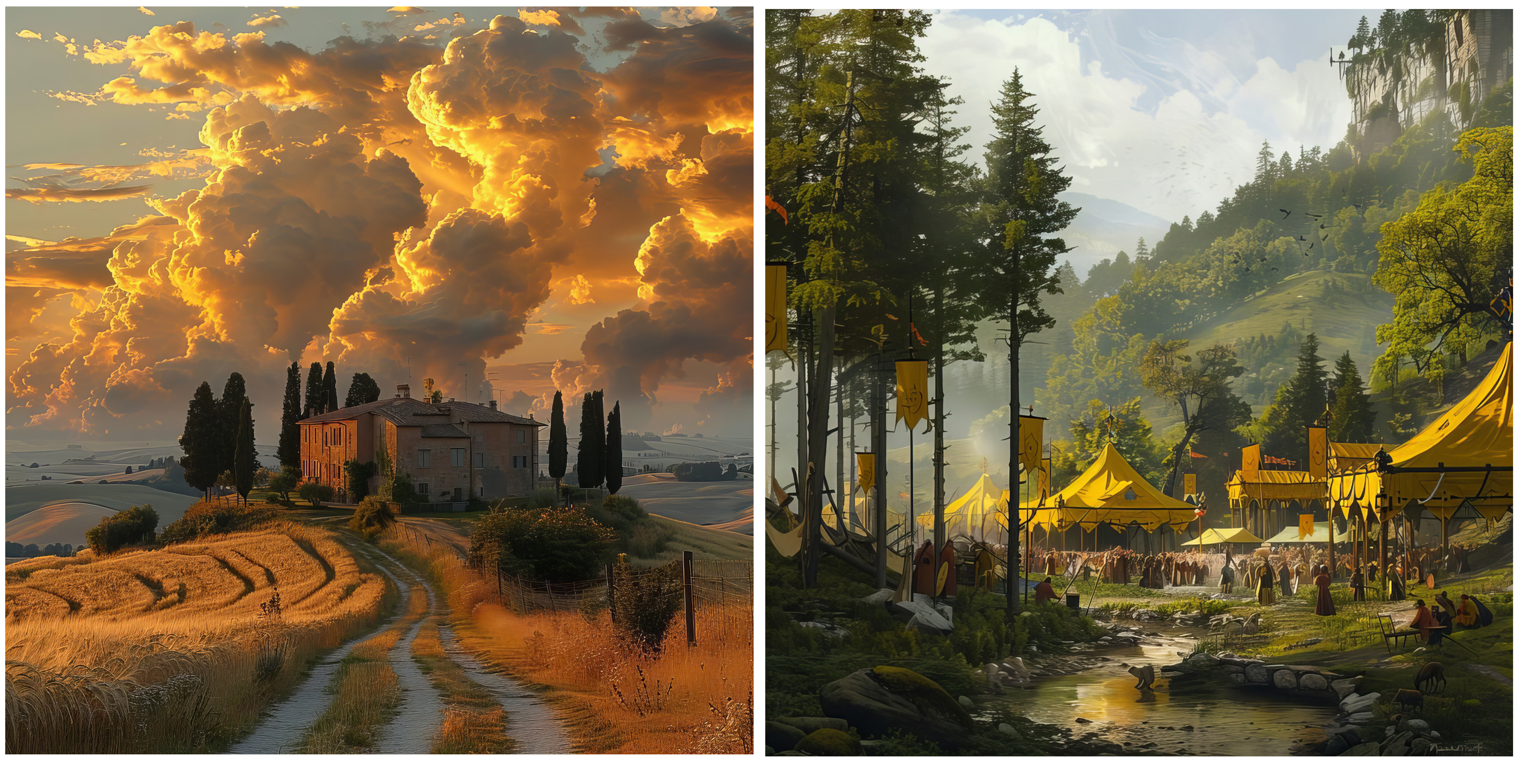
To those that call the countryside of Gildensong home, it is paradise. From the wheat and vineyards of Enimdere
(pictured, above, left) to the fairs of Seven Hills in West county (pictured, above right),
community and natural beauty, everywhere, is reflected in how culture is tied to the land.

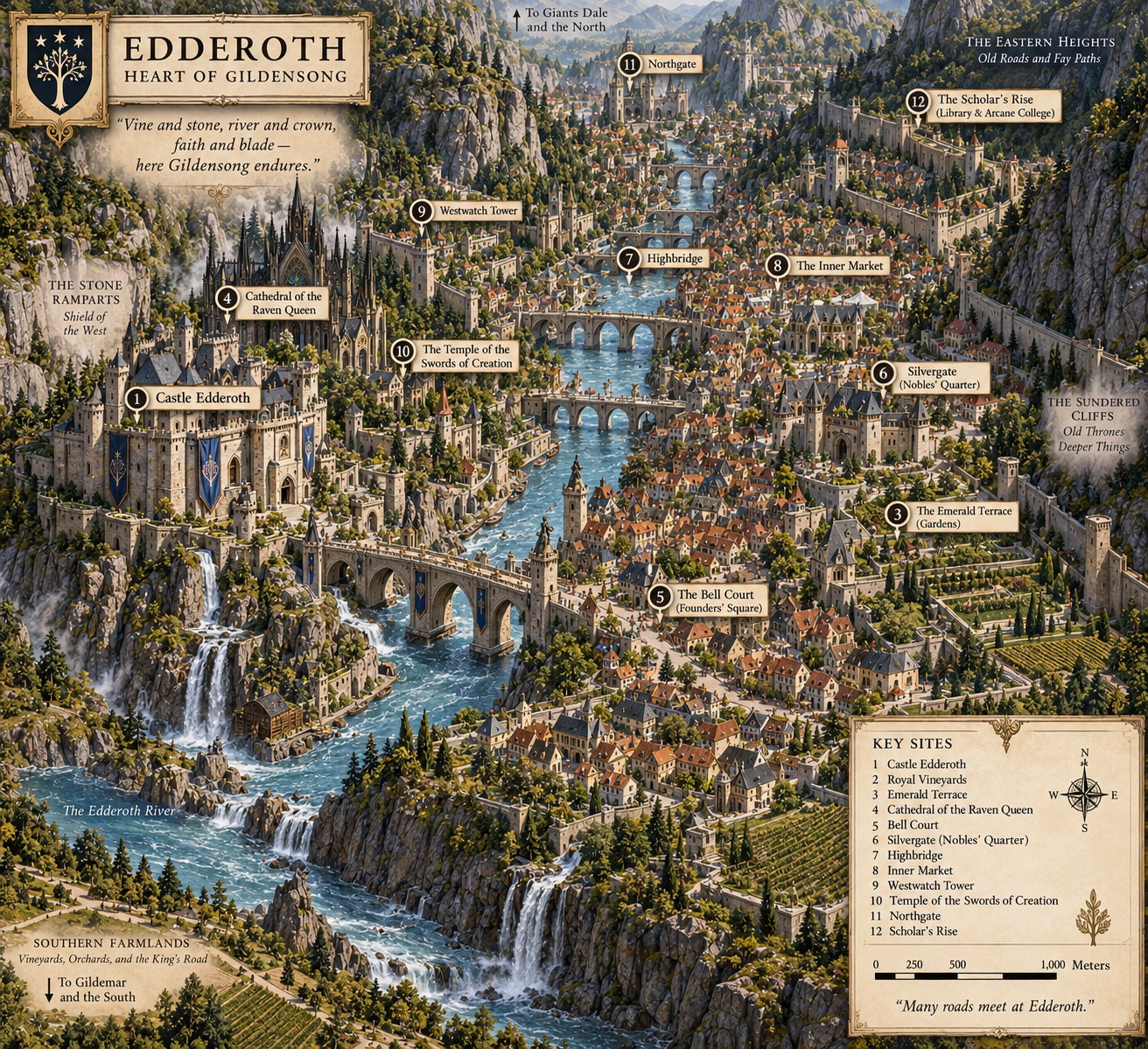
Castle Edderoth itself stands at the lower end of the city, overlooking the river and the approaches into the Elder Valley. Behind it, Edderoth climbs steeply through the valley, a city of approximately five thousand inhabitants arranged along bridges, terraces, walls, gardens, markets, and river roads. The Cathedral of the Raven Queen rises prominently behind the castle, while the great bridge across the Edderoth binds the castle precinct to the greater city.

The Great Houses and Commerce

Much of Gildensong’s political power rests with its landed and mercantile houses. House Khodelkim and House Enimdere possess extensive commercial interests and have long invested heavily in maintaining the roads, river traffic, and ports upon which the Wine Lands depend. Each controls settlements and estates of its own, giving the great houses considerable influence outside the immediate authority of Edderoth.

Elven ships from Siluvaria move valuable materials up and down the Desarrin River
at the behest of the Costar merchant holds. Magical weaponry is among
the most prized exports of the elven kingdoms.

The continuing draconian conflict has fallen particularly heavily upon these trading families. Commerce between Gildensong and Silverymoon must cross the country repeatedly, threatened by draconian strongholds and raiding parties. Protecting merchants, reopening roads, and maintaining the movement of goods have therefore become matters of national security as much as commerce.

At Port Edderoth, three mercantile powers are particularly influential: the Costers of the Green Star, House Aelsibyrn, and the Dessarin Hold, usually called the DH. The Dessarin Hold possesses the darkest reputation of the three and has frequently been associated with the Mice Eyes, a powerful thieves’ guild whose operations extend well beyond the port.

Port Edderoth

Port Edderoth stands at the western approach to the Elder Valley, where the waterways and overland routes of Gildensong converge. The river system’s deep glacial waters allow substantial barges to reach the port, making it the principal commercial gateway between the agricultural interior and the wider trade networks beyond the valley. The Bladesong knights of Granitehome, the massive wayhouse in the center of Port Edderoth, have become regional heroes in the years between 1506 and 1510.

Wine dominates this commerce, but the port carries timber, metalwork, grain, fruit, livestock, weapons, luxury goods, and products moving between Silverymoon and the western lands. Control of Port Edderoth therefore means influence over much of Gildensong’s wealth.

The realm’s prosperity is reflected in its currency, the Gildon, a small coin minted from relatively low-grade gold. Gildensong’s reputation as the Wine Lands is more than poetic. Vineyards shape its economy, landscape, noble fortunes, seasonal calendar, and political identity.

The Bladesong Knights

The Bladesong Knights are Gildensong’s sworn military defenders and one of its oldest surviving institutions. Their origin reaches back approximately seven centuries to the founding generations of the realm and the military traditions established by Valen Gildensong.

Their maxim is simple: “Once a knight, always a knight.”

The active order numbers approximately 907 knights, including both infantry and cavalry, supported by roughly 1,374 squires and service members. Their organization extends far beyond fighting personnel. Armorers, swordsmiths, blacksmiths, healers, housemasters, librarians, scribes, diplomats, shrine attendants, stablemasters, and fey wardens all belong to the institutional world of the order.

The redcloaks are an old tradition of the Bladesong Knights, as draconians
see the color red as the color black. Sir Darrington (left) is a brigade commander
at Tall Shield Castle at Faerwhen and is a veteran of many draconian battles.

Many knights reside at Castle Edderoth, but the distinctive feature of the Bladesong defensive system is its network of thirty-six Wayhouses distributed through Gildensong, particularly along roads, marches, river crossings, and vulnerable borders. These are not identical forts. Each has evolved according to its landscape and purpose, ranging from small fortified houses to substantial regional strongholds such as Rainmark in the northern country.

In 1368 DR, Vivianna entered into a military compact with Silverymoon through which the Bladesong Knights became an active brigade associated with the Argent Legion. This arrangement did not surrender Gildensong’s sovereignty. Rather, it formalized a longstanding system of mutual defense. Gildensong and Silverymoon have repeatedly reinforced one another during major crises, including the wars surrounding Hellgate Keep, the Dragon Wars, and campaigns to defend or recover the northern trade routes.

The knights nevertheless owe their immediate allegiance to Vivianna, Lady of the Valley, and to the defense of Gildensong.

Fayholds

The Fayholds complicate any simple map of Gildensong, for within the principality lie dozens of territories that are effectively sovereign fey lands, governed not by Edderoth but by their own archfey, courts, spirits, and ancient powers. Their dimensions bear little relation to their apparent boundaries: a rosebush beside a country road may contain a walled city beneath an everlasting twilight, while the hollow of an ancient oak may open upon a country of rivers, forests, villages, and distant mountains. Fayholds exist partly within the mortal landscape and partly beyond it, yet they are wholly bound to the places they inhabit, making them less foreign realms than hidden depths of Gildensong itself. Their borders cross roads, farms, forests, and even settled country, and travelers must observe strict local rites of passage: a bell rung at a certain stone, bread left beneath a tree, a name withheld, a particular greeting spoken before crossing a bridge. Such customs are not superstition but diplomacy. To travel through Gildensong is therefore to pass continually between overlapping sovereignties, and those who ignore the old protocols may find the road suddenly leading somewhere else, emerging years after they entered, or never returning to the mortal world at all.

Religion and the Sovereign Host

Religious life in Gildensong centers upon a group of divine powers collectively understood as the Sovereign Host, although individual communities emphasize different members of the Host. Corellon occupies the paternal and ancestral position; Tyr represents valor and justice; Oghma represents knowledge and learning; Torm represents duty and faith; and Mielikki embodies the fecundity of the land, forest, and harvest.

Sehanine also holds an important place in the older elven religious imagination of the valley, particularly in traditions concerned with moonlight, dreams, passage, memory, and the fey. Mielikki and Sehanine should therefore remain distinct divinities rather than alternate names for one another.

Edderoth also contains important cults and temples beyond the Sovereign Host, most notably the Cathedral of the Raven Queen, whose dark towers have become one of the city’s defining landmarks.

A Land Beyond the Mythals

One important distinction separates Gildensong from Silverymoon and several of the great elven centers of the North: the Elder Valley has always lain beyond the protection and influence of the great mythals.

This has profoundly shaped the country’s history. Gildensong cannot depend upon the immense inherited magical architecture that protects older elven centers. Its security instead rests upon fortifications, the Bladesong Knights, alliances with neighboring fey powers, local magic, the Wayhouses, and the accumulated covenants of its people.

That vulnerability has also made Gildensong unusually adaptable. The country survives not beneath one overarching enchantment, but through thousands of smaller relationships among houses, villages, knights, waterways, roads, fayholds, and old promises.

Ametriol and House Theradril

Below the surface lies another political power. Ametriol is a near-surface dark-elven city associated with House Theradril. Its relationship with Gildensong has never been simple enough to describe as either friendship or enmity.

House Theradril can provide information, magical assistance, trade, and military advantages unavailable elsewhere, yet it also represents an independent and potentially dangerous power immediately beneath Gildensong’s sphere. Edderoth consequently treats Ametriol with wary diplomacy. In periods of crisis, the dark elves may prove indispensable allies. In others, they may become part of the crisis themselves.

North Guard, at the mountain pass from Giants Dale, is a well-defended labyrinth of
Bladesong citadels that exist in an environment of constant threat.
The steadfast knights are charged with keeping the road open, an important trade route with
Silverymoon and the Silver Marches beyond.

Old threats from the East and new threats from the West

Many of Gildensong’s most persistent military dangers lie east and northeast of the Elder Valley, but new draconian insurgencies from the western front have erupted over the past year. Draconian forces occupy or contest several strongholds along the routes between Gildensong and Silverymoon. They raid merchants, disrupt communication, threaten the Wayhouses, and repeatedly attack Northguard, an important trading settlement on the exposed marches.

The Oandanian orcs threaten the southeastern marches, forcing Gildensong to divide its attention between very different enemies. The geography of the Wine Lands therefore creates a peculiar strategic problem: the prosperous valley at its center is relatively compact, but the roads that sustain its wealth extend through dangerous country in several directions.

The northern situation has deteriorated further with the opening of the conflict around Rainmark, Mount Olostian, and Highspire, where draconian forces have begun penetrating country previously protected by ancient fey boundaries.

Northwestern Gildenson is dominated by the expansive Evermoors,
where too much rain cold rain and snow fall for grapes to grow.
Outpost wayhouses like Claytop (pictured, above, left) exist in a landscape that is much
different than the more temperate, affluent lands to the south.

Dragons and the Recent War

The present year is 1510 DR. Two powerful dragons maintain realms east of Gildensong among the mountains of the western High Forest: the bronze dragon Gnimetria and the red dragon Orantor. Both Greatwyrms. Both withdrew into dormancy following the Dragon War, but the peace that followed has proved deceptive. The dragon armies may have ceased their great campaigns, yet their draconian soldiers and surviving warlords remain scattered throughout the eastern marches.

The result is a country technically at peace but increasingly unable to distinguish peace from the interval before another war. Draconian forts remain occupied. Northguard remains vulnerable. Trade with Silverymoon remains dangerous. Highspire has fallen, the old fey protections of the northern country have been violated, and a new draconian force has entered the Papadin country.

Gildensong therefore began 1506 DR wealthy, beautiful, independent, and profoundly exposed. Its vineyards still descend toward the rivers. Barges still reach Port Edderoth. The thirty-six Wayhouses still keep their watches, and Vivianna’s court still governs from the terraces of Castle Edderoth. Yet beyond those terraces stand dragons, draconians, orcs, dark elves, compromised fayholds, and older powers beginning to move again.

Between 1506 and 1510 DR, the three Swords of Doom moved from half-remembered legend into the center of Gildensong’s affairs. Forged in the primordial age alongside the Swords of Glory, the blades were created as terrible instruments of necessity, each possessing a different power of unmaking. Rendlereign, the Sovereign of Ruin, rends legitimacy, stripping kings and dragon-lords of the supernatural authority by which they rule. Rendgray, the Shadow of Ending, rends memory and continuity, severing names, inheritances, spells, bargains, and the accumulated identity of its victims. Rendpyre, the Flame of Dominion, rends immortality, making final death possible even for beings protected by ancient metaphysical bonds. Prophecy holds that the three blades may ultimately end the wars of the Scintilliant dragons not simply by killing them, but by making their war impossible to sustain. By 1509, Rendlereign lay warded in the deep vaults of Castle Edderoth, Rendgray was eventually secured beneath Granitehome at Port Edderoth, and Rendpyre remained lost, perhaps deliberately hiding from those who would wield it.

There are nearly as many elves living in Gildensong as there are humans.
The elves call themselves the Silvaeren and in their tongue the humans are the Reghed.
Elves often speak with a rather thick accent when they converse in the common language of men.

The Knights of Granitehome became entangled with this legacy through a sequence of adventures that increasingly revealed the Swords of Doom as part of a much older struggle. Their road carried them from Granitehome through attempted assassinations and the interception of unholy cargo bound for Edderoth, then in desperate haste across Gildensong to Castle Edderoth itself. There they were drawn into the dangerous politics surrounding Lady Vivianna, Alustriel Silverhand, Matildae, Skylla, and Rendgray, and later confronted the deeper powers behind the sword. At Felsparia, the knights encountered Aceritiana and her Shadar-kai amid an ancient wound between the mortal world and the Feywild. Their struggle ultimately carried Loralin, Zun Alta, Korrath, and Sayelle into the Hall of the Night Mist, where the restored Ivory Blade destroyed Veteramor just before she could complete her third bite of Zun. Yet Rendgray continued to claim him. Loralin saved his friend by severing Zun’s right hand, after which the Avatar of Volukai withdrew and Sayelle secured the abandoned blade.

By 1510, those adventures had left scars rather than conclusions. Zun, now Captain of the Granitehome Knights and remembered as Zun the One-Handed, bore an artificed replacement hand and the lingering consequences of his contact with Rendgray. His return to his childhood home of Ulfdin opened another front in the story: a murdered eladrin mage, compromised knights, strange fey activity, the fire elemental called the Consumer, and the illithid Theraktrian, whom Zun eventually destroyed. Thus the four years transformed the Granitehome company from provincial defenders of Gildensong into custodians of a primordial conflict. They had prevented Rendgray from awakening fully, but they had not ended the design surrounding the three Swords of Doom. By 1510, they had discovered that the design was larger than Edderoth, older than Siluvaria, and still unfolding.

The Wine Lands have survived for seven centuries because their people learned that prosperity requires vigilance. Now the roads are closing, the old bargains are failing, and the Bladesong Knights are being summoned once again.

The Thieves of Edderoth

Posted in Uncategorized on September 22, 2026 by coyoteandthunder
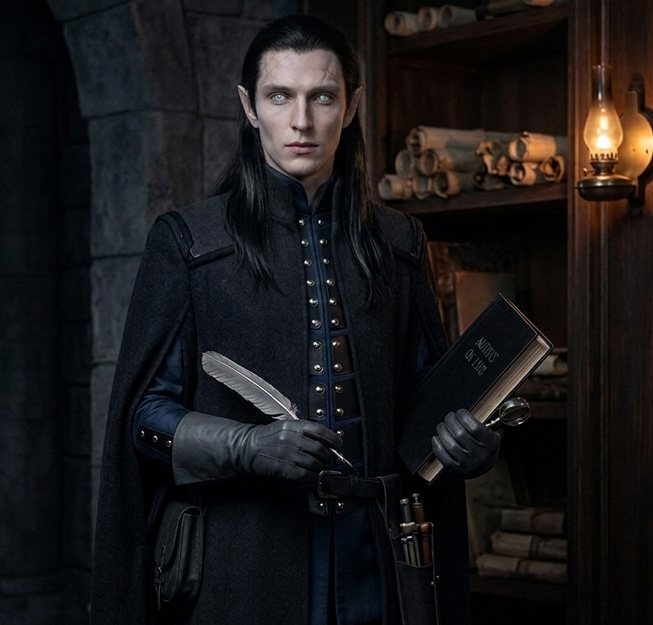
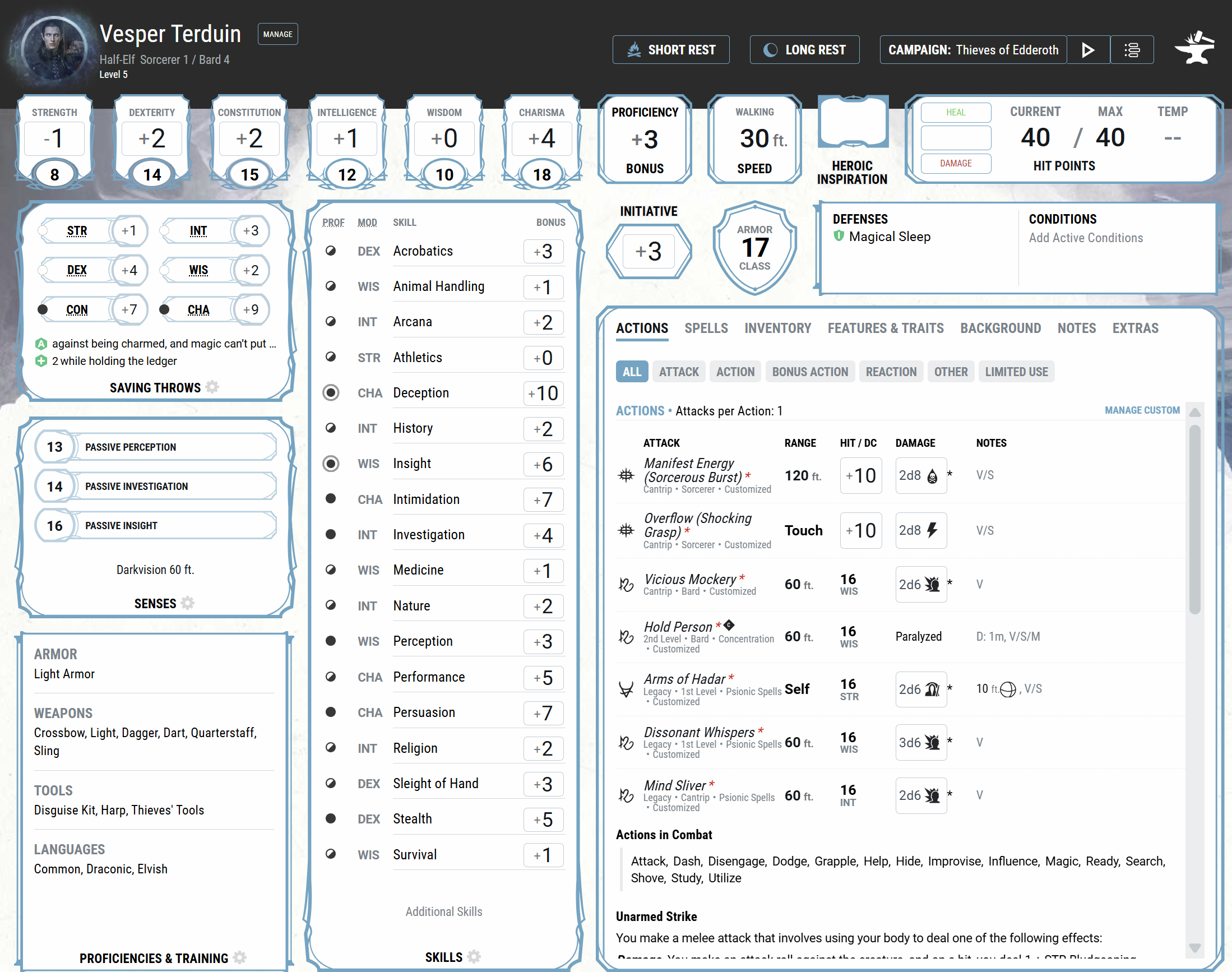
Vesper Terduin

VESPER


● The Zhentarim (The Cover): Vesper was recruited by the Black Network for his meticulous mind. He was a “Deep Archive Sleeper.” His job was to monitor the flow of information in Silverymoon and report on magical assets that the Zhents could seize or influence.


● The Pale Synod (The True Loyalty): While working for the Zhents, Vesper was”audited” by the Synod. They realized his Zhentarim training in espionage and coldcalculation made him the perfect Receiver.


● The Dynamic: He uses Zhentarim resources (safe houses, contacts, dead drops) to hunt for the Synod’s “Stagnant Capital.” The Zhentarim think he’s looking for leverage for them; in reality, he’s looking for the First Word. The Vault of Whispers (The Conclave) In Silverymoon, Vesper was a high-level archivist/sleeper agent in The Vault of Whispers within the Conclave of Silverymoon (the city’s great university of magic).


● The Vault of Whispers Job: Vesper was a cataloger of unidentified curiosities. This department handles artifacts that are too dangerous or too “silent” to be put on public display. It gave him the perfect excuse to spend years alone with ancient, dusty relics
without anyone questioning why he was staring at a stone shard for six hours.


● The Location: Skylla used a front company to ship the cache to the Vault of Whispers in Silverymoon for “appraisal and historical verification.”


● The Vesper Connection: As a Zhentarim Sleeper and Pale Synod Receiver, Vesper was the exact clerk assigned to process this “incoming shipment.” He was the one who was supposed to look at the stolen goods, sign the paperwork, and make them “legal” in
the eyes of the Conclave.


● Summary: Vesper was a Zhentarim Sleeper embedded as a Cataloger in Silverymoon’s Vault of Whispers. While secretly reporting magical assets to the Black Network, he was recruited by the Pale Synod to act as their internal “Receiver.” During Skylla’s heist, he intercepted The Ossified Tongue, an ancient artifact associated with Volukai. The shard bonded to his consciousness, hollowing out his mind to create a psionic “clean room” for Volukai’s whispers.


Aberrant Mind Transformation; When Vesper touched the Ossified Tongue of Volukai in the Silverymoon archives, it didn’t just
give him powers—it turned his brain into a tuning fork.

● The Pull: Even after Skylla vanished with the cache, the “Whispers” didn’t stop. They began to hum at a specific frequency that points toward Castle Edderoth.


● The Knowledge: The whispers aren’t just noise; they are cryptic messages from the disincarnate form of Volukai. Vesper now knows things he shouldn’t: specifically, that a Sword of Doom is currently sitting in the heart of Edderoth.


● The Mission: To The Pale Synod, a Sword of Doom is the ultimate “Liquid Asset.” To Volukai, it is a surgical instrument required to “re-stitch” his disembodied form into the material plane, or possibly even Vesper’s flesh. The Narrative Pivot: From Clerk to Seeker Vesper didn’t just “go” to Edderoth; he absconded.

  1. The Default: After the security breach in Silverymoon, the Zhentarim expected a report. Vesper gave them nothing. He realized the Black Network’s petty squabbles over gold were “statistically insignificant” compared to the return of the First Word.
  2. The Journey: He followed the magnetic pull of the whispers. Every mile closer to Edderoth he gets, the “Static” in his head clears, replaced by the cold, structural clarity of Volukai’s instructions.
  3. The Sword: He isn’t just looking for “an artifact”—he is looking for the specific blade that can return a dead god. He believes that by wielding a Sword of Doom while holding the Ledger of Final Reckoning, he can bridge the gap between the Pale Synod’s theory and Volukai’s physical return.

Timeline

  1. The Shipment: Skylla steals a cache from Edderoth and ships it to Silverymoon under a false merchant name (“The Amber Trade Guild”) to have it “verified” (laundered).
  2. The Audit: Vesper, working his day job at the Vault of Whispers, opens Case #882. He finds the Ossified Tongue.
  3. The Awakening: Proximity to the Tongue triggers his Aberrant Mind psionics. He begins to hear the “Whispers of Volukai.” He realizes this is the opportunity the Pale Synod has been hunting for centuries.
  4. The Theft: Before Vesper can alert his Synod handlers or his Zhentarim superiors, Skylla (disguised or using magic) raids the vault and takes the cache back.
  5. The Pursuit: Vesper is now tracking Skylla hoping to “repossess” the assets and complete the ritual that will make him the Vessel. But the whispers of Volukai fill his mind and direct him to Edderoth and the Sword of Doom.
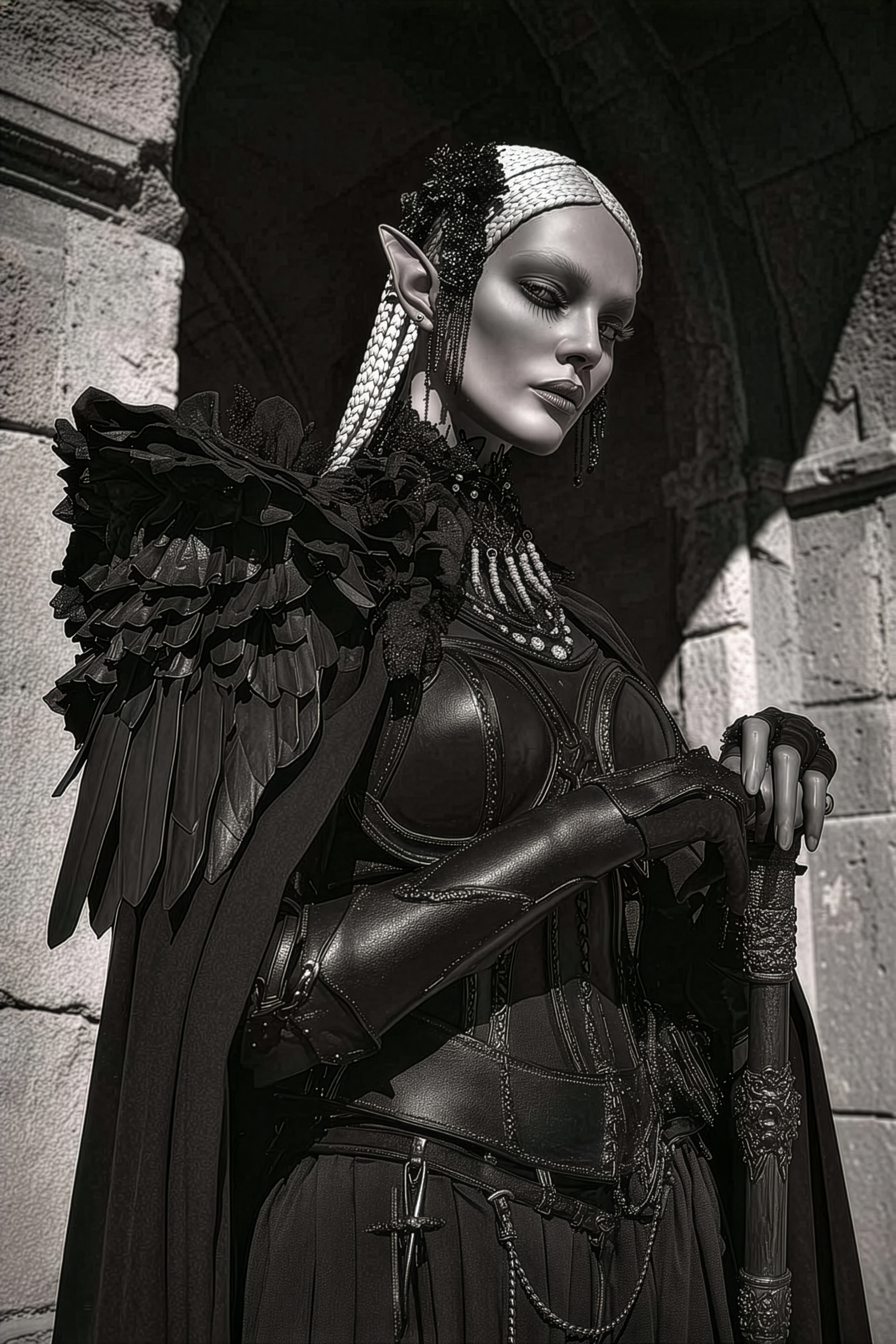
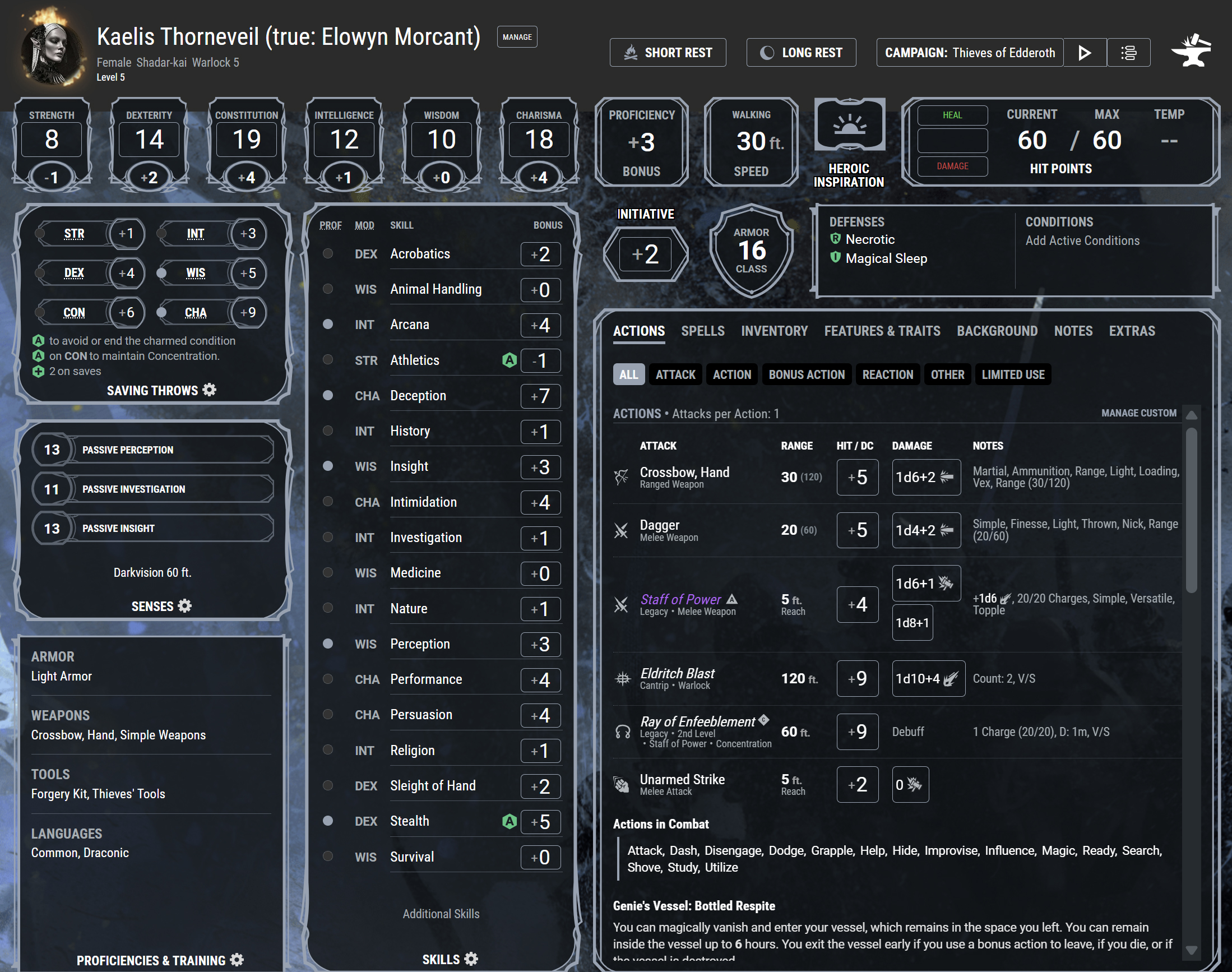
Kaeliss Thorneveil

PRIVATE RULE “You don’t take jobs that destroy things. You take jobs that relocate them—into the right custody. Stealing the Sword of Doom isn’t sacrilege; it’s proof that any lock is temporary, and some locks must be replaced with better ones.”

SOCIALIZATION / NAME USAGE In public / with guards / on paperwork: “Kaelis Thorneveil.” In private moments (rare): Elowyn Morcant. With the crew: Kaelis by default; Elowyn only if trust is earned.

True Name: Elowyn Morcant.
Function: Shadowfell custody agent (Raven-Queen-adjacent in ethos, not necessarily clerical).
Directive: Quarantine-class recovery.

Elowyn’s circle keeps a ledger the living do not see: what objects distort endings, what relics corrupt memory and fate, what tools turn death into a lever rather than a boundary.

The Sword of Doom is categorized as quarantine-class—not “destroy on sight,” not “lock away and forget,” but remove from circulation and seal in custodial containment.

Why the Shadowfell Cares

This sword is not merely evil. It is administratively catastrophic.

In Elowyn’s belief system, the Sword of Doom:

  • warps the integrity of identity (names, selves, remembered lives),
  • makes death behave incorrectly (too sticky, too transferable, too exploitable),
  • and spreads “ledger rot” through proximity and claim.

The Shadowfell is not concerned with morality. It is concerned with accounting—the boundary where a life ends and stays ended.

A dragon priest using the sword is a fate-breaking event. Severin’s pipeline is not just a villain’s plan; it is a mass-contagion vector.

How the Djinni Pact Serves This (and Why It’s Not a Contradiction)

The Ledgerwind/Keyhole Current does not share the Shadowfell’s ethic. It cares about motion: thresholds crossed, seals undone, custody inverted.

Elowyn exploits that.

Her pact’s wording is compatible with quarantine because quarantine is also a kind of movement:

  • remove the object from the wrong containment,
  • move it into the right one,
  • replace a failing lock with a better lock.

The patron is satisfied when the sealed thing moves. Elowyn is satisfied only when it is sealed correctly.

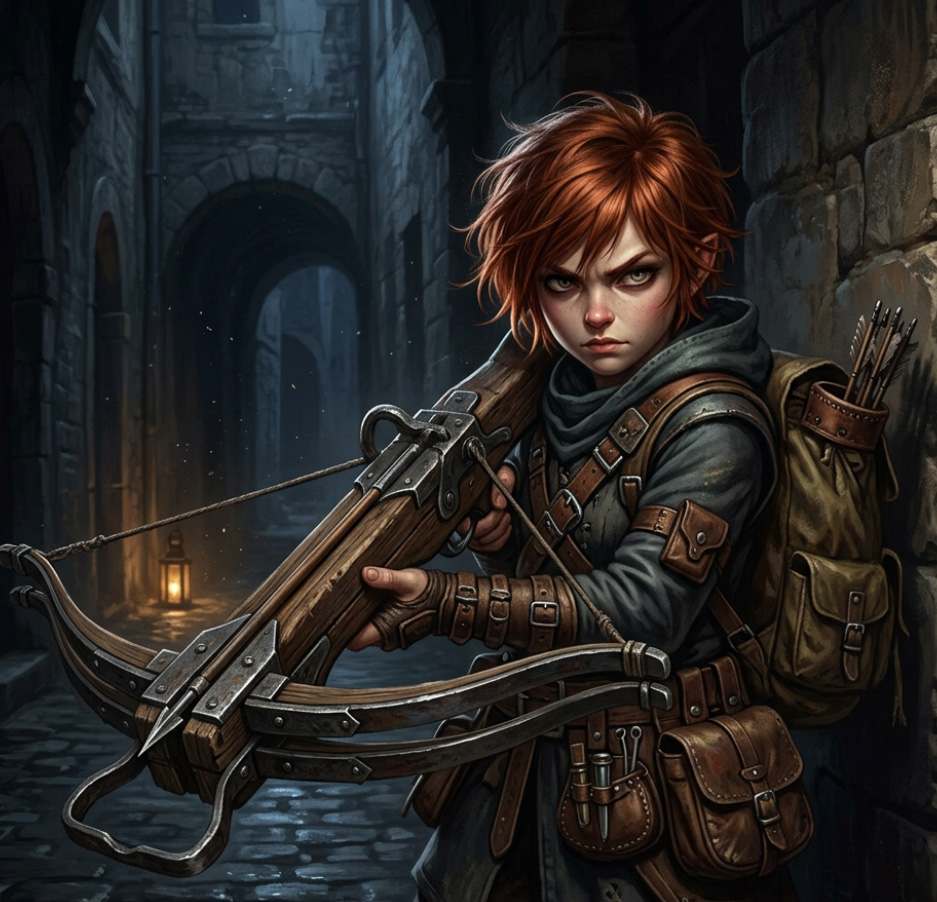
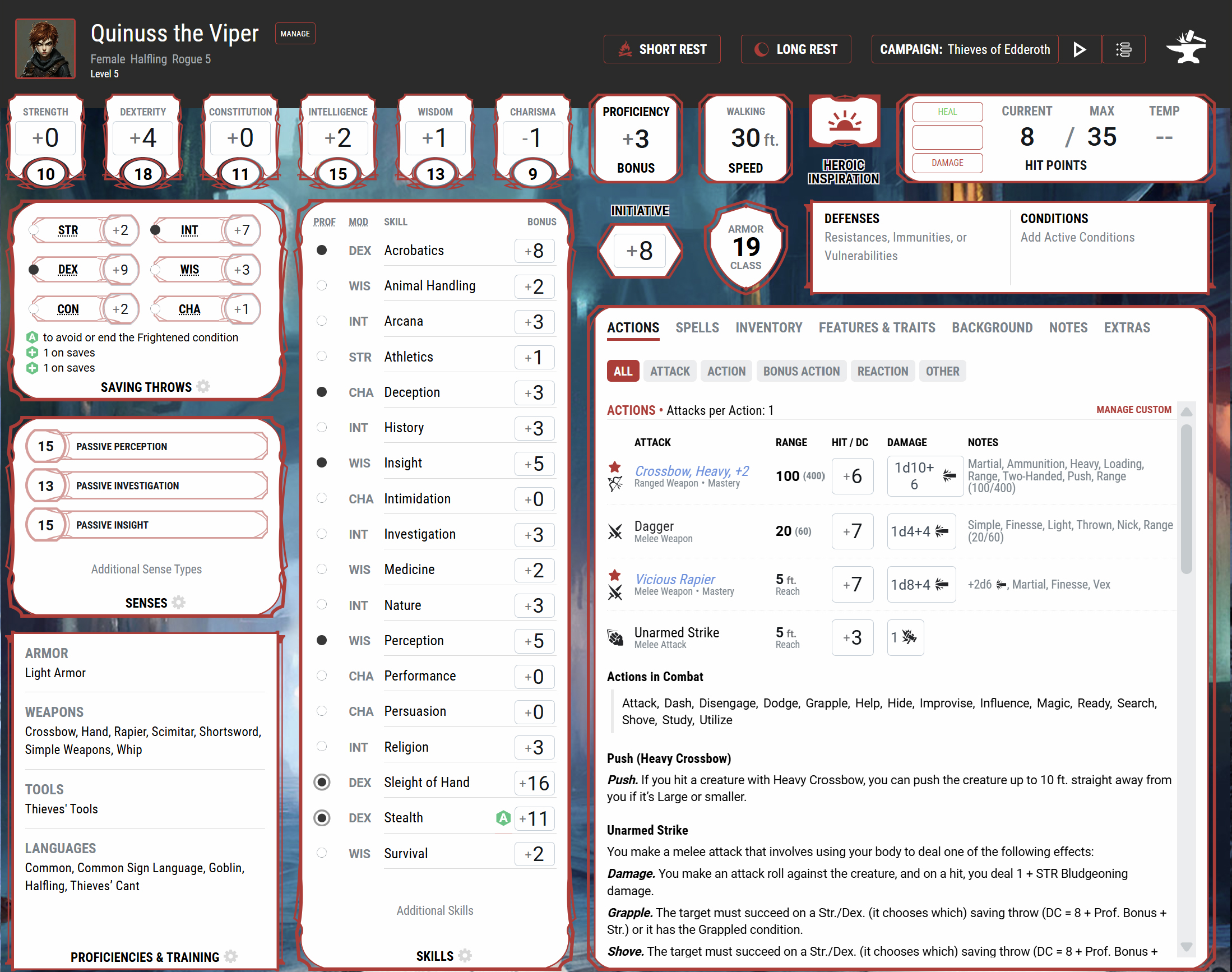
Quinuss the Viper
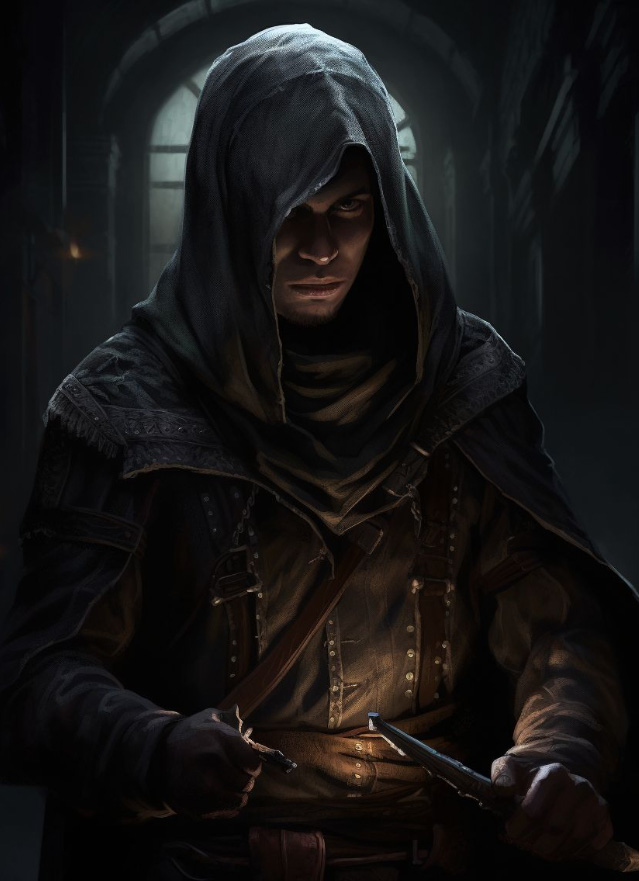
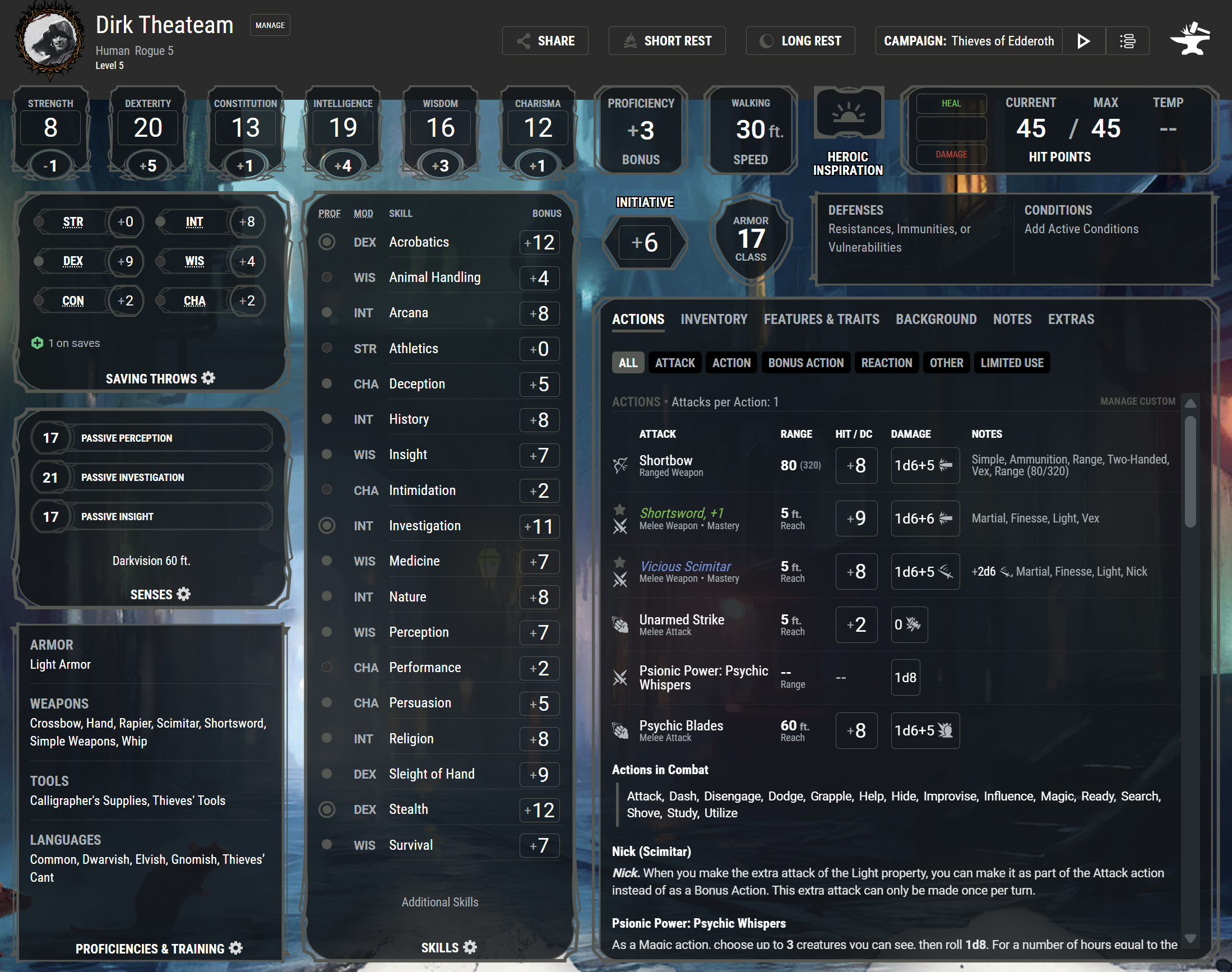
Dirk Theateam

Castle Edderoth

Posted in Uncategorized on September 22, 2026 by coyoteandthunder

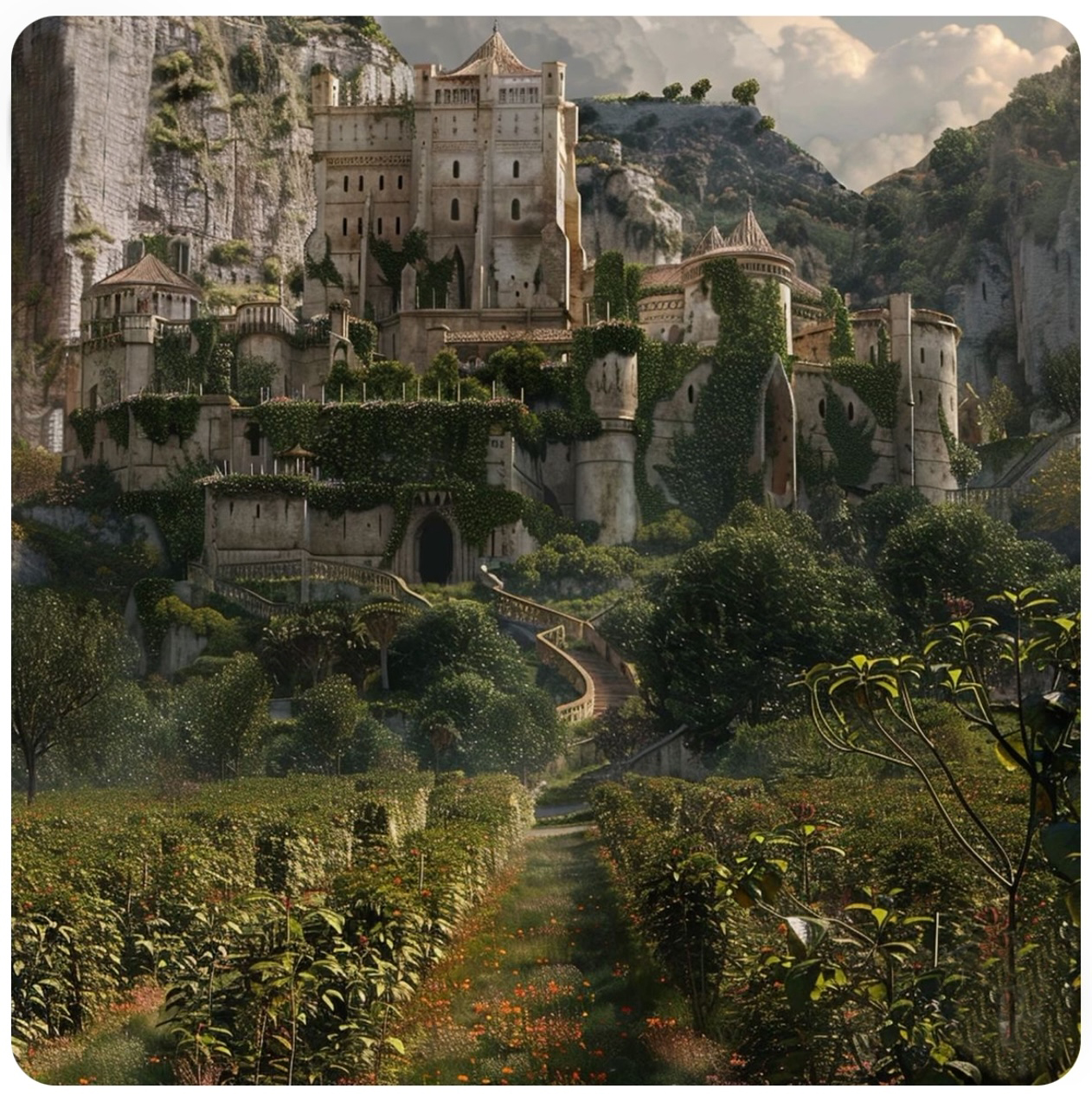
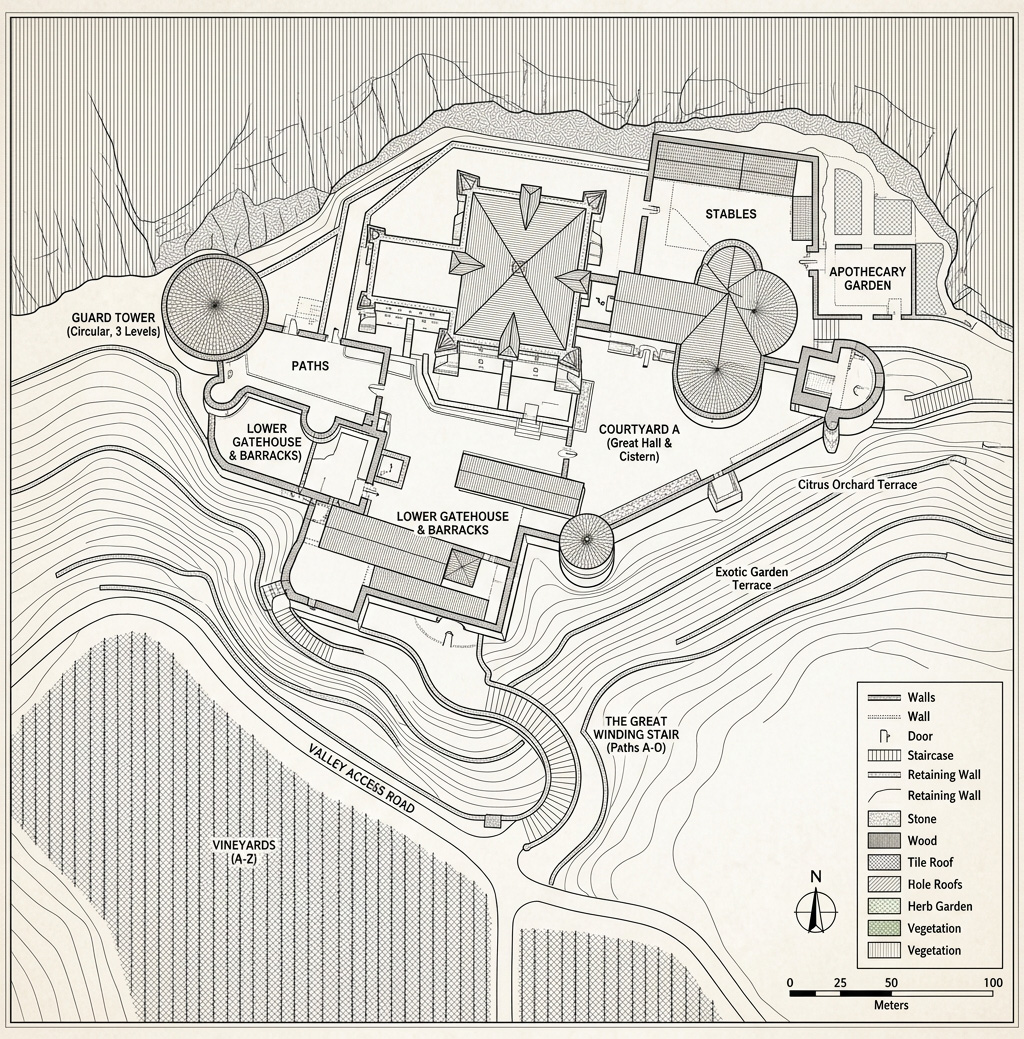
Castle Edderoth stands at the heart of Gildensong, an old seat of wealth and governance from which the fertile country of vineyards, river towns, fayholds and knightly roads has long been held together by something subtler than conquest. Generations of treaties with the fey, alliances with Silverymoon, the authority of the Bladesong Knights, and the accumulated fortunes of Gildensong’s great houses have made the castle less a fortress than the hinge upon which the whole country turns. Here Lady Vivianna holds her brilliant and dangerous court, where knights dine beside merchant lords, ambassadors, sorcerers and beings whose titles are older than the kingdom itself, and where even Alustriel Silverhand has sat at table while the affairs of the North were decided. Yet Edderoth has grown darker in recent years: Although Matildae, the deathless Lady of Black Dreams, has been banished from Vivianna’s court after the securing of Rendgray and the destruction of the avatar of Volukai, somewhere in the castle lies Rendlereign, the ancient Sword of Doom called the Sovereign of Ruin, that leaks evil through its halls. The power of Edderoth is both temporal and supernatural: whoever commands the castle does not merely rule Gildensong, but stands watch over some of the oldest bargains, treasures, and terrors upon which Gildensong was built.

The capital city of Gildensong, Edderoth, pop. 5,000
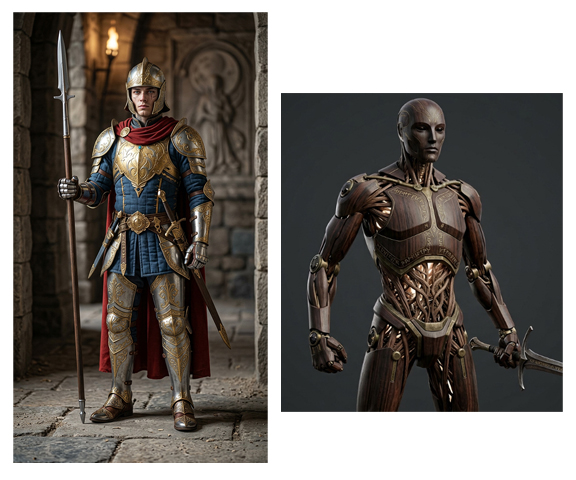
The city and the castle are well guarded by battalions of Bladesong squires and over a hundred, semi-sentient elven war golems, made of steel, porcelain and brass.

Elven War Golem Sentinel

Medium Construct, unaligned

Armor Class 18 (mithral-laced living wood)
Hit Points 114 (12d8 + 60)
Speed 35 ft.

STR 20 (+5)
DEX 14 (+2)
CON 20 (+5)
INT 4 (-3)
WIS 12 (+1)
CHA 5 (-3)

Saving Throws Con +8, Wis +4
Damage Resistances bludgeoning, piercing, and slashing from nonmagical attacks
Damage Immunities poison, psychic
Condition Immunities charmed, exhaustion, frightened, paralyzed, petrified, poisoned
Senses darkvision 60 ft., passive Perception 11
Languages understands Elvish and Common but cannot speak
Challenge 6 (2,300 XP)
Proficiency Bonus +3

Immutable Form. The golem is immune to any spell or effect that would alter its form.

Magic Resistance The golem has advantage on saving throws against spells and other magical effects.

Magic Weapons The golem’s weapon attacks are magical.

Elven Sentinel Protocol The golem appears as a motionless statue until a creature without proper authority enters a warded space or a magical alarm is triggered. It has advantage on initiative rolls when activating from this state.

Grace of the Bladesong The golem’s movements are unnaturally fluid. Opportunity attacks against it are made with disadvantage.

Actions

Multiattack The golem makes two longsword attacks.

Longsword Melee Weapon Attack: +8 to hit, reach 5 ft., one target. Hit: 10 (1d10 + 5) slashing damage plus 4 (1d8) radiant damage. If the target is concentrating, it makes the saving throw with disadvantage.

Radiant Arc (Recharge 5–6) The golem sweeps its blade in a wide arc of luminous energy.Each creature of its choice within 10 feet must make a DC 15 Dexterity saving throw. Failure: 18 (4d8) radiant damage and pushed 10 feet. Success: Half damage, no push

Reactions: Parrying Form. When hit by a melee attack, the golem adds +3 to its AC against that attack, potentially causing it to miss.

The Rending of Highspire

Posted in Gildensong on September 21, 2026 by coyoteandthunder

THE RENDING OF HIGHSPIRE

A Tale of Rainmark

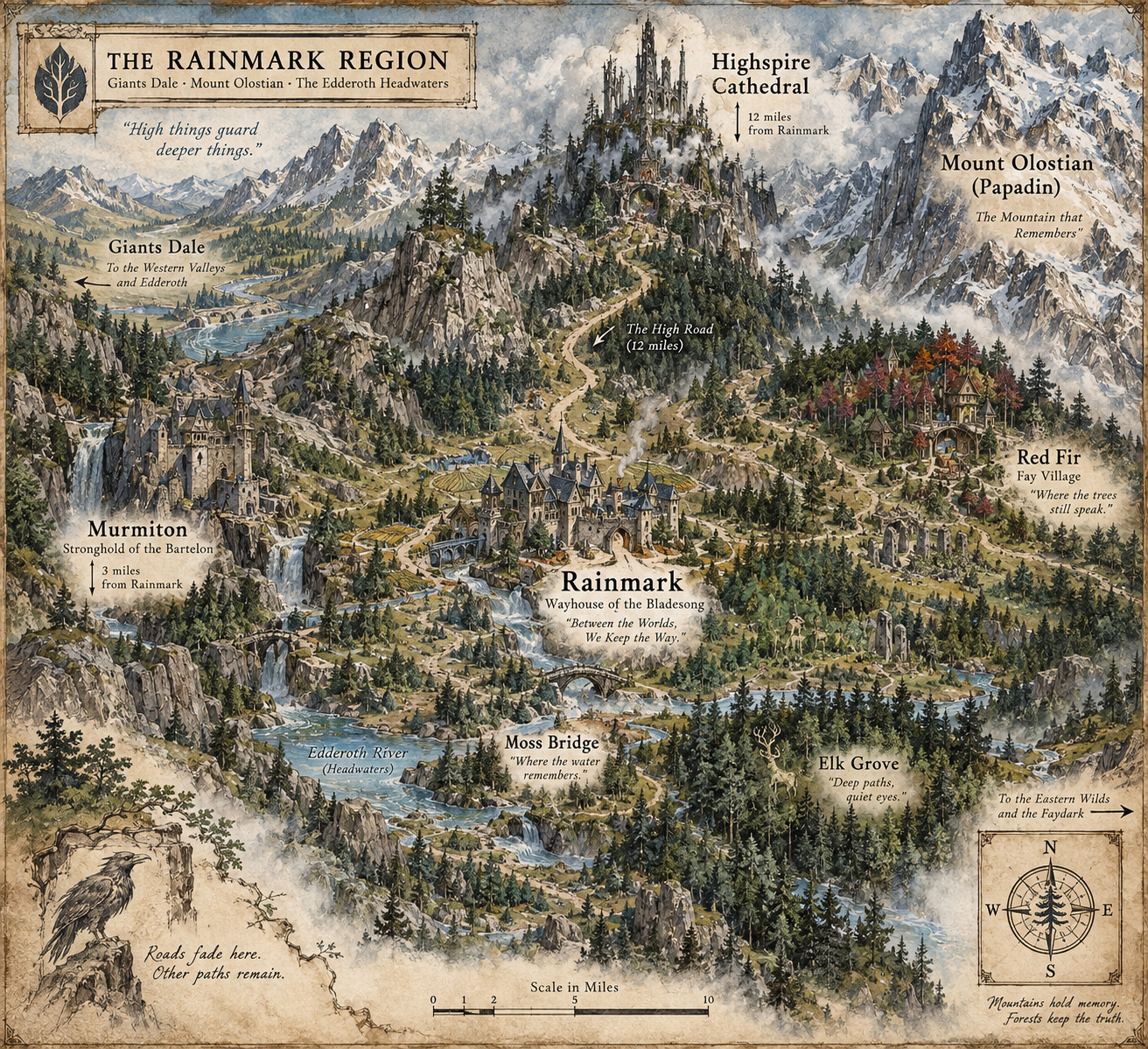
In Gildensong’s northernmost country, where the vineyards have long since surrendered the hills to black oak and pine, where granite and snow surround expansice high meadows that give pasture to mighty herds of elk, there stands the stronghold called Rainmark. It was one of the wayhouses, in the rolls of the Bladesong Knights, though wayhouse is an old word and misleading. Rainmark was no roadside inn. It is a fortress, a village, a granary, a refuge, a school of arms and, to those who had been born beneath its steep blue roofs, simply home.

Rainmark stands where the upper waters of the Edderoth gather from a hundred nameless springs between Giants Dale and the great mountain Olostian, which the shepherds and charcoal-burning goliath tribes have called Papadin since before any knight of Gildensong had ridden north.
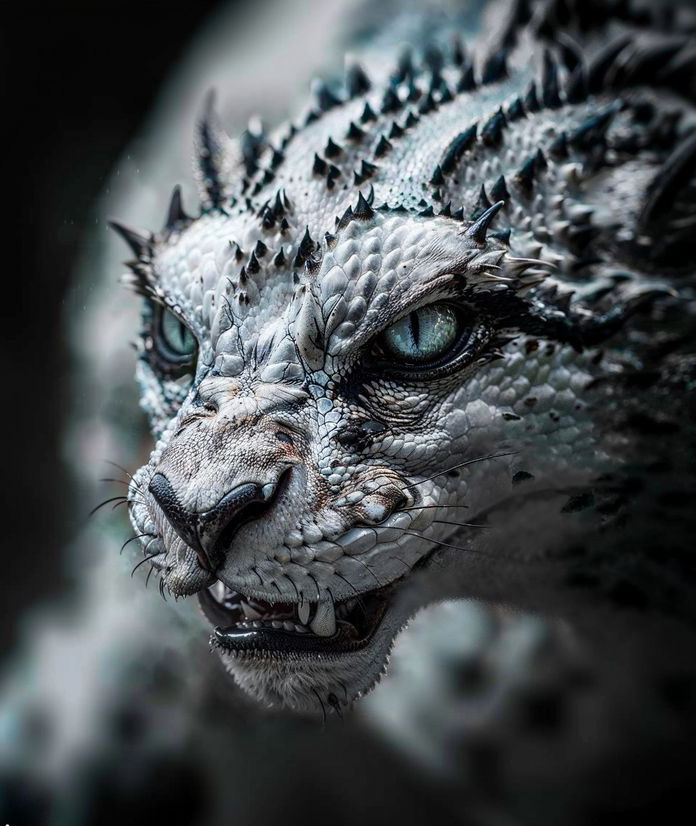
RAINMARK

Papadin is a mountain that makes its own weather. Clouds come to it when the encompassing sky is empty. Thunder walks its western shoulders in summer. Snow remains in its northern gullies when the valleys below are loud with insects and warm with wine. There were caves in Papadin that have never known sunlight and little alpine meadows that flower for only a fortnight each year. The people of Rainmark know these things as well as they know the rooms of their houses. They know where the marmots emerge in spring. They know which slopes the mountain dragons favored when the morning thermals begin. They know where not to whistle after sunset. And they knew that beyond the last stone markers east of Rainmark the world becomes less than certain.

HIGHSPIRE

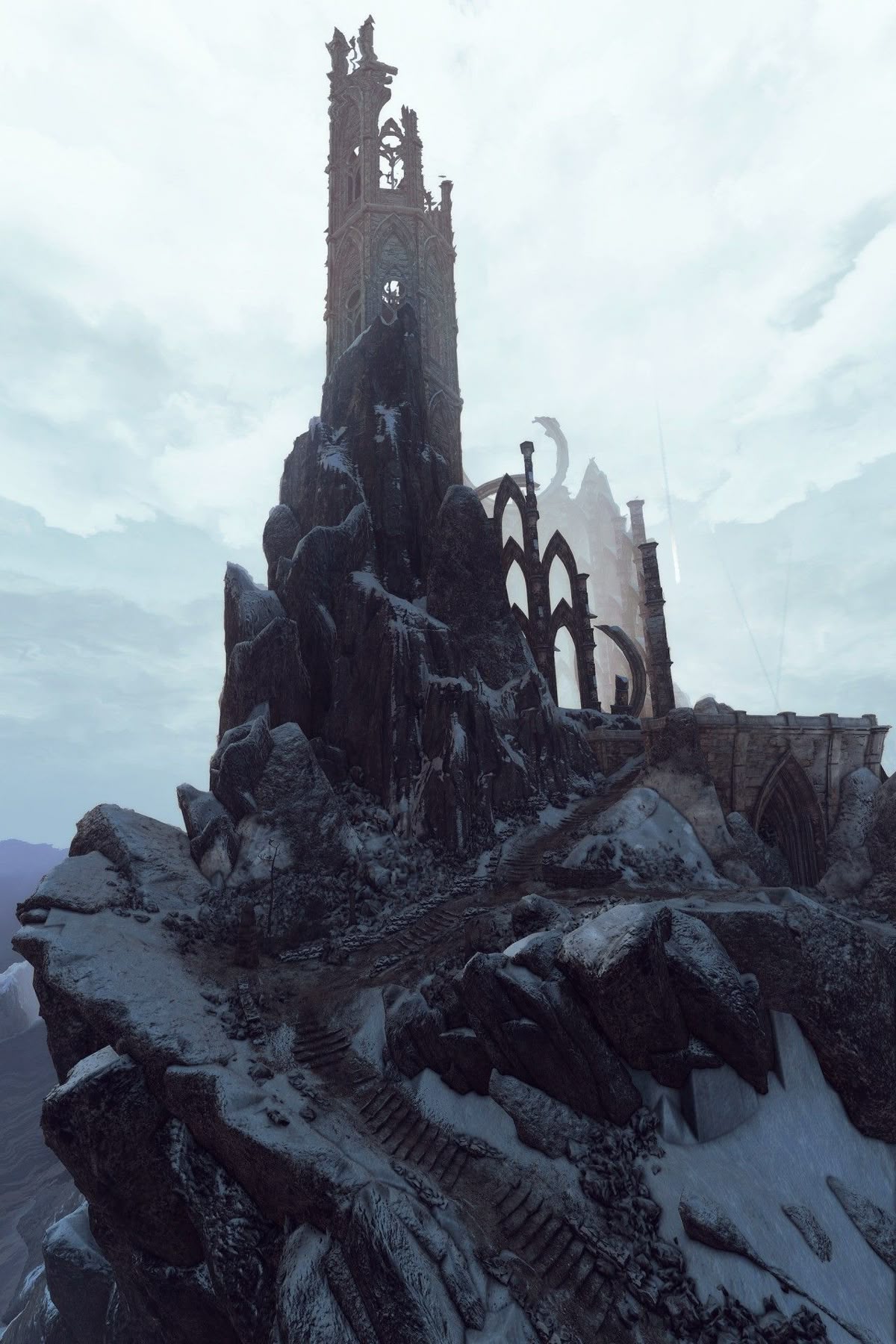
For there begins the mountain fayhold. Its gate, if you can call it that, is Highspire Cathedral. Highspire stands upon a black promontory above the Edderoth headwaters, a ruined edifice of such impossible height and delicacy that no one in Rainmark believes mortal hands had built it. Its bell tower remains though there had been no bell within it for perhaps a thousand years. Great lancet windows open upon nothing. Arches stand without walls. Snow passes through its nave. Mountain swallows nest in the broken galleries in summer, and in winter the stars can be seen through the roof. There, where the mortal mountain touched another country, dwelt Yultha.

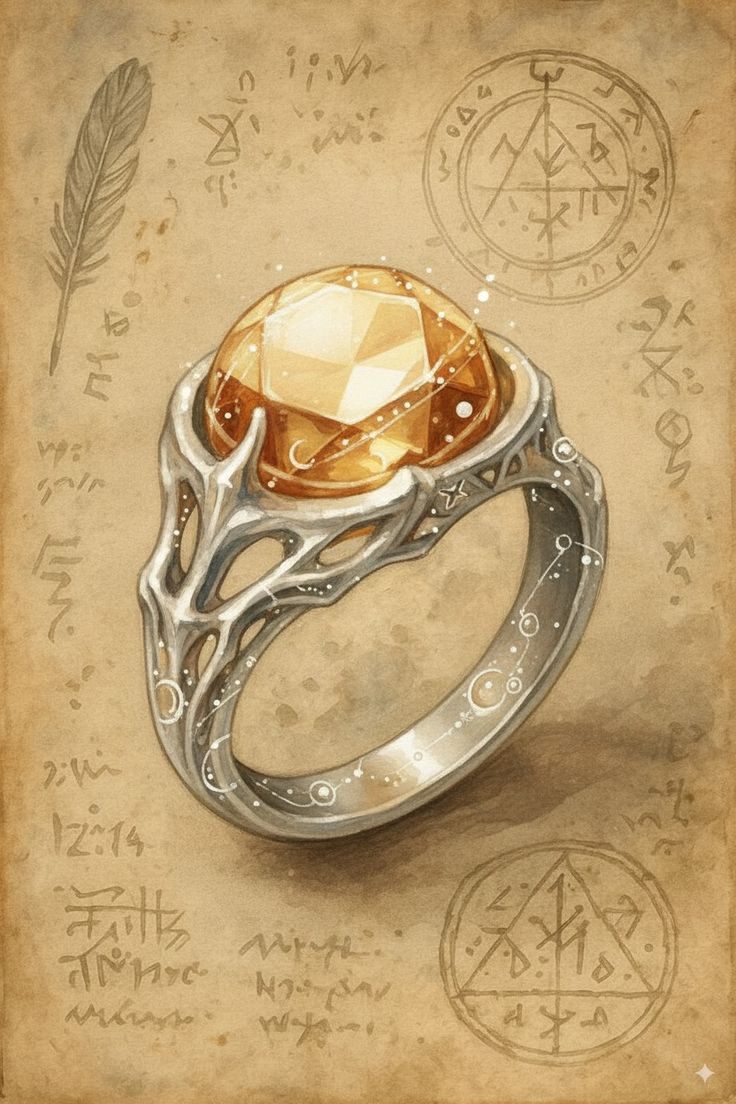
And on the last quiet morning before the war came to Rainmark, Aelyr Glasshair dreamed that Highspire had a bell again. She heard it ring three times. Then she woke. She lay still for a while. Outside her narrow chamber the mountain wind pressed softly against the shutters. It was still dark. Rainmark slept around her. Aelyr raised her right hand. Celestiaman caught the faint light. The ring was ancient beyond the reckoning of House Glasshair, fashioned of silver so pale that it sometimes appeared white. Upon it rested a great amber stone, golden at its center and almost clear at its edges. Tiny points of light moved within the gem. They were not reflections.

AELYR

“You heard it,” Aelyr whispered. For a moment nothing happened. Then warmth passed through her finger.

I heard what you heard. The voice of the solar did not enter through her ears. It arrived instead as a thought already remembered. Aelyr sat up. Her hair fell around her shoulders, nearly white in the darkness.

“Was it a warning?” Everything is a warning if fear is permitted to interpret it. “That sounds very wise.” You are annoyed with me. “I have been awake for less than a minute.” You were annoyed with me yesterday. “That saves time.” A warmth passed through Celestiaman that Aelyr had learned, over many years, to recognize as amusement.

CELESTIAMAN

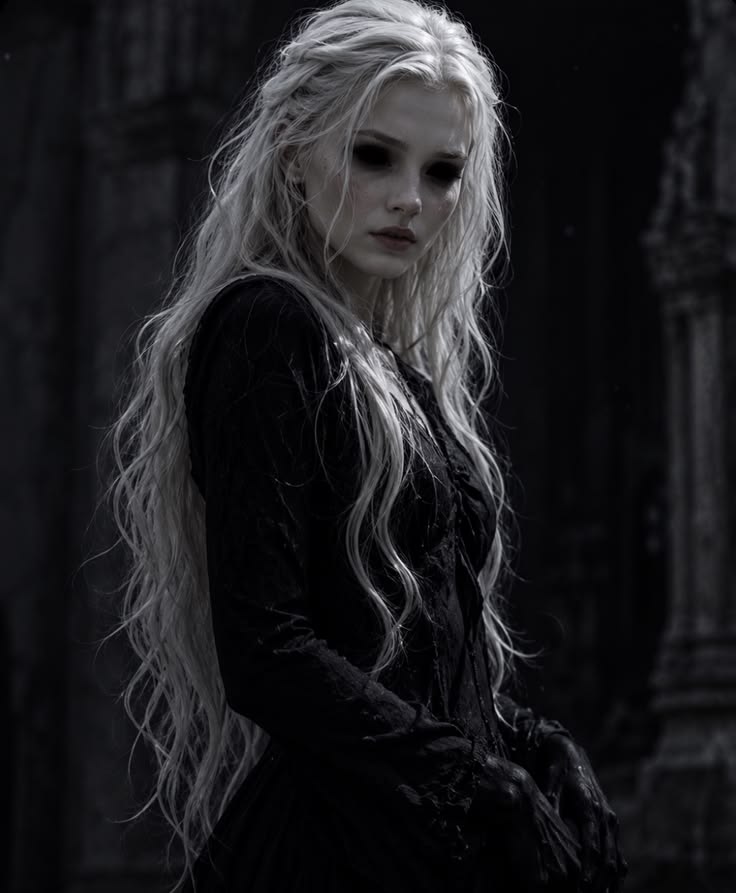
She smiled despite herself. It was a very small smile. People at Rainmark had not seen Aelyr Glasshair smile in a year. She rose and dressed. She wore black most days now, although no rule of the Bladesong order required it. Beneath a long dark coat she buckled a narrow sword belt and fastened the silver clasp of her office at her throat. She wore no cosmetics and little ornament. Her hair she left loose.

Once, someone had loved her hair loose. She kept it that way after his death. She did not know whether this was remembrance or defiance. Perhaps there was no difference. Her village was gone too. She seldom dreamed of its destruction anymore. Grief had ceased to be an event in her life and become one of its climates instead. It accompanied her without preventing anything. She could mourn while reading an inventory. She could miss the dead while calculating winter grain. She could remember her lover’s hands while ordering three riders into danger. This had surprised people who did not understand sorrow. They had expected it to make her foolish. It had made her exact.
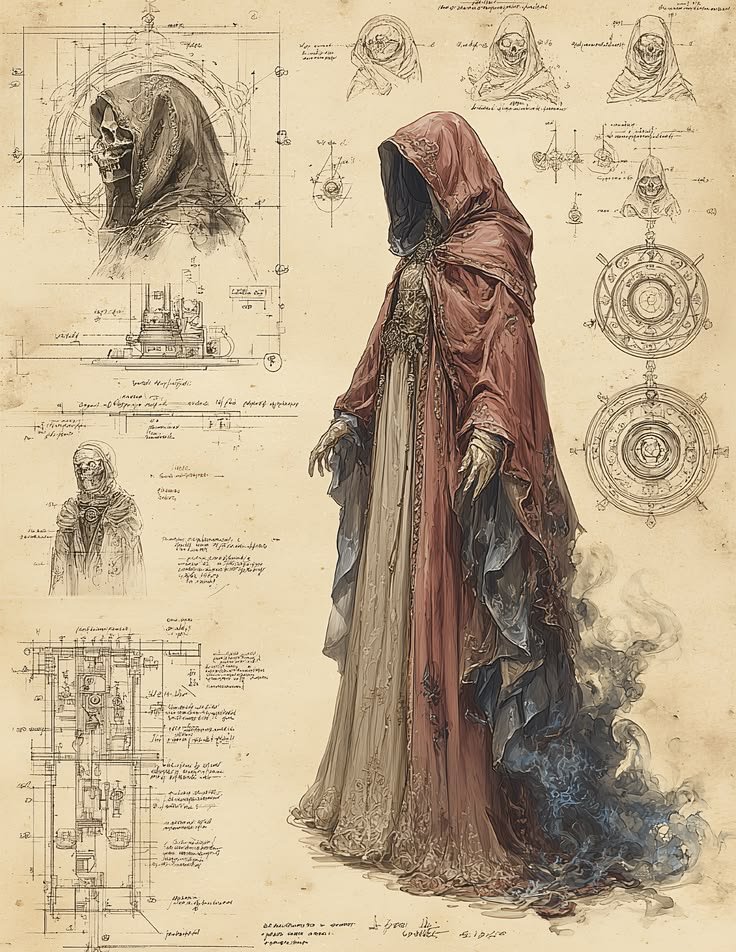
HEMETH

By sunrise the Steward Knight was in the lower hall arguing with a dwarf.“You have lost six barrels of lamp oil,” said Hemeth Ironfold.

“I have not lost anything.”

“Six.”

“They were transferred.”

“Without appearing in my ledger.”

“That is because it is my ledger.”

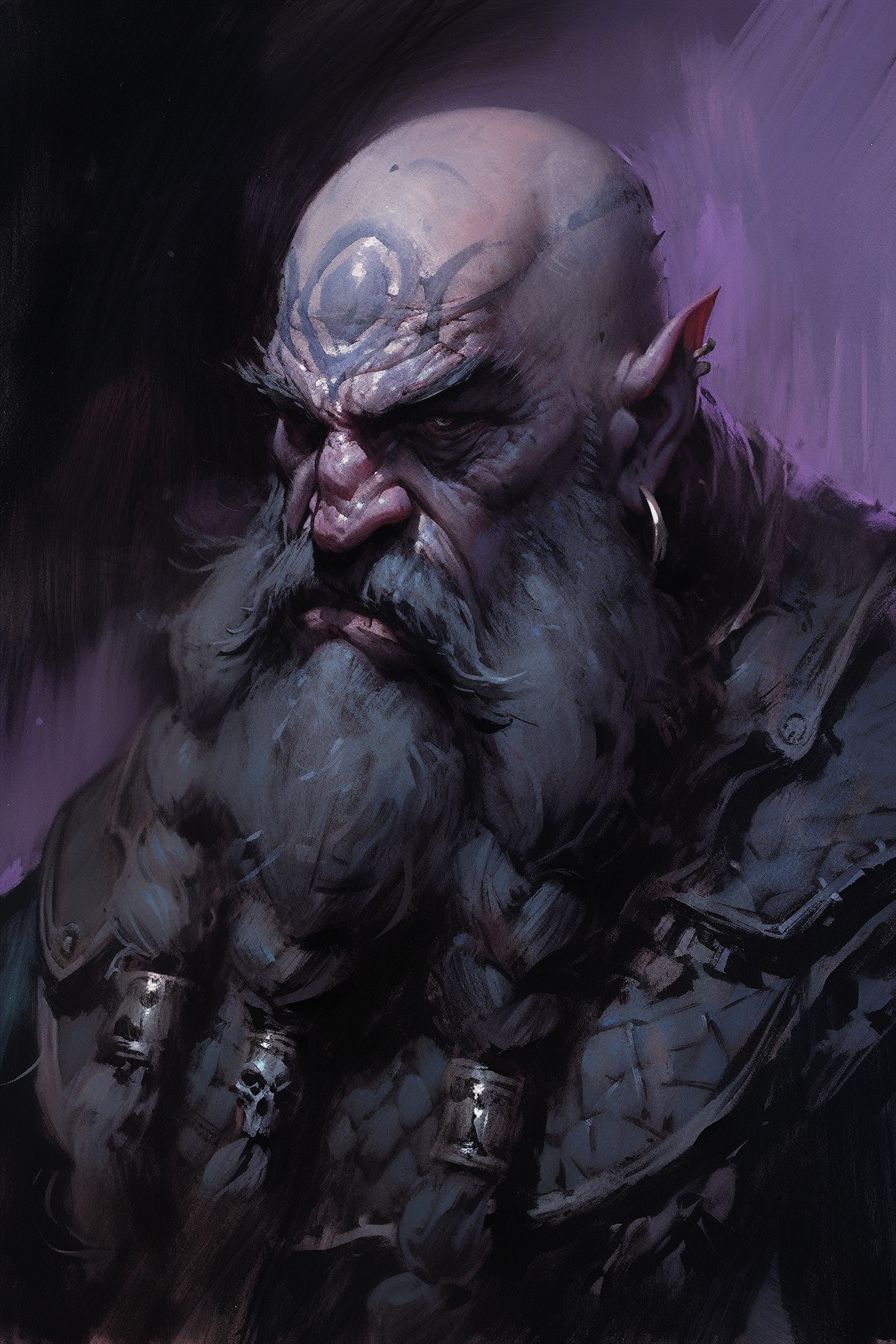
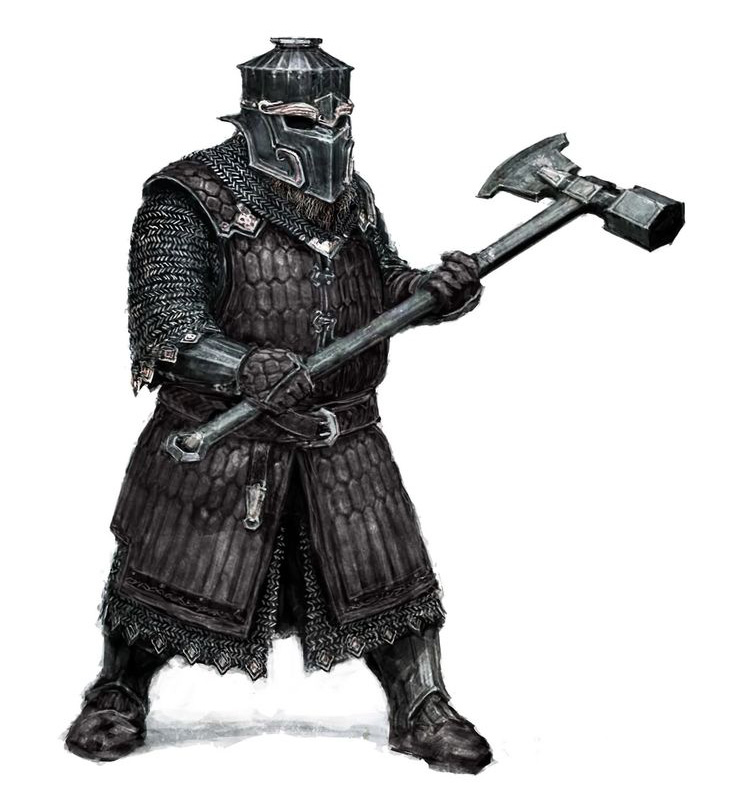
Hemeth looked down at her. This was an impressive achievement because Hemeth Ironfold was not tall. He possessed, however, the dwarven capacity to make height seem an administrative error committed by other races. His head was bald and immense, his beard iron-gray and divided into two heavy forks bound in black silver. A faded blue device had been tattooed upon his forehead in his youth. His armor was dark, battered and meticulously maintained.

Twenty-five Bartelon dwarves served beneath him. They constituted nearly the whole standing army of Rainmark. Hemeth was also, as he reminded everyone whenever useful, the only dwarf ever admitted among the Bladesong Knights. Aelyr suspected he reminded himself more often than anyone else.

“The oil went to Murmiton,” she said.

Hemeth frowned. “I live at Murmiton. I would have noticed six barrels of oil arriving at my own stronghold.”

“They did not arrive by road.”

Hemeth’s eyes narrowed.

“Oh, no.”

“Oh, yes.”

“You used the book.”

“I used the book.”

“For lamp oil?”

“For six barrels of lamp oil.”

Hemeth stared at her. “Aelyr, your ancestors created a magical portal network between the mortal world and the hidden dominions of the fey.”

“That is broadly correct.”

“You possess a book capable of negotiating passages through the walls of reality. And you used it to move lamp oil.”

“The north stair at Murmiton needed lamp oil.” Hemeth opened his mouth. Someone laughed behind them. Gaeema had entered.

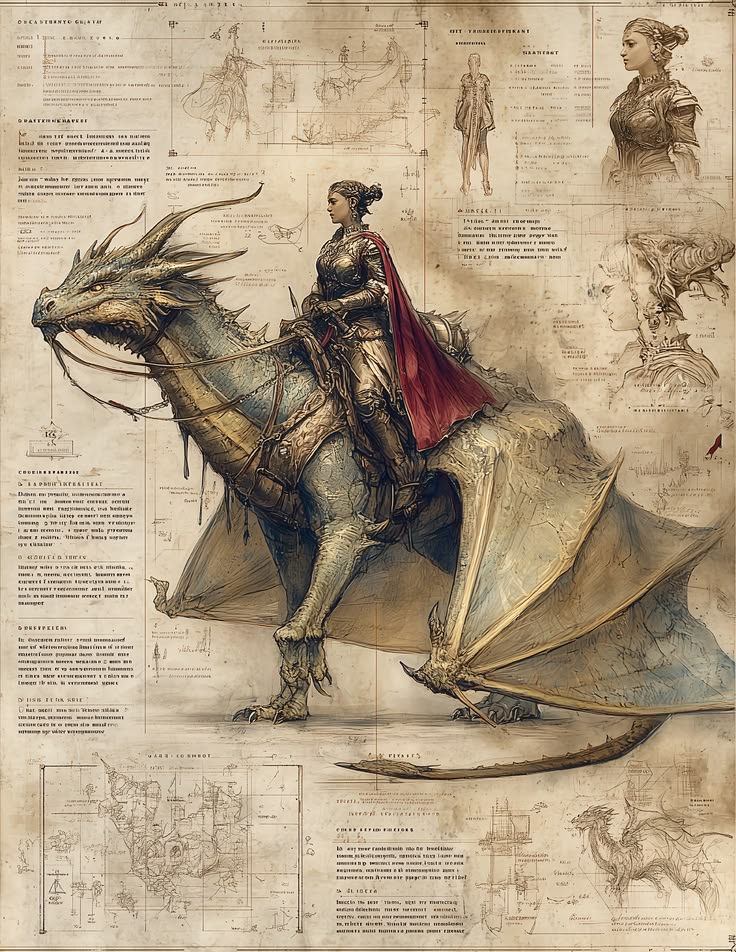
GAEEMA & HAMMERWING

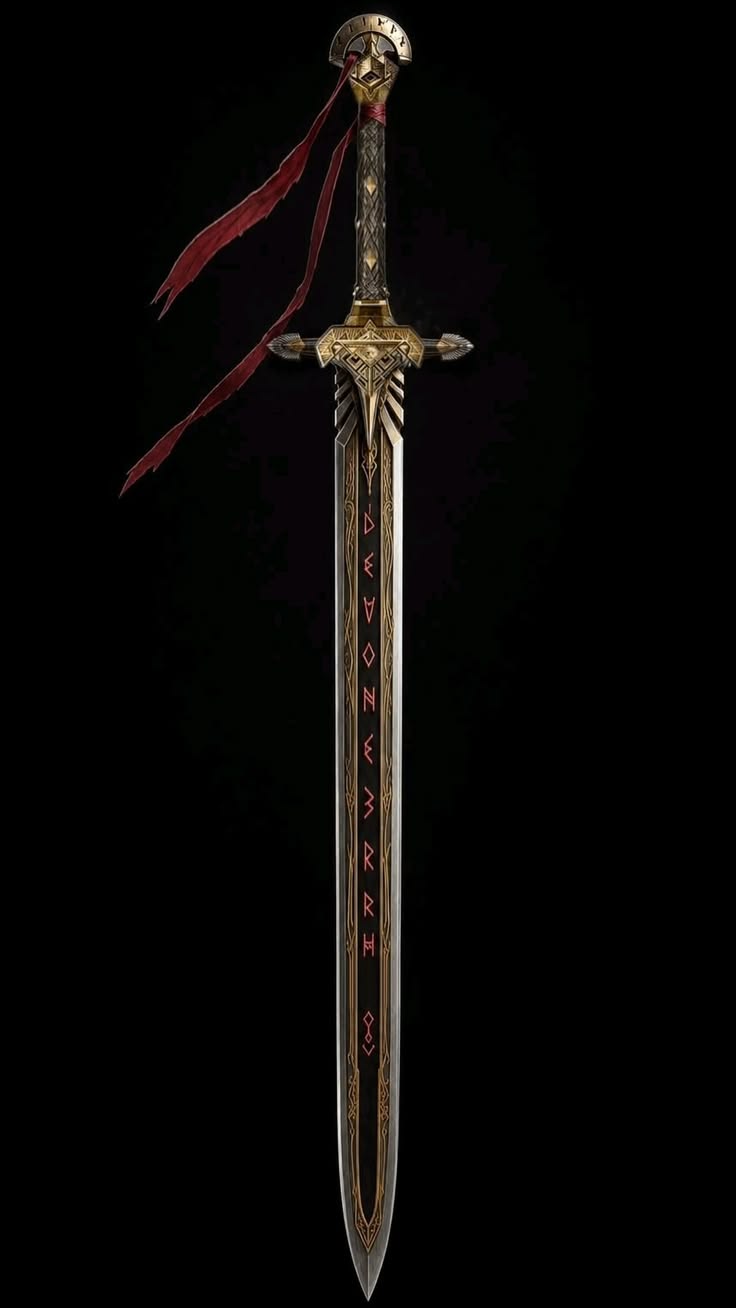
She wore riding leathers beneath a long coat of bronze-scaled armor, and her dark hair had been braided tightly behind her head. She carried her helmet beneath one arm. Across her back rested Ontakye. The sword was long and almost black, its blade narrow and severe, marked from guard to point with red characters of an alphabet older than Gildensong. When drawn, those characters shone and lightning crawled between them.

“Twenty-seven years,” Gaeema said, “and you still think you can win an argument with her.”

“I have won arguments with her.”

“When?”

Hemeth considered.

“That is beside the point.”

Gaeema kissed Aelyr lightly upon the temple as she passed. She had done this since they were girls. Rank had never cured her of it.

“Good morning, little glass.”

“Don’t call me that in front of the garrison.”

“I have called you that in front of the High Captain.”

“My sister already thinks you are insufferable.”

“Your sister is correct.”

Hemeth grunted. “Finally, common ground.” Gaeema grinned.

Aelyr looked at her friend.

“Where is Hammerwing?”

“Eating.”

“Of course.”

“He claims flying requires enormous quantities of goat.”

“Hammerwing claims everything requires enormous quantities of goat.”

“He is a mountain dragon. It is an internally consistent philosophy.”

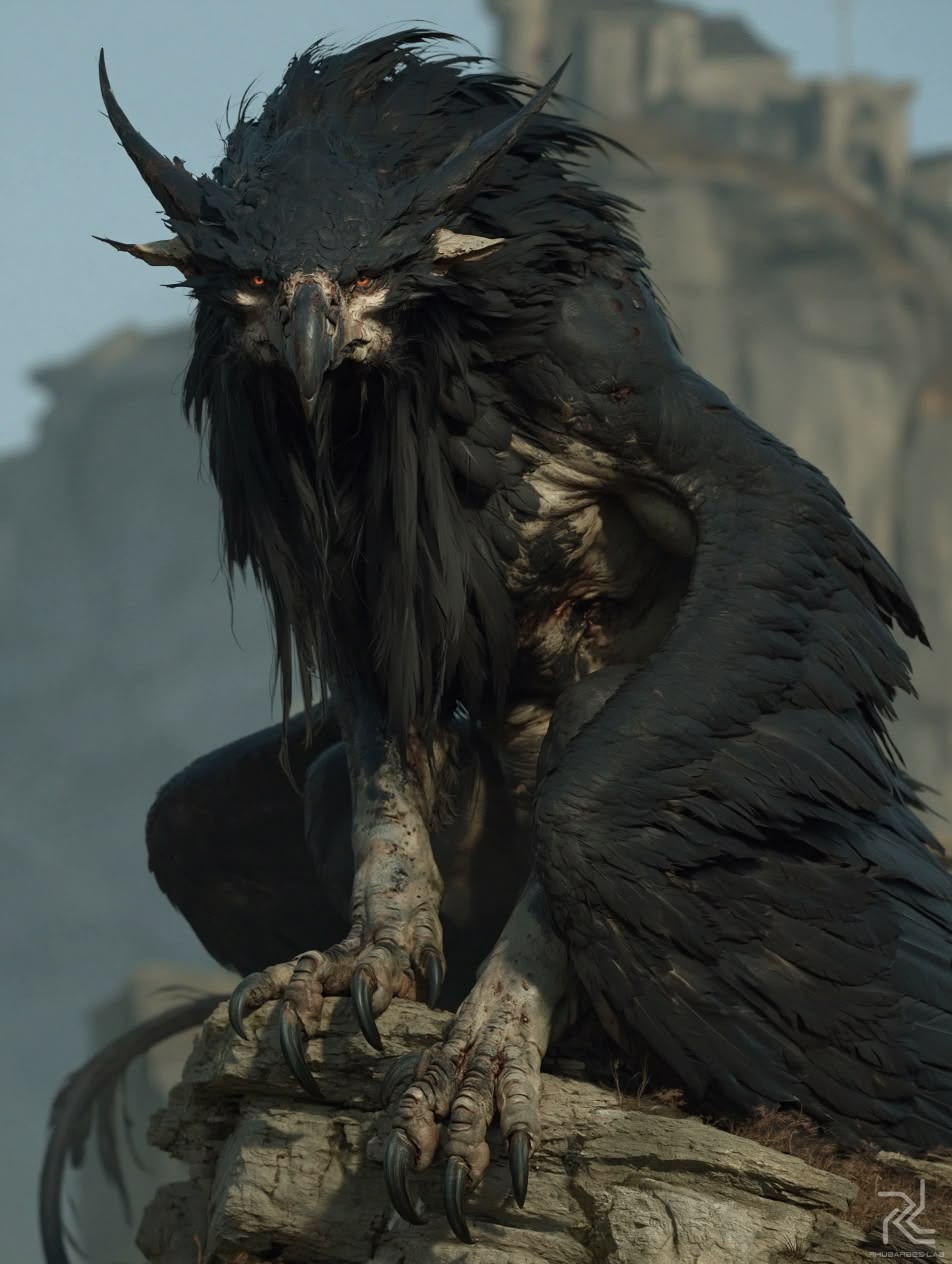
Aelyr almost smiled again. Then the outer bell rang. Once. Not alarm. Arrival. A moment later a shadow crossed the windows. Gaeema looked upward. “That will be our ghost.” They went outside. Fastlight descended into Rainmark without sound. The griffon was black.

At least most people called him a griffon, although the resemblance was imperfect. His head was more owl than eagle, broad and feathered, with two long hornlike tufts swept backward from the crown. His hooked beak was black, his eyes ember-red, and his foreclaws were enormous. Great feathers descended from his jaw like a beard.

FASTLIGHT

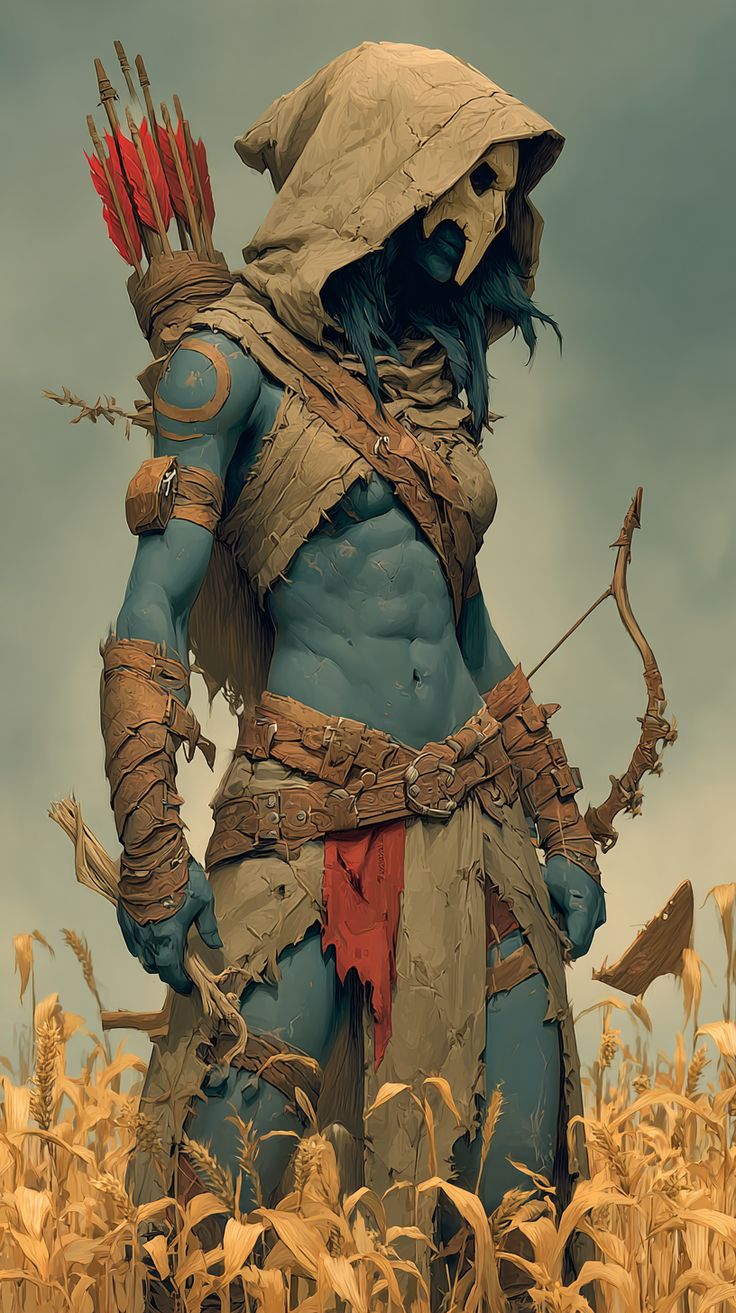
Upon his back sat Itnahai. She dismounted before Fastlight had entirely folded his wings. The dark elf wore the colors of no order. Her clothes were layered in gray-brown cloth, leather, and weathered linen, with a ragged hood drawn over blue-black hair. Her skin had the blue cast of deep water beneath moonlight. A bow rode across her back.

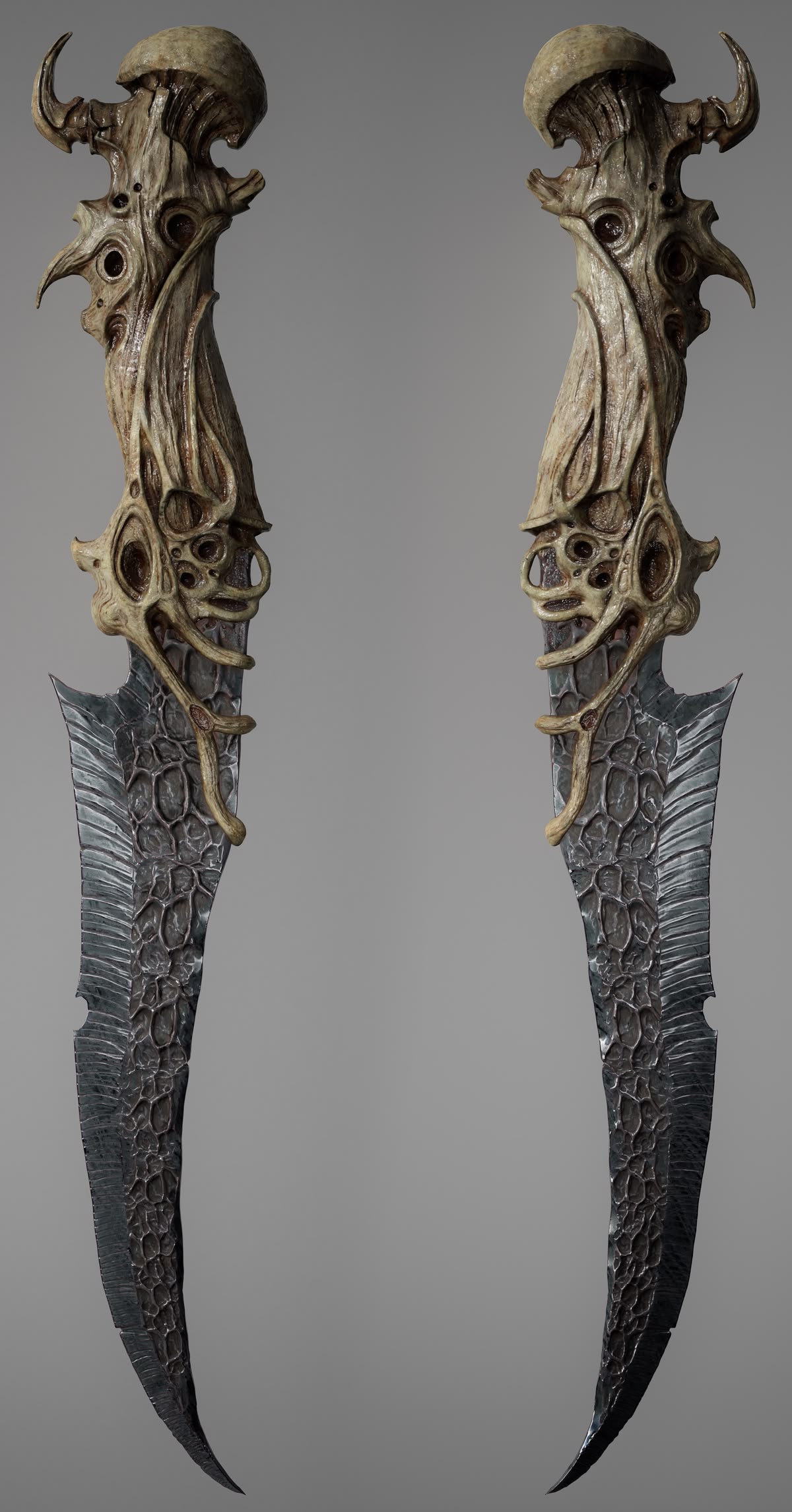
At her hips hung the Outworld Blades. They were ugly things. Each curved backward like the jawbone of some extinct animal, its metal dark and strangely textured, while the grips appeared almost grown rather than made. Hemeth disliked looking at them.

THE OUTWORLD BLADES

He had once declared that any weapon which made a dwarf uncertain whether it had been forged ought to be thrown into a volcano. Itnahai had replied that the volcano might throw it back. Hemeth had disliked them more thereafter.

ITNAHAI

“You’re early,” said Aelyr.

“No,” Itnahai answered. Her voice was quiet.

“You’re late.” Gaeema’s humor vanished.

They had all known one another too long to require further ceremony.

“What did you see?” Aelyr asked.

“Nothing.”

Hemeth folded his arms.

“Then this has been a profitable morning.”

Itnahai looked at him.

“The fay are gone.”

That silenced him. Aelyr stepped closer. “Gone where?”

“I don’t know.”

“Which ones?”

“All of them.” She pointed east.

“The laughing thing at Moss Bridge. The three sisters beneath Red Fir. The little lights above Elkwater. The old man who lives backward in the spring. Gone.”

“Perhaps they’ve crossed deeper into the hold,” Gaeema said.

“They have.”

“How do you know?”

“Because they told me.”

Aelyr watched her.

“When?”

“Last night.”

“And today?”

“Today nothing will answer.”

Celestiaman warmed upon Aelyr’s finger. She looked toward Papadin. High above Rainmark, clouds were gathering around the mountain. “Yultha?” she asked.

Itnahai shook her head. “I went as far as Highspire.”

“You crossed the markers alone?”

“I always cross the markers alone.”

“Did you see her?”

“No.”

That troubled Aelyr more than anything else. Yultha had guarded Highspire longer than Rainmark had existed. She was proud, strange, sometimes cruel in the careless manner of old fey, but she had never abandoned her post.

“What did you see?”

Itnahai’s eyes shifted toward the mountain. “Tracks.”

“What kind?”

“I don’t know.”

Hemeth sighed. “You are having difficulty with nouns today.”

Itnahai ignored him. “Four feet when it wished to run. Two when it wished to walk. Claws. Something like a cat. Something like a dragon.”

Gaeema’s hand moved unconsciously toward Ontakye. “Draconian?”

“No.”

“How certain?”

“Entirely.”

Aelyr asked, “Where did the tracks go?”

“Highspire.”

No one spoke. Far above them something moved among the clouds. Hammerwing. The mountain dragon circled once, bronze wings catching the morning sun.

Aelyr looked at her three oldest companions. “Gaeema, put Hammerwing in the air. Circle Highspire but do not cross into the fayhold.”

Gaeema nodded.

“Hemeth, bring twelve Bartelon up from Murmiton. Quietly.”

“Twelve?”

“If I wanted twenty-five I would have said twenty-five.”

The dwarf’s mouth twitched.

“And me?” Itnahai asked.

“You’re coming downstairs.”

That surprised her. “To the matrix?”

“Yes.”

Hemeth muttered something in Dwarvish.

Aelyr turned toward him. “What?”

“I said this morning has become too interesting.”

“Then pray it becomes dull again.”

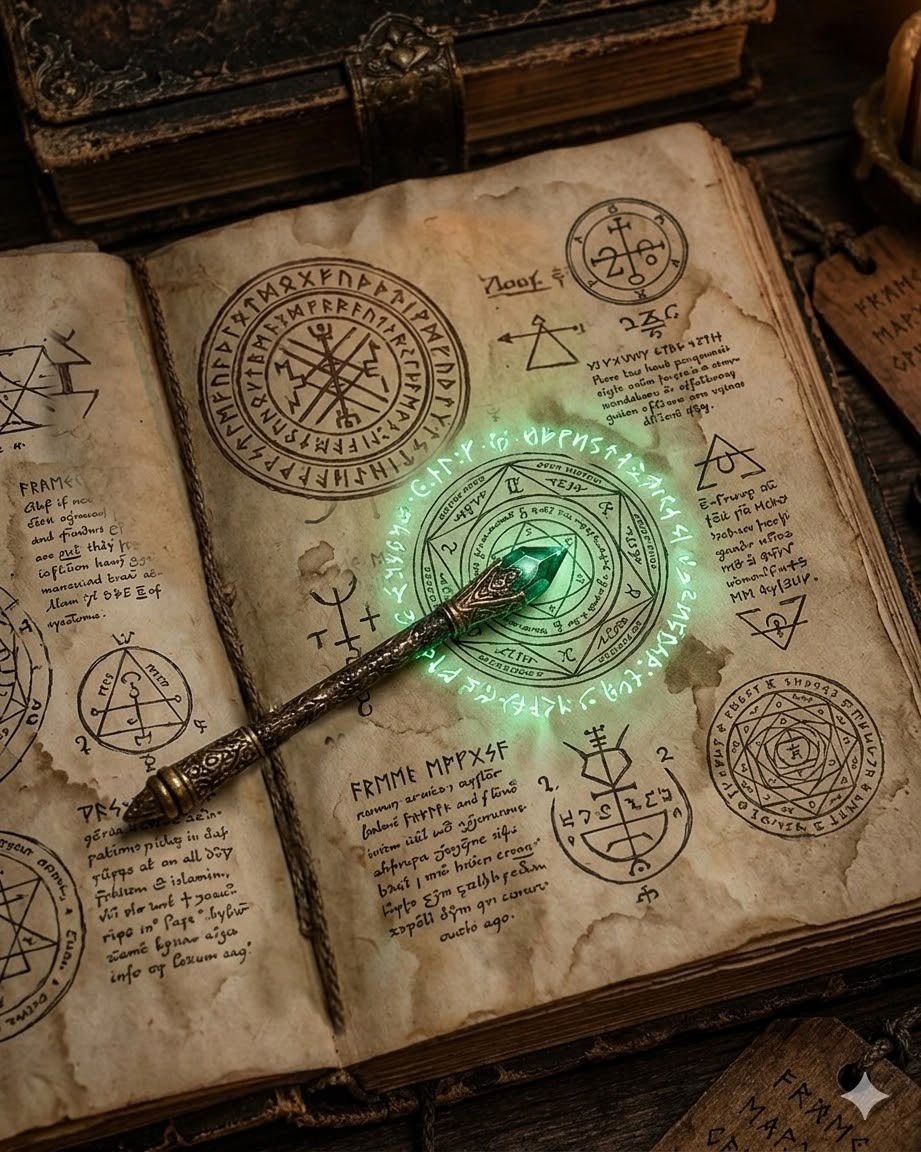
But the morning did not. Deep beneath Rainmark lay a chamber older than the house above it. The walls were raw granite. Upon the floor had been constructed seven concentric circles of silver, each intersected by symbols whose meaning had been forgotten before the first Glasshair had come north. At the center stood a stone lectern. Aelyr placed the Book of Keys upon it. The book was enormous. Its leather had darkened almost to black with age. Brass protected its corners. Its pages were covered with diagrams, circular alphabets, geometric invocations, maps that changed when no one watched them, and instructions written in languages of which some had never belonged to mortal tongues.

THE BOOK OF KEYS

Aelyr opened it. The portal matrix woke. Green light moved through the floor. One circle illuminated. Then another. Then another. Itnahai watched from the edge. She had been down here hundreds of times. She had never liked it.

THE RECTORY

“What are you looking for?”

“A door.”

“There are several thousand doors in that book.”

“Four thousand, eight hundred and nine.”

“You counted?”

“No. The book did.”

Aelyr turned a page. Symbols lifted from the parchment. They floated above it, revolving slowly. “The mountain fayhold should answer here.” She touched one. Nothing happened. She touched another. Nothing. A third. The matrix flickered. Then died. Aelyr became very still.

“What?” Itnahai whispered.

Aelyr turned several pages quickly.

“Highspire isn’t answering.”

“Yultha?”

“No.”

“Then what?”

Aelyr looked up.

“Something has locked the door from the other side.”

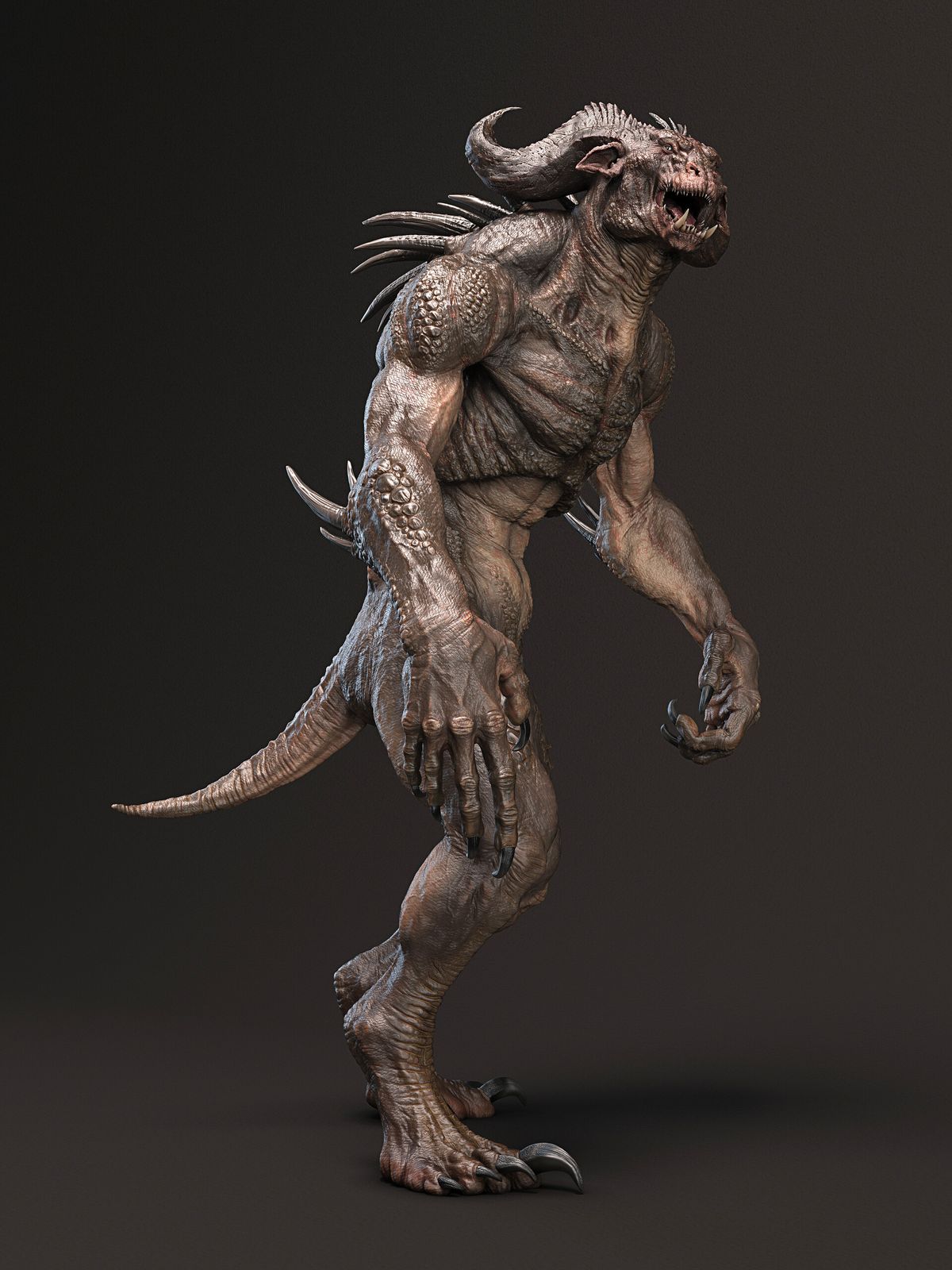
Far away, among the ruined arches of Highspire Cathedral, Tirgol was smiling. He had a narrow smile. Too much tooth in it. He crouched upon a broken capital thirty feet above the ruined nave, his long tail hanging beneath him. White fur covered his throat, shoulders, and portions of his face, but black scales emerged through it along the brow, spine, forearms, and thighs. His body was lithe, almost to emaciation. Claws tipped his fingers. His eyes were yellow. They did not blink often.

TIRGOL

“Come out,” he whispered. Nothing answered. Tirgol scratched one claw along the stone.

“Come out, pretty lady.”

Snow drifted through the cathedral. Behind him there was no shadow. That was because Nuromon had taken it. The wraith stood where Tirgol’s shadow ought to have been. Its robe moved although there was no wind. Nothing could be seen within its hood. Tirgol did not look back.

NUROMON

“You promised me,” he hissed.

A voice came from nowhere.

Yes.

“The treasure.”

Yes.

“The gate.”

Yes.

“The blood.”

There was a pause.

Then:

All the blood you desire.

Tirgol shivered with pleasure.

“You speak so beautifully.”

And you speak too much.

Tirgol’s smile disappeared. Something moved beneath the snow. Roots. They rose through cracks in the cathedral floor. Tirgol stood. Across the ruined nave, a figure emerged between two broken columns. Yultha.

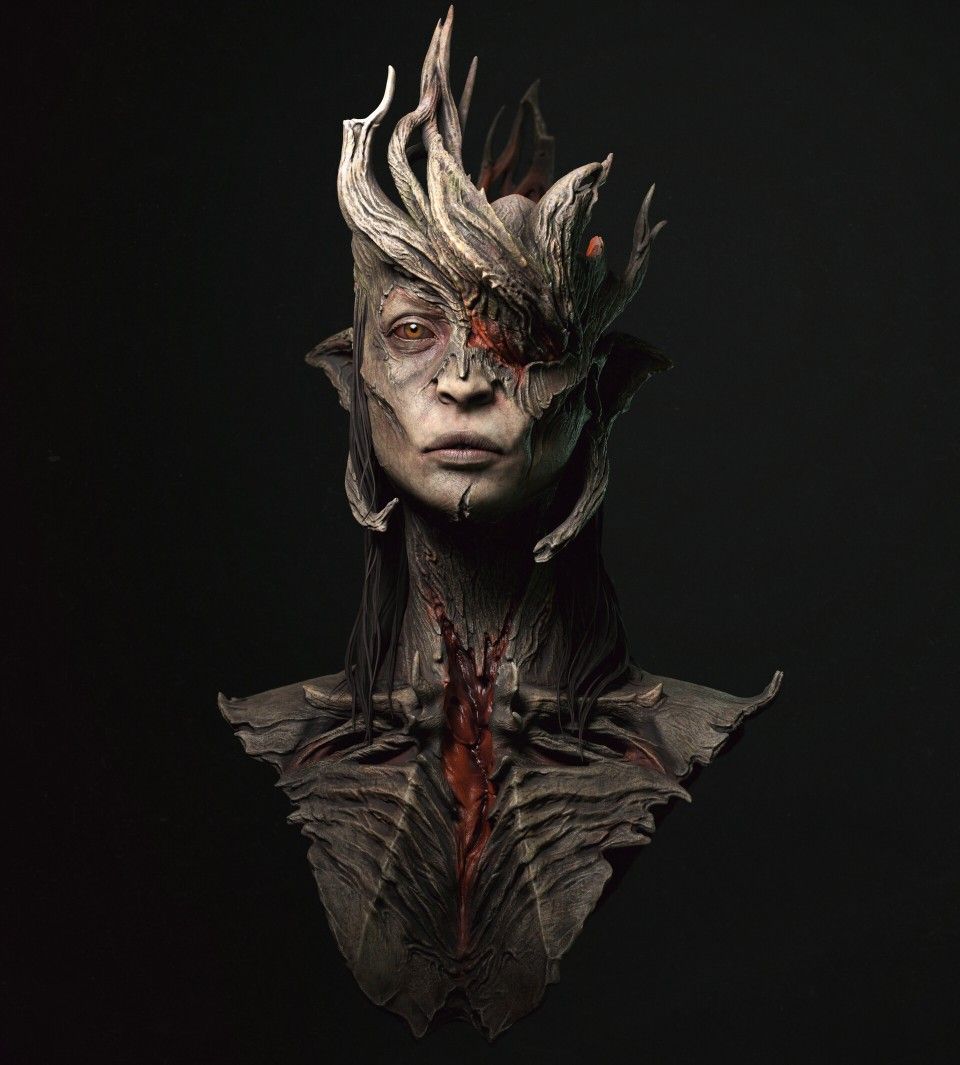
She was tall, almost seven feet, and slender as a young tree. Her flesh resembled bark where it crossed one side of her face and breast, and living wooden horns swept upward from her brow like the shattered beginnings of a crown. One eye was amber. The other was hidden beneath wood.

YULTHA

“Tirgol,” she said.

His smile returned.

“You know me.”

“I know what you are.”

“Do you?”

“Yes.”

He slipped from the stone and landed upon all fours. Yultha watched him rise.

“You have been walking my borders for nine nights.”

“Ten.”

“Nine.”

“I came before the moonrise.”

“That was still yesterday.”

Tirgol considered this.

“I hate you.”

“I know.”

He began circling her.

“You guard a broken church.”

“No.”

“A broken tower.”

“No.”

“Stones.”

“No.”

“What then?”

Yultha looked toward the ruined altar.

“A promise.”

Tirgol laughed. It was a dry, unpleasant sound. “Promises are what weak things call chains when they put them on themselves.”

Yultha looked at him almost sadly. “No, little beast. A chain binds what wishes to leave. A promise tells the world what has chosen to remain.”

Behind Tirgol, Nuromon stirred. Yultha’s visible eye narrowed. At last she understood. Not Tirgol. The shadow. “Oh,” she said. Nuromon rose. For the first time, Tirgol saw fear enter Yultha’s face. He delighted in it.

“You know him too.”

Yultha did not answer.

Nuromon’s voice filled Highspire.

You have kept my door long enough.

Yultha stepped backward. Roots erupted from the floor. They struck Tirgol.He twisted between them with impossible speed. One caught his shoulder and hurled him against a column hard enough to crack stone. He laughed. Yultha raised both hands. The mountain answered. Every tree upon the slope beneath Highspire bent toward the cathedral.

Tirgol came at her. She struck him with a branch that grew from her arm as she swung it. Bone broke. Tirgol spun across the nave. He landed badly. For several seconds he did not move. Yultha turned toward Nuromon.

“You cannot cross.”

I already have.

“No.”

Look behind you.

She did. Tirgol was there. One claw entered beneath her ribs. The other closed around her throat. Yultha gasped. Tirgol pressed himself against her back. His mouth came beside her ear. “You were right,” he whispered. Blood ran down his wrist.

“About what?”

“A promise.” His claws sank deeper.

“Tells the world what chooses to remain.” Yultha’s amber eye widened.

Tirgol smiled against her cheek. “I choose not to.”

He tore downward. Yultha fell. At Rainmark, Aelyr screamed. She was standing over the Book of Keys when every page turned at once. Hundreds. Thousands. Paper flew beneath her hands. The portal matrix blazed green.

“Aelyr!” Itnahai caught her before she fell.

Celestiaman burned upon her finger. Not warm. Burned.

A voice thundered inside her.

THE WARDEN HAS FALLEN.

Aelyr staggered upright. “What?”

THE WARDEN HAS FALLEN.

The Book of Keys stopped turning. One page remained open. Aelyr stared at it. There was no writing. Only a circle. A door. And something was opening it.

“Highspire,” she whispered. Above them the alarm bell began to ring. Gaeema had seen it first. From Hammerwing’s back she watched the summit of Highspire turn black. Not dark. Black. A wound opened beneath the ruined cathedral. It was perfectly vertical and perhaps thirty feet high. Around its edges the world bent inward. Snow lifted from the mountain and streamed toward it.

Hammerwing roared. Gaeema drew Ontakye. Lightning leaped down the blade. “No,” she whispered. Something stepped through the gate. A soldier. Then another. And another. They came in ranks. Scaled men in armor. Some bore shields. Some carried long spears. Others carried swords with hooked blades. Their armor was dark red and black, and upon their shields was a device Gaeema had seen only in dispatches from the southern war.

ONTAKYE

Draconians. Ten. Twenty. Thirty. They kept coming. Hammerwing climbed. Gaeema looked toward Rainmark. The little community seemed impossibly small beneath her. A hundred people. A few steep roofs. Smoke from breakfast fires. The paddock. The smithy. The west orchard. The schoolhouse where she and Aelyr had once hidden a dead fox because they had believed, at nine years old, that they could resurrect it.

NORTHERN DRACONIAN

Murmiton lay farther down the valley, scarcely visible among the rocks. Home. Ontakye trembled in her hand. “Go,” she told Hammerwing. The dragon turned. At Highspire, Tirgol stood over Yultha’s body. Nuromon had become immense. The wraith rose through the broken cathedral until its hood reached the shattered galleries. Its robes spread through the nave like smoke filling a tomb.

Tirgol watched the soldiers march through.

“What happens now?”

Nuromon did not answer.

“What happens now?”

Still nothing.

Tirgol’s yellow eyes narrowed. “You promised me treasure.”

The wraith turned its hood toward him. Tirgol suddenly wished it had not.

Did I?

For the first time that morning, Tirgol stopped smiling. The gate widened. The hundredth draconian stepped onto Papadin. Its commander raised a black sword. The column turned west. Toward Rainmark. Far below, the gates of the wayhouse opened. Twenty-five Bartelon dwarves marched into the road. Hemeth Ironfold walked at their head.

Fastlight landed upon the eastern wall, and Itnahai stood upon his back with one Outworld Blade already drawn. Children were being taken belowground. Horses screamed in their stalls. Men and women who had spent their lives tending goats, keeping bees, repairing roofs, guiding elk and carrying wine down the mountain now lifted spears that had hung above their hearths for generations.

Aelyr Glasshair climbed the steps to the gatehouse. The wind caught her white hair. Celestiaman shone upon her hand. The Book of Keys was beneath one arm. She looked up as Hammerwing descended. Gaeema did not wait for the dragon to land. She jumped the final six feet and came running.

Aelyr knew from her face. “Highspire?”

Gaeema nodded.

“Yultha?”

“I didn’t see her.”

Aelyr closed her eyes. Only for a moment. Gaeema took her hand. Not the hand bearing Celestiaman. The other one. The hand of the woman she had known before either of them understood what death could take.

“Aelyr.”

“I know.”

“You don’t.”

Aelyr opened her eyes. Gaeema was crying.

“I saw them.”

“How many?”

“A hundred.”

Hemeth swore softly. Itnahai looked toward the mountain.

“How long?”

“Less than an hour.”

Silence passed between the four of them. Not the silence of strangers who had nothing to say. The silence of people who had already said nearly everything to one another over the course of their lives. Hemeth had taught Aelyr how to sharpen a knife. Gaeema had held her while she wept the night the news of her village arrived. Itnahai had once carried Gaeema seventeen miles through a blizzard after Hammerwing had been wounded. Aelyr had sat beside Hemeth when his son died. They had quarreled over horses, politics, romances, money, magic, roads, wine, dwarven songs and whether Fastlight ought to be allowed inside the dining hall. They had buried friends together. They had believed there would be time to become old together.

Aelyr looked at Rainmark. Then she looked toward Papadin. The first distant figures had appeared upon the snow. Celestiaman spoke.

You are afraid.

“Yes.”

The others heard only her answer.

Good.

Aelyr frowned.

Courage without fear is merely ignorance of danger.

She looked at Gaeema. At Itnahai. At Hemeth. Behind them waited the people of Rainmark. Her people. The melancholy remained. Her dead remained dead. Her lost village remained lost. Nothing about the approaching enemy repaired any of it. And strangely, this comforted her. She did not need to become someone else to meet what was coming. She had only to remain what grief had failed to destroy. Aelyr handed the Book of Keys to Itnahai.

“Take this downstairs.”

Itnahai stared at her.

“What are you doing?”

“Opening every friendly fayhold that still answers.”

“For what?”

“Everything.”

Hemeth understood first. He began to laugh. Gaeema looked between them.

“Everything what?”

“Everything,” Hemeth repeated.

Aelyr pointed toward Rainmark.

“Food. Water. Arrows. Medicine. Stone. Timber. Oil. Every favor owed to this house. Every promise made to us. Every road the Book can still open.”

“And if something unfriendly answers?” Itnahai asked.

Aelyr looked toward Highspire. “Then tell it there are draconians coming.”

Itnahai smiled. It was not a pleasant smile. “Some of them will like that.”

“I am counting on it.”

Hemeth drew his hammer. The Bartelon dwarves behind him struck their weapons against their shields. Twenty-five blows sounded together.

BARTELON DWARVES

Gaeema looked upward. Hammerwing spread his wings. Ontakye came free of its scabbard. Lightning ran along the black blade. Then Gaeema turned to Aelyr. “If this goes badly…”

“No.”

“Little glass.”

“No.”

“Listen to me.”

Aelyr did. Gaeema stepped closer. “I am not dying for Rainmark.”

Aelyr’s face tightened.

“I am not dying for your sister. I am not dying for Gildensong. I am certainly not dying for Hemeth.”

“Much appreciated,” said the dwarf.

Gaeema ignored him. “If it comes to it, I die for you.”

Aelyr stared at her. “Don’t.”

“I wasn’t asking permission.”

“You never do.”

“No.” Gaeema smiled. There were tears upon her face. For one terrible instant they were children again. Then Aelyr embraced her. Hard. When they separated, Gaeema mounted Hammerwing. Itnahai climbed onto Fastlight. Hemeth descended to his dwarves. Aelyr remained upon the gatehouse. The draconians were visible now. A dark procession descended from the snowfields of Papadin. Behind them Highspire stood against the sky.

Something enormous and black moved among its ruins. Aelyr raised her hand. Celestiaman blazed like a small sun. The people of Rainmark looked toward her. Aelyr Glasshair had never wanted command. Perhaps that was one reason command had trusted her. “Close the gate,” she said. The great doors began to move. Above them Hammerwing roared. Fastlight spread his black wings. Twenty-five dwarves lowered their weapons.

Far up the mountain, beneath the empty bell tower of Highspire, Yultha lay upon the snow. Her blood ran between the stones. Where it touched the earth, small white flowers began to grow. Tirgol watched them. He crushed one beneath his clawed foot. Then another. There were too many. Behind him the gate remained open. Through it came the smell of another country: iron, ash, old blood, and the hot breath of war.

Nuromon stood within the ruined cathedral and watched his warband descend. For centuries Highspire had guarded the border. For centuries the mountain fayhold had remained closed. Now the guardian was dead. The promise was broken. And for the first time in all the long memory of Rainmark, the road down Papadin belonged to the enemy.

Below, a bell began to ring. Once. Twice. Three times. Aelyr heard it and remembered her dream. Then she understood. The bell had not been tolling for Highspire. It was Rainmark’s bell. And the dream had not been a warning of what might come. It had been the sound of something already on its way. Aelyr drew her sword. “Here they come.”

And beneath the cold immensity of Papadin, while the Edderoth ran bright and heedless from its mountain springs, the first draconians of the northern war marched down into Gildensong.