LORE NOTES 1510
The Elder Valley and the Founding of Gildensong
Gildensong, commonly called the Wine Lands, occupies the fertile Elder Valleys southwest of Silverymoon. Its political and cultural heart is Edderoth, where Castle Edderoth rises above the Edderoth River and the valley’s vineyards, orchards, roads, and settlements. The realm lies roughly seventy-five miles southwest of Silverymoon, close enough that the histories of the two countries have remained intertwined for centuries. Technically, Gildensong is something of a vassal state of Silverymoon.
The realm traces its founding to 851 DR, when Valen Gildensong, a high elf of Silverymoon, led a company of elves and humans southward during a period of growing racial violence and political unrest associated with the Eldreth Veluuthra. According to Gildensong tradition, the archfey Verenestra guided Valen’s company into the Elder Valley and helped establish the covenants with the fey that made permanent settlement possible. The resulting country was neither wholly elven nor human, but a mingled society whose identity grew from Siluvaeren culture, the agricultural wealth of the valley, and ancient agreements with the neighboring fayholds.
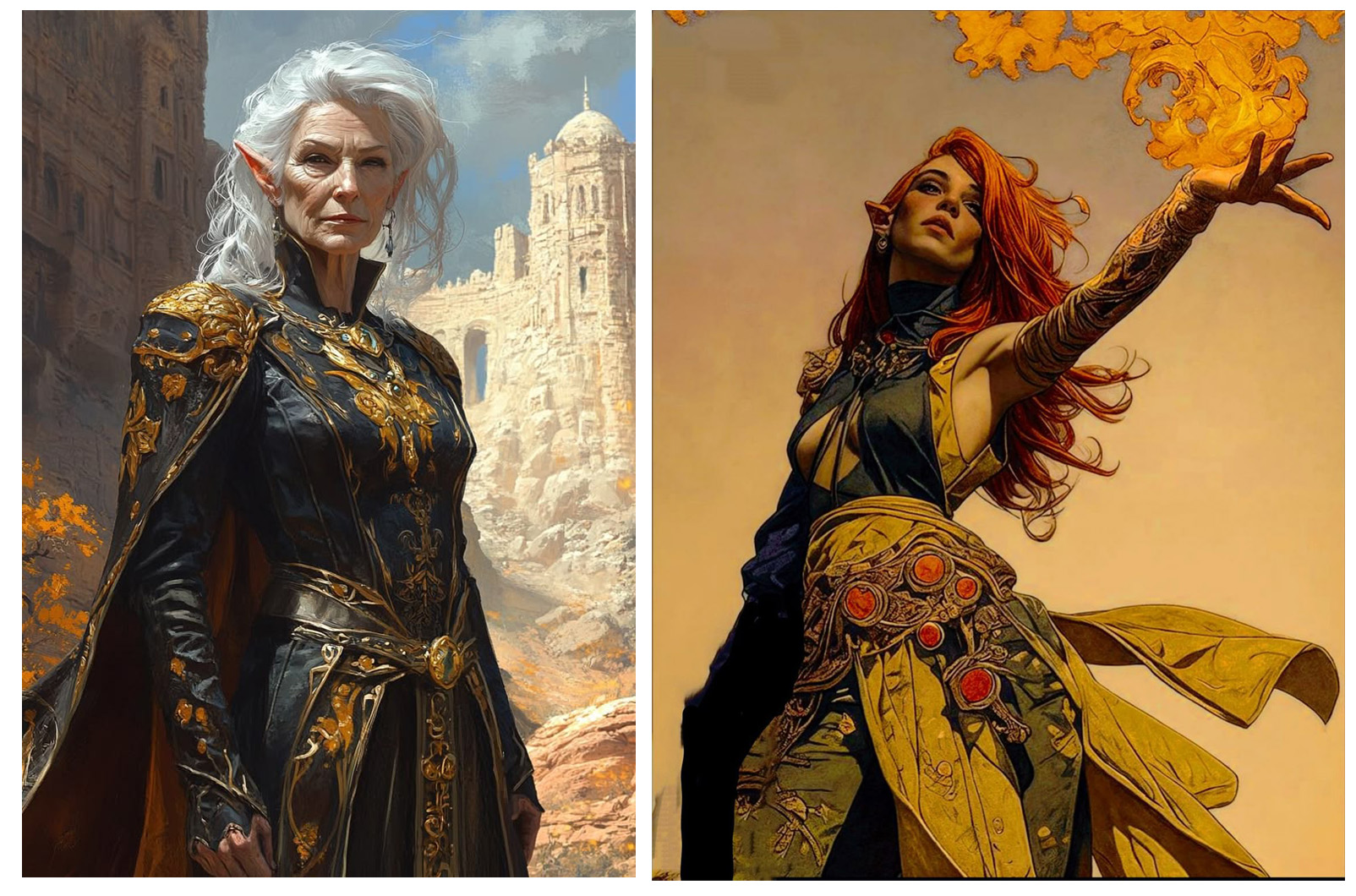
are the most politically power people in the Principality of Gildensong
The relationship with Silverymoon remains unusually intimate. Many of Gildensong’s old high-elven families trace their ancestry to Silverymoon, and the two countries share centuries of marriage, trade, scholarship, and military service. Although part of the larger, cultural kingdom of Siluvaria, Gildensong has repeatedly declined incorporation into larger northern political projects, including the Confederation of the Silver Marches and the former Principality of Luruar. Its friendship, business, and military relationships with Silverymoon are therefore rooted in an alliance between sovereign powers rather than political subordination.
Lady Vivianna and the Court of Edderoth
Gildensong is ruled from Castle Edderoth by Lady Vivianna, Lady of the Valley, whose blood ties to Alustriel Silverhand reinforce the ancient relationship between Edderoth and Silverymoon. The Edderoth court is consequently both provincial and international: the great houses of the Wine Lands mingle there with Bladesong officers, merchants, diplomats, fey emissaries, priests, mages, and representatives of Silverymoon.
Silverymoon maintains a permanent diplomatic presence at Edderoth through Thereal the Siluvaeren, its ambassador to Vivianna’s court. Matters decided at Edderoth often extend far beyond the valley. Trade through the Dessarin corridor, draconian incursions, relations with the fayholds, the security of the northern roads, and the disposition of the Bladesong Knights all make the castle one of the consequential political centers of western Siluvaria.
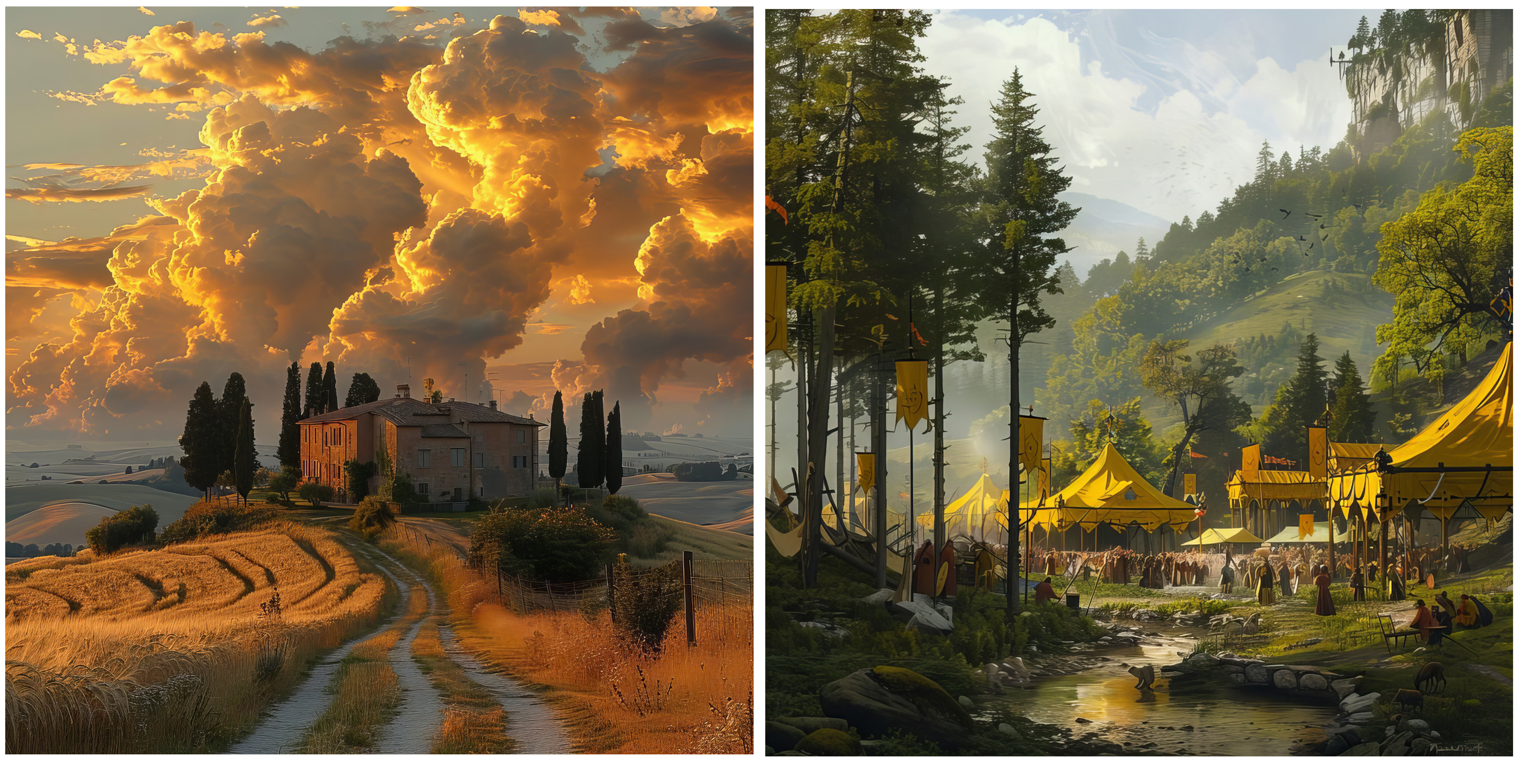
(pictured, above, left) to the fairs of Seven Hills in West county (pictured, above right),
community and natural beauty, everywhere, is reflected in how culture is tied to the land.
Castle Edderoth itself stands at the lower end of the city, overlooking the river and the approaches into the Elder Valley. Behind it, Edderoth climbs steeply through the valley, a city of approximately five thousand inhabitants arranged along bridges, terraces, walls, gardens, markets, and river roads. The Cathedral of the Raven Queen rises prominently behind the castle, while the great bridge across the Edderoth binds the castle precinct to the greater city.
The Great Houses and Commerce
Much of Gildensong’s political power rests with its landed and mercantile houses. House Khodelkim and House Enimdere possess extensive commercial interests and have long invested heavily in maintaining the roads, river traffic, and ports upon which the Wine Lands depend. Each controls settlements and estates of its own, giving the great houses considerable influence outside the immediate authority of Edderoth.
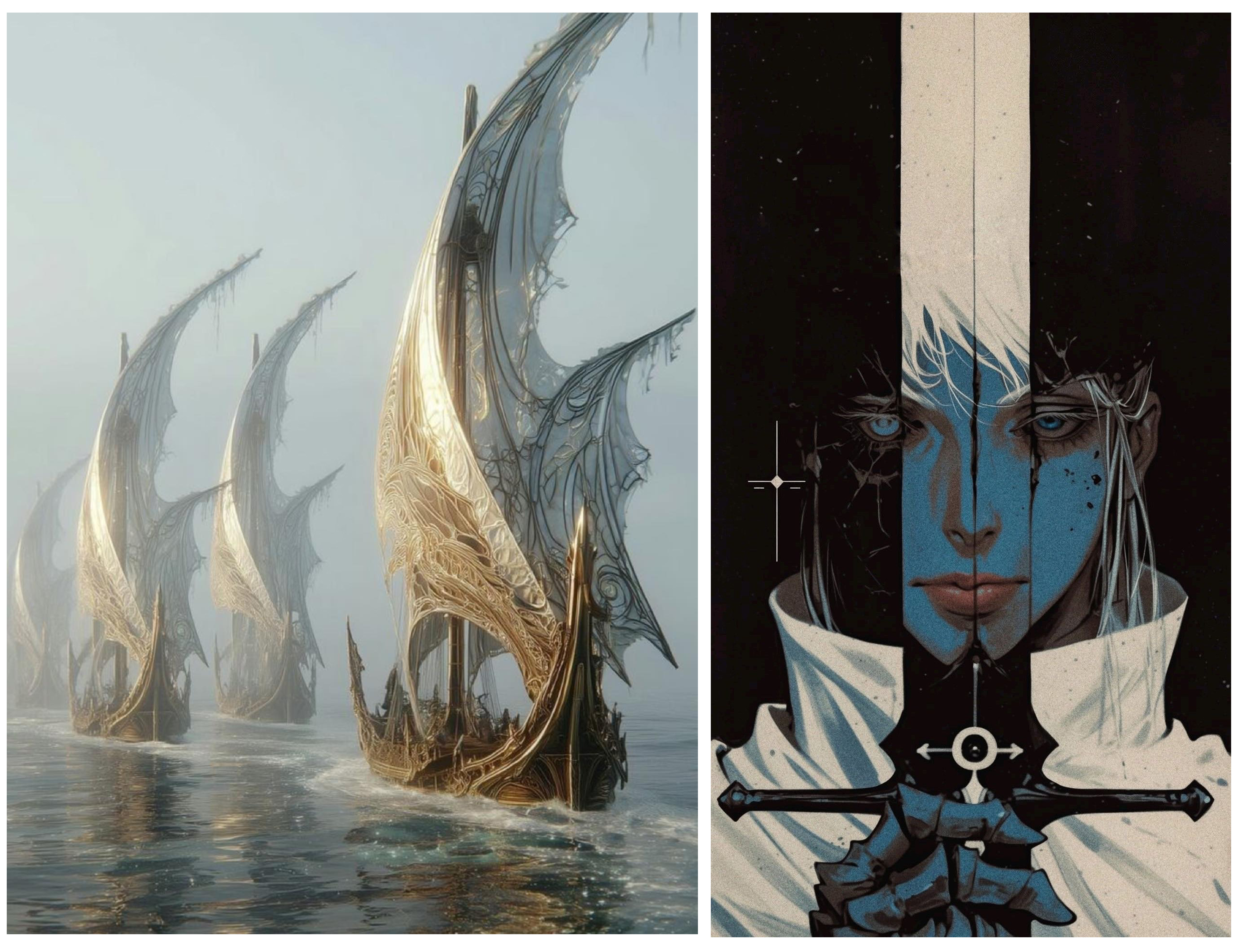
at the behest of the Costar merchant holds. Magical weaponry is among
the most prized exports of the elven kingdoms.
The continuing draconian conflict has fallen particularly heavily upon these trading families. Commerce between Gildensong and Silverymoon must cross the country repeatedly, threatened by draconian strongholds and raiding parties. Protecting merchants, reopening roads, and maintaining the movement of goods have therefore become matters of national security as much as commerce.
At Port Edderoth, three mercantile powers are particularly influential: the Costers of the Green Star, House Aelsibyrn, and the Dessarin Hold, usually called the DH. The Dessarin Hold possesses the darkest reputation of the three and has frequently been associated with the Mice Eyes, a powerful thieves’ guild whose operations extend well beyond the port.
Port Edderoth
Port Edderoth stands at the western approach to the Elder Valley, where the waterways and overland routes of Gildensong converge. The river system’s deep glacial waters allow substantial barges to reach the port, making it the principal commercial gateway between the agricultural interior and the wider trade networks beyond the valley. The Bladesong knights of Granitehome, the massive wayhouse in the center of Port Edderoth, have become regional heroes in the years between 1506 and 1510.
Wine dominates this commerce, but the port carries timber, metalwork, grain, fruit, livestock, weapons, luxury goods, and products moving between Silverymoon and the western lands. Control of Port Edderoth therefore means influence over much of Gildensong’s wealth.
The realm’s prosperity is reflected in its currency, the Gildon, a small coin minted from relatively low-grade gold. Gildensong’s reputation as the Wine Lands is more than poetic. Vineyards shape its economy, landscape, noble fortunes, seasonal calendar, and political identity.
The Bladesong Knights
The Bladesong Knights are Gildensong’s sworn military defenders and one of its oldest surviving institutions. Their origin reaches back approximately seven centuries to the founding generations of the realm and the military traditions established by Valen Gildensong.
Their maxim is simple: “Once a knight, always a knight.”
The active order numbers approximately 907 knights, including both infantry and cavalry, supported by roughly 1,374 squires and service members. Their organization extends far beyond fighting personnel. Armorers, swordsmiths, blacksmiths, healers, housemasters, librarians, scribes, diplomats, shrine attendants, stablemasters, and fey wardens all belong to the institutional world of the order.
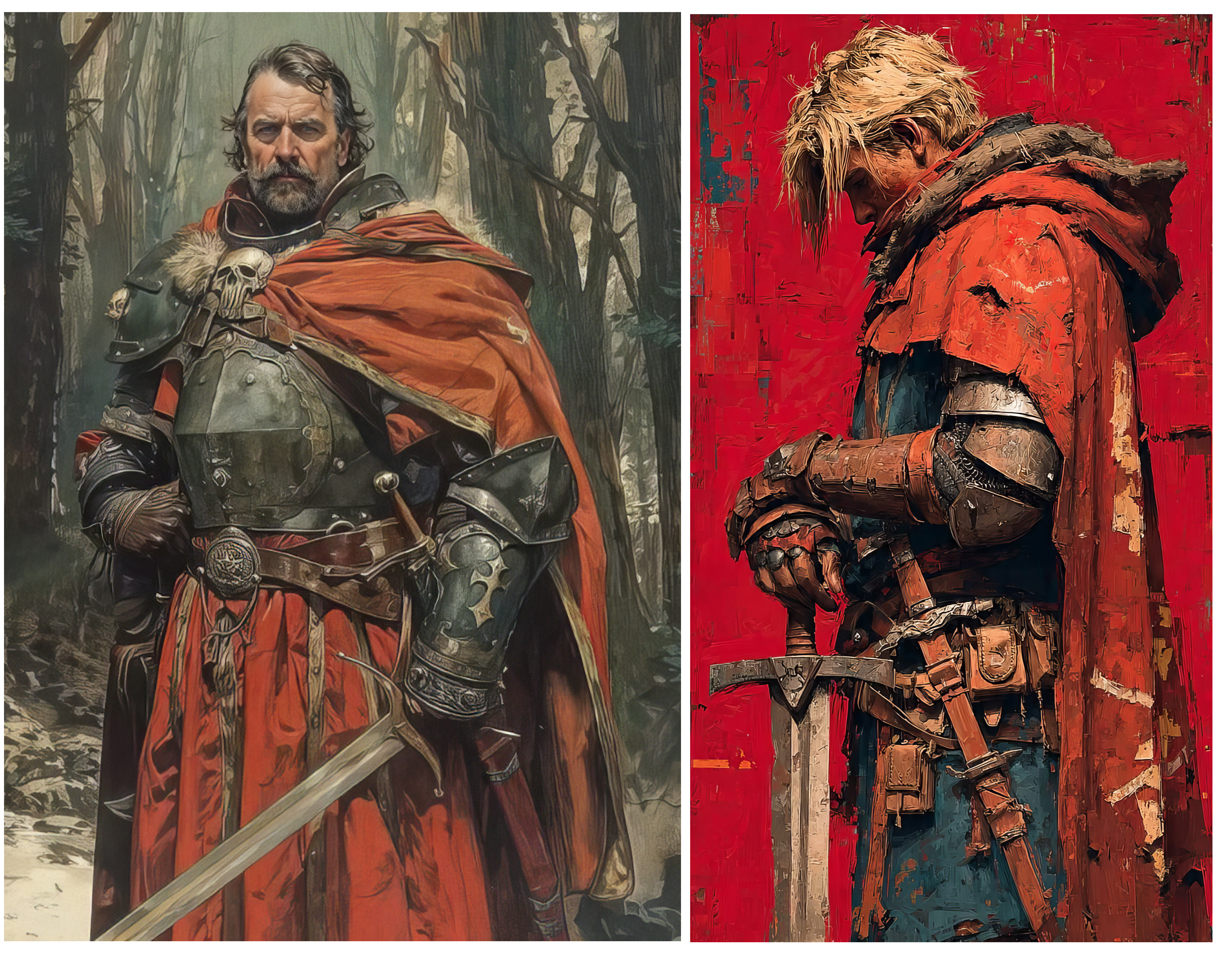
see the color red as the color black. Sir Darrington (left) is a brigade commander
at Tall Shield Castle at Faerwhen and is a veteran of many draconian battles.
Many knights reside at Castle Edderoth, but the distinctive feature of the Bladesong defensive system is its network of thirty-six Wayhouses distributed through Gildensong, particularly along roads, marches, river crossings, and vulnerable borders. These are not identical forts. Each has evolved according to its landscape and purpose, ranging from small fortified houses to substantial regional strongholds such as Rainmark in the northern country.
In 1368 DR, Vivianna entered into a military compact with Silverymoon through which the Bladesong Knights became an active brigade associated with the Argent Legion. This arrangement did not surrender Gildensong’s sovereignty. Rather, it formalized a longstanding system of mutual defense. Gildensong and Silverymoon have repeatedly reinforced one another during major crises, including the wars surrounding Hellgate Keep, the Dragon Wars, and campaigns to defend or recover the northern trade routes.
The knights nevertheless owe their immediate allegiance to Vivianna, Lady of the Valley, and to the defense of Gildensong.
Fayholds
The Fayholds complicate any simple map of Gildensong, for within the principality lie dozens of territories that are effectively sovereign fey lands, governed not by Edderoth but by their own archfey, courts, spirits, and ancient powers. Their dimensions bear little relation to their apparent boundaries: a rosebush beside a country road may contain a walled city beneath an everlasting twilight, while the hollow of an ancient oak may open upon a country of rivers, forests, villages, and distant mountains. Fayholds exist partly within the mortal landscape and partly beyond it, yet they are wholly bound to the places they inhabit, making them less foreign realms than hidden depths of Gildensong itself. Their borders cross roads, farms, forests, and even settled country, and travelers must observe strict local rites of passage: a bell rung at a certain stone, bread left beneath a tree, a name withheld, a particular greeting spoken before crossing a bridge. Such customs are not superstition but diplomacy. To travel through Gildensong is therefore to pass continually between overlapping sovereignties, and those who ignore the old protocols may find the road suddenly leading somewhere else, emerging years after they entered, or never returning to the mortal world at all.
Religion and the Sovereign Host
Religious life in Gildensong centers upon a group of divine powers collectively understood as the Sovereign Host, although individual communities emphasize different members of the Host. Corellon occupies the paternal and ancestral position; Tyr represents valor and justice; Oghma represents knowledge and learning; Torm represents duty and faith; and Mielikki embodies the fecundity of the land, forest, and harvest.
Sehanine also holds an important place in the older elven religious imagination of the valley, particularly in traditions concerned with moonlight, dreams, passage, memory, and the fey. Mielikki and Sehanine should therefore remain distinct divinities rather than alternate names for one another.
Edderoth also contains important cults and temples beyond the Sovereign Host, most notably the Cathedral of the Raven Queen, whose dark towers have become one of the city’s defining landmarks.
A Land Beyond the Mythals
One important distinction separates Gildensong from Silverymoon and several of the great elven centers of the North: the Elder Valley has always lain beyond the protection and influence of the great mythals.
This has profoundly shaped the country’s history. Gildensong cannot depend upon the immense inherited magical architecture that protects older elven centers. Its security instead rests upon fortifications, the Bladesong Knights, alliances with neighboring fey powers, local magic, the Wayhouses, and the accumulated covenants of its people.
That vulnerability has also made Gildensong unusually adaptable. The country survives not beneath one overarching enchantment, but through thousands of smaller relationships among houses, villages, knights, waterways, roads, fayholds, and old promises.
Ametriol and House Theradril
Below the surface lies another political power. Ametriol is a near-surface dark-elven city associated with House Theradril. Its relationship with Gildensong has never been simple enough to describe as either friendship or enmity.
House Theradril can provide information, magical assistance, trade, and military advantages unavailable elsewhere, yet it also represents an independent and potentially dangerous power immediately beneath Gildensong’s sphere. Edderoth consequently treats Ametriol with wary diplomacy. In periods of crisis, the dark elves may prove indispensable allies. In others, they may become part of the crisis themselves.
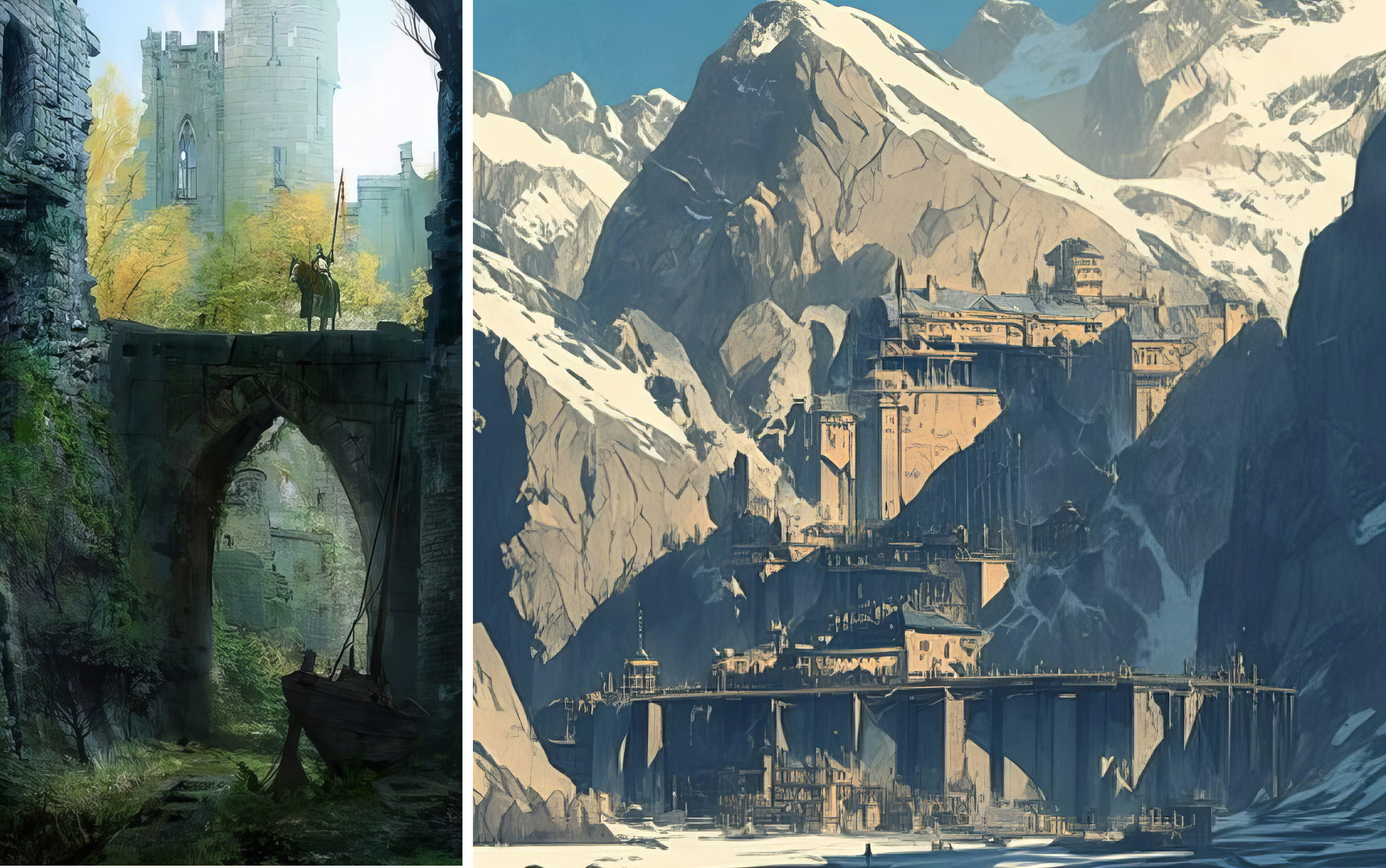
Bladesong citadels that exist in an environment of constant threat.
The steadfast knights are charged with keeping the road open, an important trade route with
Silverymoon and the Silver Marches beyond.
Old threats from the East and new threats from the West
Many of Gildensong’s most persistent military dangers lie east and northeast of the Elder Valley, but new draconian insurgencies from the western front have erupted over the past year. Draconian forces occupy or contest several strongholds along the routes between Gildensong and Silverymoon. They raid merchants, disrupt communication, threaten the Wayhouses, and repeatedly attack Northguard, an important trading settlement on the exposed marches.
The Oandanian orcs threaten the southeastern marches, forcing Gildensong to divide its attention between very different enemies. The geography of the Wine Lands therefore creates a peculiar strategic problem: the prosperous valley at its center is relatively compact, but the roads that sustain its wealth extend through dangerous country in several directions.
The northern situation has deteriorated further with the opening of the conflict around Rainmark, Mount Olostian, and Highspire, where draconian forces have begun penetrating country previously protected by ancient fey boundaries.
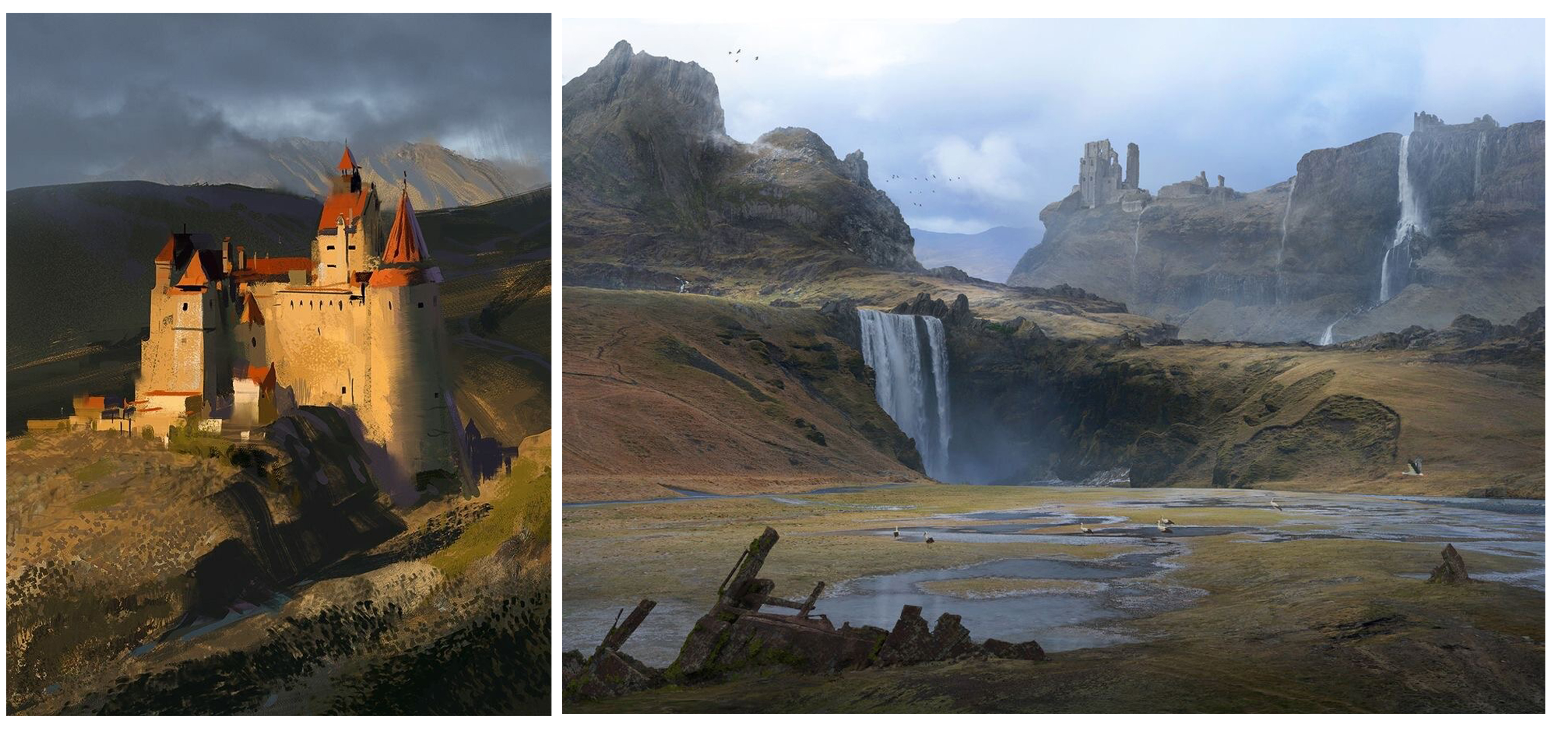
where too much rain cold rain and snow fall for grapes to grow.
Outpost wayhouses like Claytop (pictured, above, left) exist in a landscape that is much
different than the more temperate, affluent lands to the south.
Dragons and the Recent War
The present year is 1510 DR. Two powerful dragons maintain realms east of Gildensong among the mountains of the western High Forest: the bronze dragon Gnimetria and the red dragon Orantor. Both Greatwyrms. Both withdrew into dormancy following the Dragon War, but the peace that followed has proved deceptive. The dragon armies may have ceased their great campaigns, yet their draconian soldiers and surviving warlords remain scattered throughout the eastern marches.
The result is a country technically at peace but increasingly unable to distinguish peace from the interval before another war. Draconian forts remain occupied. Northguard remains vulnerable. Trade with Silverymoon remains dangerous. Highspire has fallen, the old fey protections of the northern country have been violated, and a new draconian force has entered the Papadin country.
Gildensong therefore began 1506 DR wealthy, beautiful, independent, and profoundly exposed. Its vineyards still descend toward the rivers. Barges still reach Port Edderoth. The thirty-six Wayhouses still keep their watches, and Vivianna’s court still governs from the terraces of Castle Edderoth. Yet beyond those terraces stand dragons, draconians, orcs, dark elves, compromised fayholds, and older powers beginning to move again.
Between 1506 and 1510 DR, the three Swords of Doom moved from half-remembered legend into the center of Gildensong’s affairs. Forged in the primordial age alongside the Swords of Glory, the blades were created as terrible instruments of necessity, each possessing a different power of unmaking. Rendlereign, the Sovereign of Ruin, rends legitimacy, stripping kings and dragon-lords of the supernatural authority by which they rule. Rendgray, the Shadow of Ending, rends memory and continuity, severing names, inheritances, spells, bargains, and the accumulated identity of its victims. Rendpyre, the Flame of Dominion, rends immortality, making final death possible even for beings protected by ancient metaphysical bonds. Prophecy holds that the three blades may ultimately end the wars of the Scintilliant dragons not simply by killing them, but by making their war impossible to sustain. By 1509, Rendlereign lay warded in the deep vaults of Castle Edderoth, Rendgray was eventually secured beneath Granitehome at Port Edderoth, and Rendpyre remained lost, perhaps deliberately hiding from those who would wield it.
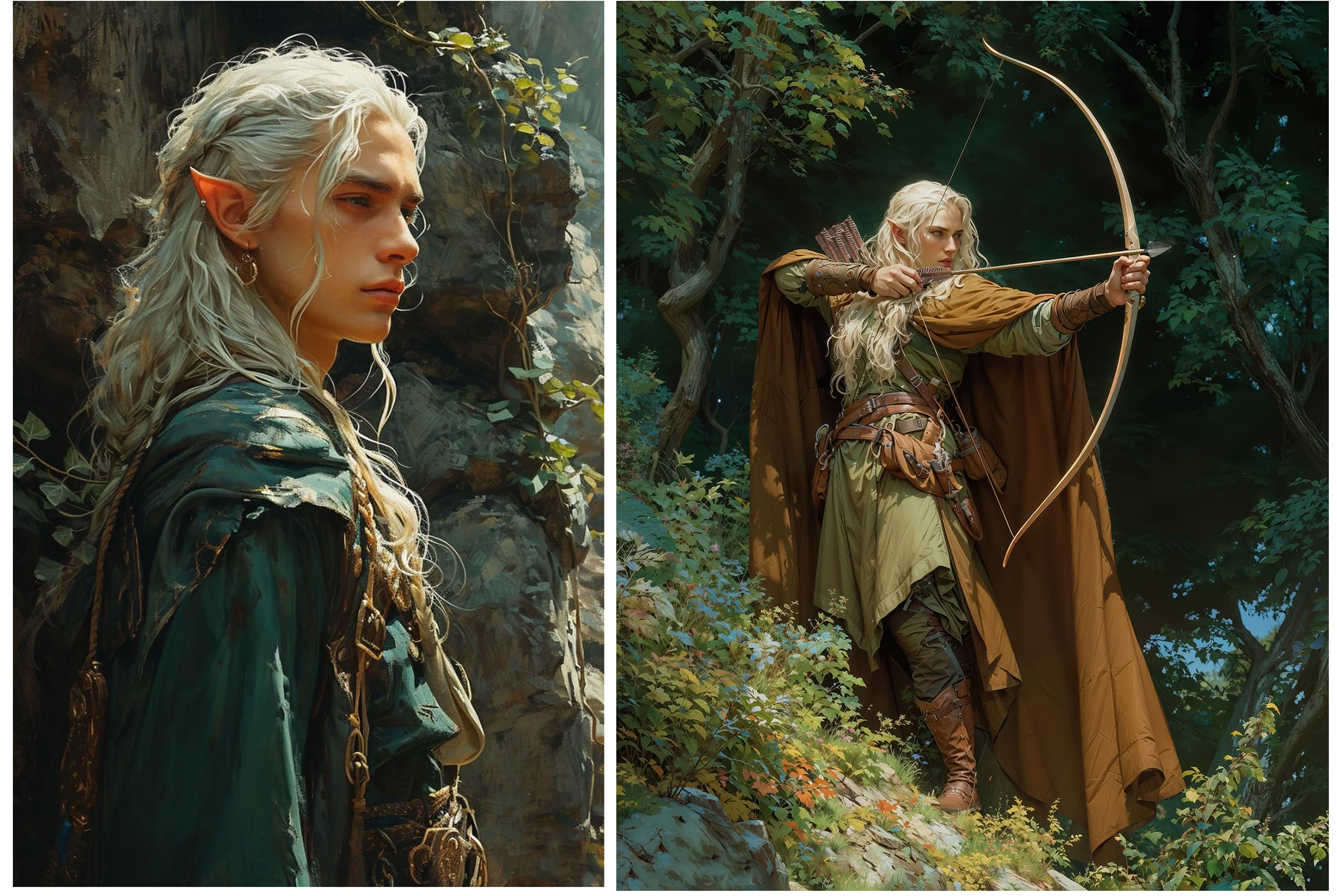
The elves call themselves the Silvaeren and in their tongue the humans are the Reghed.
Elves often speak with a rather thick accent when they converse in the common language of men.
The Knights of Granitehome became entangled with this legacy through a sequence of adventures that increasingly revealed the Swords of Doom as part of a much older struggle. Their road carried them from Granitehome through attempted assassinations and the interception of unholy cargo bound for Edderoth, then in desperate haste across Gildensong to Castle Edderoth itself. There they were drawn into the dangerous politics surrounding Lady Vivianna, Alustriel Silverhand, Matildae, Skylla, and Rendgray, and later confronted the deeper powers behind the sword. At Felsparia, the knights encountered Aceritiana and her Shadar-kai amid an ancient wound between the mortal world and the Feywild. Their struggle ultimately carried Loralin, Zun Alta, Korrath, and Sayelle into the Hall of the Night Mist, where the restored Ivory Blade destroyed Veteramor just before she could complete her third bite of Zun. Yet Rendgray continued to claim him. Loralin saved his friend by severing Zun’s right hand, after which the Avatar of Volukai withdrew and Sayelle secured the abandoned blade.
By 1510, those adventures had left scars rather than conclusions. Zun, now Captain of the Granitehome Knights and remembered as Zun the One-Handed, bore an artificed replacement hand and the lingering consequences of his contact with Rendgray. His return to his childhood home of Ulfdin opened another front in the story: a murdered eladrin mage, compromised knights, strange fey activity, the fire elemental called the Consumer, and the illithid Theraktrian, whom Zun eventually destroyed. Thus the four years transformed the Granitehome company from provincial defenders of Gildensong into custodians of a primordial conflict. They had prevented Rendgray from awakening fully, but they had not ended the design surrounding the three Swords of Doom. By 1510, they had discovered that the design was larger than Edderoth, older than Siluvaria, and still unfolding.
The Wine Lands have survived for seven centuries because their people learned that prosperity requires vigilance. Now the roads are closing, the old bargains are failing, and the Bladesong Knights are being summoned once again.


Leave a Reply